

Apple iPhone 5 To Feature Bigger Screen; Production To Begin In June For Fall 2012 Release Date [REPORT]

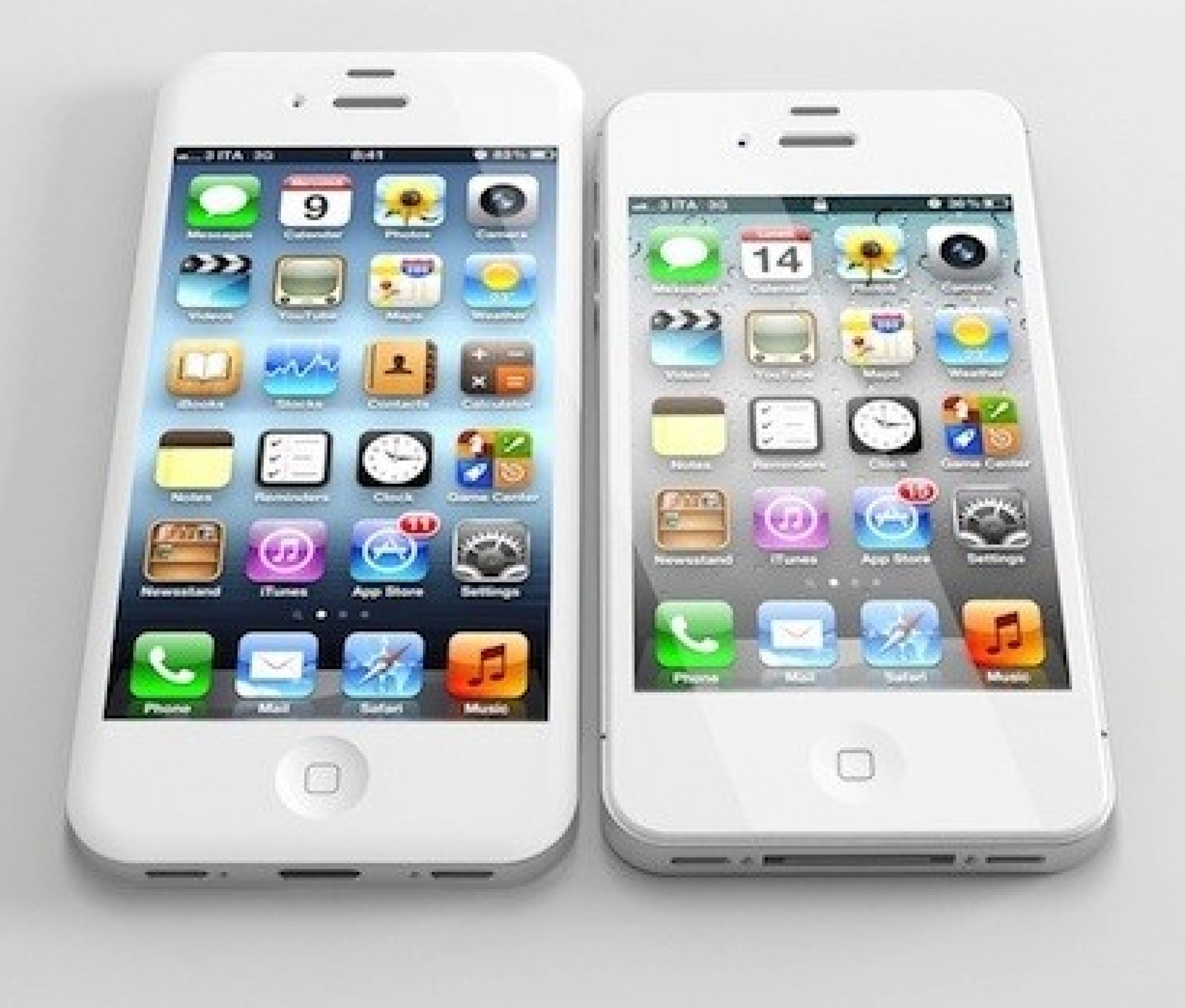
It's been long-rumored that Apple's sixth-generation smartphone, presumably called the iPhone 5, would feature a bigger screen than its predecessors. The latest report from the Wall Street Journal only confirms these rumors: According to sources from within Apple's foreign supply chains in Hong Kong, Apple has ordered bigger screens for its next iPhone, even though no exact measurement was provided.
The sources said the new screens measured at least 4 inches diagonally, compared to the 3.5-inch screens on every prior iPhone model, dating all the way back to the first iPhone, which was introduced in 2007. Apple is reportedly working with a number of screen manufacturers in Asia, including Sharp, Japan Display (a merger of Sony, Hitachi, and Toshiba's display businesses) and LG Display, but the quality of the screen (LCD vs. OLED) is also still unknown.
People want thinner and lighter smartphones, but bigger screens seem to be in fashion. Samsung, Apple's biggest competition, continues to make its smartphone screens bigger -- its latest phone, the Galaxy S III, has a 4.8-inch screen, compared to the 4.3-inch screen on its predecessor, the Galaxy S II. While Apple may not be building a screen of this magnitude, it certainly seems like the Cupertino, Calif-based company is ready to challenge itself with a screen bigger than 3.5 inches.
Apple would benefit from a bigger iPhone screen in several ways: For one, it would be able to build a bigger and more beautiful Retina Display, but more importantly, it could market the iPhone 5 as the biggest iPhone experience yet.
Apple recently proved that it knows how to make Retina Displays for different-sized devices beyond a 3.5-inch iPhone screen. Retina Displays, for those who don't know, are displays where the individual pixels are packed so close together that the human eye cannot distinguish them. In the new iPad, released on March 16, Apple upgraded the iPad 2's 1024 x 768 LCD display into a 2048 x 1536 Retina Display, keeping the chassis almost exactly the same. This impressive feat required a breakthrough in technology:
Apple figured out how to pack even more pixels into a display, and here's how it works: A pixel is made of red, blue and green subpixels, and a separate signal tells each subpixel when and how much to light up. This is what creates colors on a screen. Apple wanted to shove four times as many pixels into the same space, but learned that by doing this, the signals can easily get crossed, which results in fuzzy and distorted images. Apple needed to solve that particular problem, and eventually discovered that by elevating the pixels onto a plane separate from the signals, the signals don't get crossed, and the images look crystal-clear.As a result, Apple's new iPad packs in 3.1 million pixels, which is about 1 million pixels more than an HDTV.
While Apple will not need to pack in this many pixels into an iPhone screen, the company is now extremely confident it can make Retina Displays for most handheld screen devices, which is why there have been more rumors of iPhones and iPads of different shapes and sizes.
The Wall Street Journal said that production on the iPhone 5 will begin next month, while the release date has been scheduled for sometime in the fall, likely around October. Up until last year, each iPhone was released during the summer months roughly one year apart, but the iPhone 4S -- the latest model -- was released in the fall. While there is no clear reason for this, analysts believe Apple attempted to implement LTE into the phone, and failed.
The first implementations of LTE, which is characterized by significantly higher download and upload speeds compared to 3G networks, ravaged battery life of smartphones, which was a key complaint from uers. Apple wanted the fastest networks for its customers, but the only way to fit LTE into the iPhone 4S would've been to increase the thickness of the iPhone to accommodate a larger circuit board, and a bigger battery to power everything. Apple CEO Tim Cook, in a company earnings conference call in April 2011, said first-generation LTE chipsets force a lot of design compromises.
Fortunately, Qualcomm recently unveiled the fifth iteration of its new chip, which supports TD-SCDMA, TD-LTE, HSPA+, EV-DO, embedded GPS, and LTE on TDD and FDD networks worldwide. The chip works with Android and Windows 8 devices, but there's a high degree of likelihood that this will be the same chip inside the iPhone 5. Yet, the chip was only released in February, so Apple likely needs ample time to test the LTE chips inside the iPhone 5 before they're implemented.
A Bigger Screen Vs. A Better Screen
Apple has reportedly been busy testing prototypes of the iPhone 5 with an A5X chip, which is the same quad-core graphics processor that powers the Retina Display in the new iPad. But why would Apple want such a powerful chip for an iPhone? Given that the A5X chip is a graphics powerhouse, if Apple doesn't drastically change the physical size of the screen as the Wall Street Journal predicts, it could change the display's overall quality and shift from LCD to OLED.
LCD used to be one of the cutting edge technologies, but it is now a commoditized business, said Jasper Kim, founder and CEO of Asia-Pacific Global Research Group. It can be replicated and reproduced easily.
On April 4, the Korea Times reported that Apple was interested in switching from LCD to OLED displays for its next round of iPhones and iPads.
OLED displays have been gaining traction, as the technology can produce richer colors and better pictures in limited amount of space -- think of large, gorgeous TV displays thinner than a pencil. Samsung has not widely implemented OLED across its production lines, but the company is considering expanding the technology to compete with LG Electronics, which wowed audiences at CES 2012 with its large wafer-thin OLED TVs.
Thanks to the increased volume, chances have been raised to ship Samsung's OLEDs for Apple's iPads and even iPhones, said The Korea Times, citing unnamed Samsung executives who spoke on the condition of anonymity.
Apple has plenty of money to afford OLED screens in an iPhone-sized display, and it would make sense for Apple to ask Samsung -- the world's leading display maker, and Apple's biggest client -- to help build its iPhone 5 displays. Samsung knows how to build big, beautiful screens for any size device: Just imagine what Samsung could do with Apple's Retina technology implemented into an OLED. Apple would effectively put distance between the iPhone and all other smartphone competitors for another five years, at the very least.
Other Possible iPhone 5 Features
Crack-Proof Glass. Apple's patent for crack-resistant glass, granted on Nov. 15, uses the same alumino silicate glass solution used in the iPhone 4 and 4S, but chemically treats it with potassium and sodium ions to achieve greater compression thresholds on the surface and edges of the glass, making it less susceptible to cracks.
Apple also included a handy feature that will appeal to everyone who's ever dropped their iPhone: The patent calls for a shock mount to be placed between the glass and the body of the device, which will instantly inflate if the device senses it's falling. If the iPhone's internal accelerometer senses it's falling, an actuator within the device sucks in the cover glass as it accelerates to the ground, protecting it from damage.
Advanced Haptics. Another recently published Apple patent describes a new haptics feedback system that allows a user to interact with the content on the screen by touching it, which is accomplished with sensors and actuators working simultaneously. The new multi-tiered system is extremely sophisticated: Using several layers of elastic screens stacked on top of each other, Apple's screen can produce 3D buttons or objects to interact with, as well as give texture to images, like topographical maps.
Apple's haptic system can create different types of actions, including vibration, net displacement, bending, deforming, or any combination of those elements. The technology can also work with a secondary display screen or audio system, which would be useful if Apple ever builds its iTV, but the system can also be applied to flexible organic light emitting diode screens, or OLED screens. This advanced haptics system would also work with almost every portable Apple device, including iPhones, iPod Touch devices, iPads, MacBooks, and even TVs, video projectors, and e-Ink displays.
3D Photography. While existing 3D cameras and video recorders can gather three-dimensional information from objects, they're generally incapable of getting detailed enough information in relation to the shapes, surfaces and depth of the objects. Apple's solution involves a series of systems, tools and methods to capture a 3D image by using multiple sensors and cameras. One sensor would capture a polarizing image, while two other sensors would capture two different non-polarizing images, and Apple's system would combine the images into a composite.
3D Object Recognition. On May 10, the U.S. Patent and Trademark Officepublished a series of Apple patentsrelating to 3D face and object recognition technology. Apple's system involves taking a picture -- either with a front or rear camera -- and the 3D recognition software would distinguish between the two-dimensional projection of the image and the three-dimensional shape of the objects in the image. The process would be fully automatic, which would help for identifying faces in a group of objects, or even identifying objects in X-ray images.
Apple Avatars. If you want to buy movies, apps, or any content through Apple's iTunes Store or App Store, Apple requires you have an Apple ID. Your Apple ID sticks with you in the company's Game Center, which keeps track of a user's achievements across purchased and downloaded games. But if this recently-granted patent has any bearing on the immediate future, Apple users may soon get to make customizable Apple Avatars, which users would use to represent themselves within potential online or gaming environments. Apple users could create a 3D model of themselves, customizing features like hair, eyes, nose, and eyebrows, as well as other features and accessories. While avatars seem to be geared towards kids, it would actually help give users a source of identity while making the Apple brand -- and identification procedures -- a little more fun. Don't be surprised if Apple had Pixar's help on this one: Just look at the eyes.
NFC. Near-Field Communication is nothing new: in fact, many current smartphones have the chip built-in so owners can use mobile payments solutions like Google Pay. Apple has held off on implementing NFC technology into its iPhone, but a slew of recently granted patents seem to suggest that will change with the sixth-generation iPhone. Two of the major features said to use NFC rather heavily are the iWallet, and iTunes Gifting.
The iWallet. Apple won a major patent on March 6 for a piece of technology called the iWallet, which is a digital system that gives users complete control over their subsidiary financial accounts on their iPhones, and also leverages Near-Field Communication technology to complete credit card transactions directly on the phone as well. The iWallet has many different features, including giving users the ability to see their entire credit card profiles, view statements and messages from their banks, and even set parental controls for their children, should they also want to use their iPhones as digital wallets. Outside of the iPhone, users can keep track of their payments and statements within the iTunes billing system, which keeps credit card information and records safe and secure. There's a possibility that iWallet could also work with other Apple utilities, which could allow users to buy things like movie tickets directly within the apps, but only time will tell with that one.
iTunes Gifting. While downloading and storing digital media with online service providers has become commonplace -- more so than purchasing DVDs and CDs at physical retail stores -- it's not very easy to transfer digital files from one individual to another, usually because of copyright laws. Apple believes it has a solution to this issue: A gift-giving platform where users have a standardized way for buying, sending and receiving media files from a media provider (iTunes) between multiple electronic devices (iPhones, iPads and iPod Touch devices). The process is simply called, Gifting.
One method for gifting requires the sender to authorize a gift charge to their iTunes account, which is then transmitted from the sender's device to the receiver's device -- via tapping, or as long as they're nearby -- thanks to the NFC chip. If the recipient of the gift isn't nearby -- or you want it to be a surprise -- the gift-giver may submit an official request with iTunes, which then processes the request and charges the initiator's account for the given file. The patent also allows for multiple gifts to be sent in a single transaction, as well as certain customization options for the gifts -- including voice greetings and custom gift images, likely to conceal the gift's identity before the receipient opens it.
Multi-Player Gaming. The iPhone 5 might also be the first phone to feature a new piece of software for multi-player gaming. On March 15, the U.S. Patent and Trademark Office published a patent application from Apple that describes a system for multi-player gaming, which allows groups of people to play the same game together and even see it from different perspectives according to the devices' physical relation to one another. The system actually mimics that of the Find My Friends app, in which a user's device detects other nearby devices that it recognizes as friends, and invites them to all join a common application. The technology also determines the relative position of those devices, so some games -- like turn-based role-playing games or card games -- can be played in a specific order.
* * *
Will you buy Apple's next iPhone? Does the name matter to you, if it's called iPhone 5 or iPhone 4GS? Which is more important to you, the size of the screen or the overall quality of the display? Let us know in the comments section below.















© Copyright IBTimes 2024. All rights reserved.
-

French Air Traffic Controller Strike Threatens Flight Chaos
-

Azerbaijan Says 'Closer Than Ever' To Armenia Peace Deal Amid Border Talks
-

How UK's Biggest Water Supplier Sank Into Crisis
-

Taiwan Hit By Dozens Of Strong Aftershocks From Deadly Quake
-

Gaza Health System 'Completely Obliterated': UN Expert
-

In Ecuadoran Amazon, Butterflies Provide A Gauge Of Climate Change
-

50 Years On, Vintage Vehicles To Reenact Portugal's Carnation Revolution
-

Conflicts Push Military Spending To 'All-time High': Report
-

'Thank You, America:' Zelensky And Netanyahu Applaud House Passage Of Foreign Aid Package
-
Women Journalists Bear The Brunt Of Cyberbullying


