

Baltic Dry Index, Leading Indicator of World Economy, Down 58% in January
But Experts Say Indicator is Being Affected By Quirkiness in the Market
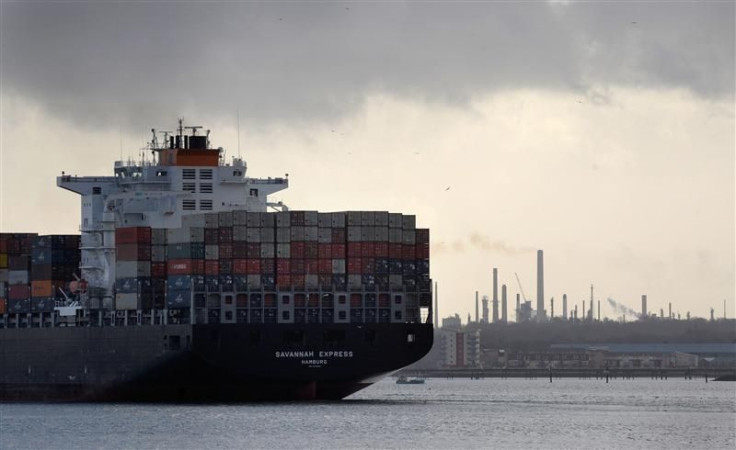
A leading indicator of the state of global trade -- whose biggest dips have come just before global recessions -- is dropping like a lead anchor.
Since the first business day of the year, the Baltic Dry Index, a proxy for worldwide business activity that gauges international shipping costs, has fallen 58.1 percent. At its current level of 680 index points, it is also only a few percentage points away from dropping below an all-time low of 663, a mark plumbed during the worst of the post-Lehman 2008 financial crisis.
The market has gone for a complete ball of sh-t, said Matthew Addington, a Johannesburg, South Africa-based dry cargo shipbroker for global shipping concern Clarksons PLC.
The steep, sudden drop in the wonky index, which surveys companies involved in ship chartering along 26 globally significant sea routes and assesses the price of moving commodities through those lanes, is giving pessimistic market forecasters ammunition. Since the price of moving commodities goes up when the world economy is expanding, a move in the opposite direction, some market strategists are saying, should sound alarm bells.
This collapse looks similar to the falls we saw in the Baltic Dry ahead of the recessions of the late 1970s and early 1990s -- but this drop is actually steeper, Nick Bullman, managing partner at risk consultant Check Risks recently told Financial News, a Dow Jones & Co. Web site.
But what do the experts who actually work in shipping say?
Oversupply, Quirks
We don't really know how well the index reflects the macroeconomic picture, said Frode Mørkedal, an Oslo-based shipping analyst for shipping-focused investment bank RS Platou Markets, whose views on the subject reflect those of other analysts, shipbrokers, chartering managers and commodity traders.
The main reason why the index might no longer be a proper indicator of the near-term economic future: a glut in the number of ships introduced this month, which has produced an excess supply in shipping services and chopped shipping costs.
We've seen a big increase in supply, which has not helped, partly because of the fleet growth of new ships coming on, Mørkedal said, referring to a lagging buildup that persisted from the boom years but has been made much worse this month. A quirk in the way vessel prices are estimated has led shipowners to hold back on using just-delivered vessels during the last quarter of 2011, only to let a huge number set maiden voyages during the first few days of 2012.
If the ship is delivered in December, you want to postpone (using) it to January, Mørkedal said.
Yet another market quirk, this one related to how iron ore is priced, has also affected the index, said Tim Jones, chief executive of France-based cargo brokerage Barry Rogliano Salles.
The change in the pricing mechanism for that commodity has meant that a lot of people at the end of the year were trying to get in as much as they could. There was a rush of iron ore in the last three months of the year and the market was really strong and then dropped off dramatically, said Jones.
Other unusual developments have also piled on to make January a terrible month for the index. Bad weather in Brazil and Australia reduced harvests of agricultural commodities, depressing demand for ships. An unexpected ban on iron ore exports from one of India's mining regions, enacted earlier this month, had the same effect.
And then there's the Chinese New Year, which took place earlier than usual, what some experts see as the worst of all possible times.
China has been off the market, basically. This is a one-week holiday where they close down everything, said Mørkedal. They have been away, and they had been very active in the market during the autumn, especially for iron ore.
Different For Each Country
Because the Baltic Dry Index is global in scope, it also incorporates further noise from factors unique to specific countries. Such is the case of Brazil.
A São Paulo-based chartering manager for a major international ship-owning group, who asked that his name be withheld as he was not authorized to discuss official business, explained how the situation in Brazil had decoupled from that facing other international markets, at least for a while.
Hedge-related chartering kept things pretty good through the 15th of January, the manager noted, then it dropped. Still he was not worried about oversupply, which he said affects lines in the Pacific first, as much as he was about commodity inflation, or a slowdown in the Brazilian economy.
I think it's the combination of everything that drives the market, he said.
Going Forward
In the near future, experts expect the depressed scene in shipping to improve.
This week and next week when people (in China) are coming back to work again, you should assume that activity will pick up and rates will go up again, Mørkedal, the Oslo shipping analyst, said. If things stay weak next week and onwards, then there's something wrong.
The Brazilian shipping manager was optimistic as well, though he noted the agriculturally sensitive shipping lanes he deals with will probably take until March to really see shipping recover.
Until then, those that follow worldwide shipping barometers, used to seeing their fortunes rise and fall with the wider economy, will keep living through the quirks in their industry one question at a time.
If you find someone that can tell exactly what's going on, do let me know, Addington, the Johannesburg shipbroker, said.
© Copyright IBTimes 2024. All rights reserved.
-

Bitcoin And Crypto Price Review - Another Myth Gets Busted?
-

Mass Cancellations Loom Despite French Air Union Cancelling Strike
-

Mired In Crisis, Boeing Reports Another Loss
-

Recycled 'Zombie' Misinformation Targets US Voters
-

Hackers Leak Part Of Source Code Of El Salvador's Bitcoin Wallet
-
Azerbaijan Says 'Closer Than Ever' To Armenia Peace Deal Amid Border Talks
-

How UK's Biggest Water Supplier Sank Into Crisis
-
Taiwan Hit By Dozens Of Strong Aftershocks From Deadly Quake
-

Gaza Health System 'Completely Obliterated': UN Expert
-

In Ecuadoran Amazon, Butterflies Provide A Gauge Of Climate Change


