

Apple iPad 3 Release: Why Siri Would Be Better on iPad Than iPhone
OPINION

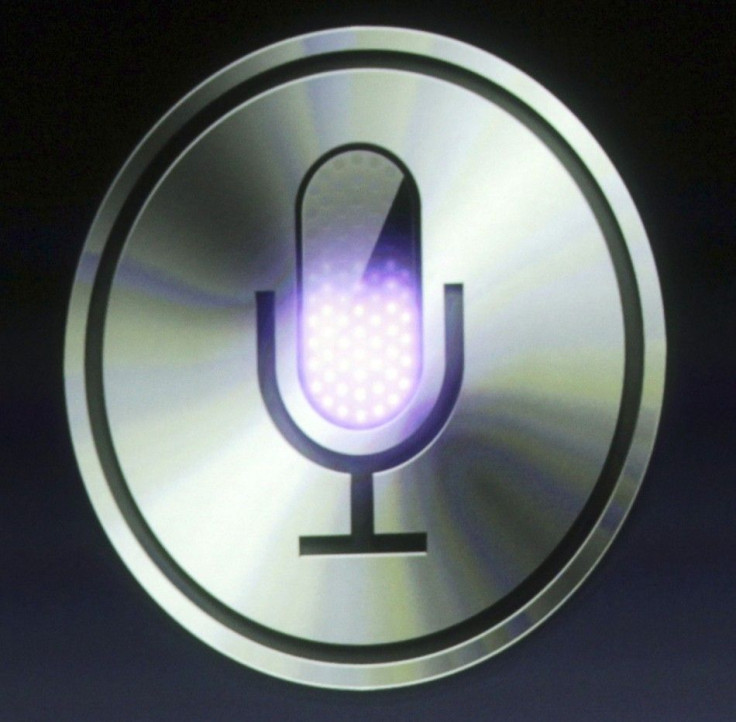
Apple is reportedly gearing up to release the iPad 3 in early March, and now the Washington Post believes the next-generation tablet will also feature Siri, the AI virtual assistant currently exclusive to the iPhone 4S that can write and send texts and e-mails, place calls, schedule meetings and reminders, play music, surf the Web, and answer complicated and context-sensitive questions.
Siri may have debuted on the iPhone, but it can make a name for itself on the iPad.
Siri has grown considerably since it was an iPhone application. The Siri app, which similarly understood conversations with its user to provide accurate answers, was originally a spinoff of a project co-developed by SRI Ventures and the Department of Defense's innovation arm called DARPA, or the Defense Advanced Research Projects Agency. The project was called CALO, which stood for Cognitive Assistant that Learns and Organizes, and it was the largest artificial intelligence project in U.S. history, with DARPA investing $150 million into CALO over five years.
The project later raised $24 million in two rounds of funding, led by Menlo Ventures and Morgenthaler Ventures, and was launched as an iPhone app on Feb. 4, 2010. Apple quietly bought the app two months later for an undisclosed sum.
Apple has started a whole new paradigm with real AI... for the benefit of people, said Norman Winarsky, VP of SRI Ventures and the original co-founder of Siri. I think it's a great achievement of Steve Jobs and all of Apple.
Winarsky says Apple has made Siri far more intelligent, and has bestowed the personal assistant with more power so she can access the device owner's personal information, contact list and calendar.
Siri needed to be bought by Apple for that to happen, Winarsky said. Because of that, you can ask questions and arrange meetings and find your music... things that you couldn't have done in Siri before.
Siri has been the most popular feature on the iPhone 4S by far, driving the smartphone to record sales since its Oct. 14 release date. A ChangeWave Research survey of 215 iPhone 4S owners found that 96 percent of respondents were very satisfied or satisfied with the iPhone 4S, and about half of those said Siri was the reason why.
It's faster, simpler, more effective and more time-saving than talking to a person, Winarsky said. I think people will like that more than they dislike talking to a computer.
When Apple released the iPhone 4S, Scott Forstall, Apple's VP of mobile operations, warned that Siri was still in beta. The software isn't perfect, only works with a Wi-Fi connection and still has yet to add support for more languages like Japanese, Chinese, Korean, Italian and Spanish, but the current software could definitely shine on the iPad, even more so than on the iPhone.
Why Siri on iPad Makes Sense
The one gripe about Siri is that it's, well, embarrassing to use. In its current state, there's no way to ask Siri questions without speaking to it, and having Siri respond out loud. It gets worse if Siri announces your incoming texts and calls in public, from, say, your mom.
More people own smartphones than tablets, but people approach iPads for business, education, and productivity purposes. Given that Siri is meant to boost one's production, helping the user schedule and remember meetings and become better organized, the technology, when paired for with iPad, has incredible potential.
An iPad with Siri could have a tremendous impact on education. Imagine a student holding an iPad. The iPad could read aloud a selection from a new iBooks textbook, or remind the student to study for an upcoming test. If a textbook doesn't answer the student's question, they could simply ask Siri, which could then search its own database or try a Web search.
iPads in schools are helping kids learn in amazing new ways, said Apple CEO Tim Cook at the iPhone 4S unveiling. iPads can change the way teachers teach and kids learn. Almost 1,000 K-12 schools have a 1-to-1 program so a kid can enjoy the iPad for the entire day. And it's not just happening in K-12; higher ed is also doing this. About 1,000 universities across the U.S., including schools like Stanford, Notre Dame, the University of Pennsylvania, and the University of Chicago, all have iPad programs.
More importantly, Siri could aid people and children with learning disabilities like never before.
Since the first iPad first debuted in April 2010, educators have praised the tablet for its ability to attract children and actually advance their overall cognitive development. The iPad has dozens of available apps that aid in fine-tuning social skills, motor skills, sensory skills, and communication and language skills. Therapists, autism experts, and parents have called iPad a near-miracle device.
By adding Siri into an iPad, the device could help its young user navigate the tablet and answer questions the child has.
Beyond the classroom, Siri for iPad can be a boon for professional settings, too. Imagine sitting in an office with an iPad instead of a traditional PC. The iPad already helps users write and share documents, track of financial data and create ready-to-go slide presentations, but Siri can also remind employees of meetings, help them perform research, or even set timers if they're working on a deadline. Because of the tablet's flexibility, the iPad can be perfect for all business settings, from small start-ups to large enterprises and beyond.
In the cockpit, pilots are using [iPads], Cook said. They're replacing 40-pound flight bags full of paper manuals and log books and navigation charts and checklists, making the pilot more efficient and making the plane more fuel efficient. [iPads] are also showing up in hospitals, where medical professionals are using them to access patient records, review medical images, to administer bedside care.
Yet, there's still so much more Siri could do. Hopefully in the near future, Siri will be able to plug into APIs from useful services like OpenTable, MovieTickets.com, and Stubhub -- which the original app could do, interestingly enough. But yet, the potential of an iPad with Siri is virtually endless.
If Siri could ever partner with Wikipedia, or if it could integrate with WebMD's symptom checker, users would be more inclined and less embarrassed to use the platform. But even better, if Siri could remember our preferences -- which is not unheard of in the technology realm -- Siri could fulfill one's shopping needs, news needs, music needs, and even more. Putting Siri on the iPhone 4S got the technology out to more people. But Siri on the iPad could be a powerful tool that would distance Apple even further from the competition -- in a good way.
What's New in iPad 3
We'll have to wait until early March to see if Siri in fact makes it onto the iPad 3, but all reports indicate that the tablet will indeed be unveiled on March 7. The date, which is two days before the SXSW Festival in Austin -- an event that took attention away from the iPad 2 announcement in 2011, aligns well with previous reports, including AllThingsD's Feb. 9 report that claimed Apple would launch its next iPad in the first week of March. John Paczkowski added that the company had chosen San Francisco for the unveiling, presumably at the Yerba Buena Center for the Arts, Apple's preferred location for big events like these. If Apple holds true to tradition, it will make the tablet available for purchase roughly a week or so after the unveiling.
The iPad 3 is said to feature an improved camera, a bigger battery, and a dual-LED backlit system to power an 2048 x 1536 true HD display that looks, according to a source who spoke to The New York Times, truly amazing. Apple's dual-LED solution makes the iPad's screen noticeably brighter, but it also apparently solved several puzzling issues with heat dissipation and battery consumption.
The Wall Street Journal claims that AT&T and Verizon Wireless are getting ready to sell an LTE-capable iPad 3, which means that earlier reports, which said Apple has built two different versions of the device, including a Wi-Fi-only option and a tablet that uses Wi-Fi, embedded GSM and CDMA, and global LTE connections. The unnamed source procured the data using a development and debugging tool on the tablet called iBoot, which revealed model numbers J1 and J2, which had confirmed earlier reports that Apple's next-gen tablets would be codenamed J1 and J2, and that J2 would be a more ambitious upgrade from the iPad 2 than the J1 model.
Apple has also reportedly upgraded its front and rear cameras for better Facetime and pictures. This is no surprise -- the camera system on the iPad 2 is now considered low-end, given that it only records up to 720p HD and requires tapping to focus. Assuming Apple outfitted the iPad 3 to shoot stills and video like the iPhone 4S, expect autofocus, video stabilization and full 1080p HD video recording.
Another reason to believe the iPad 3 can shoot 1080p video: Starting late last year, Apple reportedly asked several movie studios to submit content to the iTunes Store in 1080p.
Thus far, 1080p HD content has largely eluded users of Apple products, with HD versions of videos on the company's digital download service maxing out 720p (1280 x 720) and chief executive Steve Jobs balking at adoption of Blu-ray on Macs due to licensing complications and other challenges that he said threatened to translate into a 'bag of hurt.' But that could begin to change later this year, as a handful of feature films being submitted to the iTunes Store for a release in the September and October timeframe are being sent with documentation for an optional 1920 x 1080 resolution, according to people familiar with the matter.
Apple is expected to launch a new version of its operating system, iOS 5.1, along with the iPad 3. If this is true, iOS 5.1 could offer support for 1080p HD videos. If this is the case, the update would also apply to the Apple TV device, which currently maxes out at 720p HD. In this way, users could start watching full HD videos on their Apple TVs, Mac computers and new iPads starting in early March. And who knows? Maybe by then, users will be able to control the whole ecosystem with Siri.
Apple announced its best quarter in the company's 35-year history on Jan. 24, with net income of $13.1 billion on revenue of $46.3 billion. In the final 14 weeks of 2011, Apple sold 15.4 million iPads. In all of 2011, the company sold about 47.5 million iPads.
© Copyright IBTimes 2024. All rights reserved.
-

Taiwan Hit By Dozens Of Strong Aftershocks From Deadly Quake
-

Gaza Health System 'Completely Obliterated': UN Expert
-

In Ecuadoran Amazon, Butterflies Provide A Gauge Of Climate Change
-

50 Years On, Vintage Vehicles To Reenact Portugal's Carnation Revolution
-

Conflicts Push Military Spending To 'All-time High': Report
-

'Thank You, America:' Zelensky And Netanyahu Applaud House Passage Of Foreign Aid Package
-
Women Journalists Bear The Brunt Of Cyberbullying
-

US Aid Shows Ukraine Will Not Be 'Second Afghanistan': Zelensky
-

Elon Musk's X Fights Australian Watchdog Over Church Stabbing Posts
-

Ukraine, Israel, TikTok: The Massive Aid Package Before US Congress


