By | August 07 2012 1:22 AM

1 of 10
Curiosity Spotted on Parachute by Orbiter
Photo: NASA/JPL-Caltech/Univ. of Ariz

Curiosity Spotted on Parachute by Orbiter

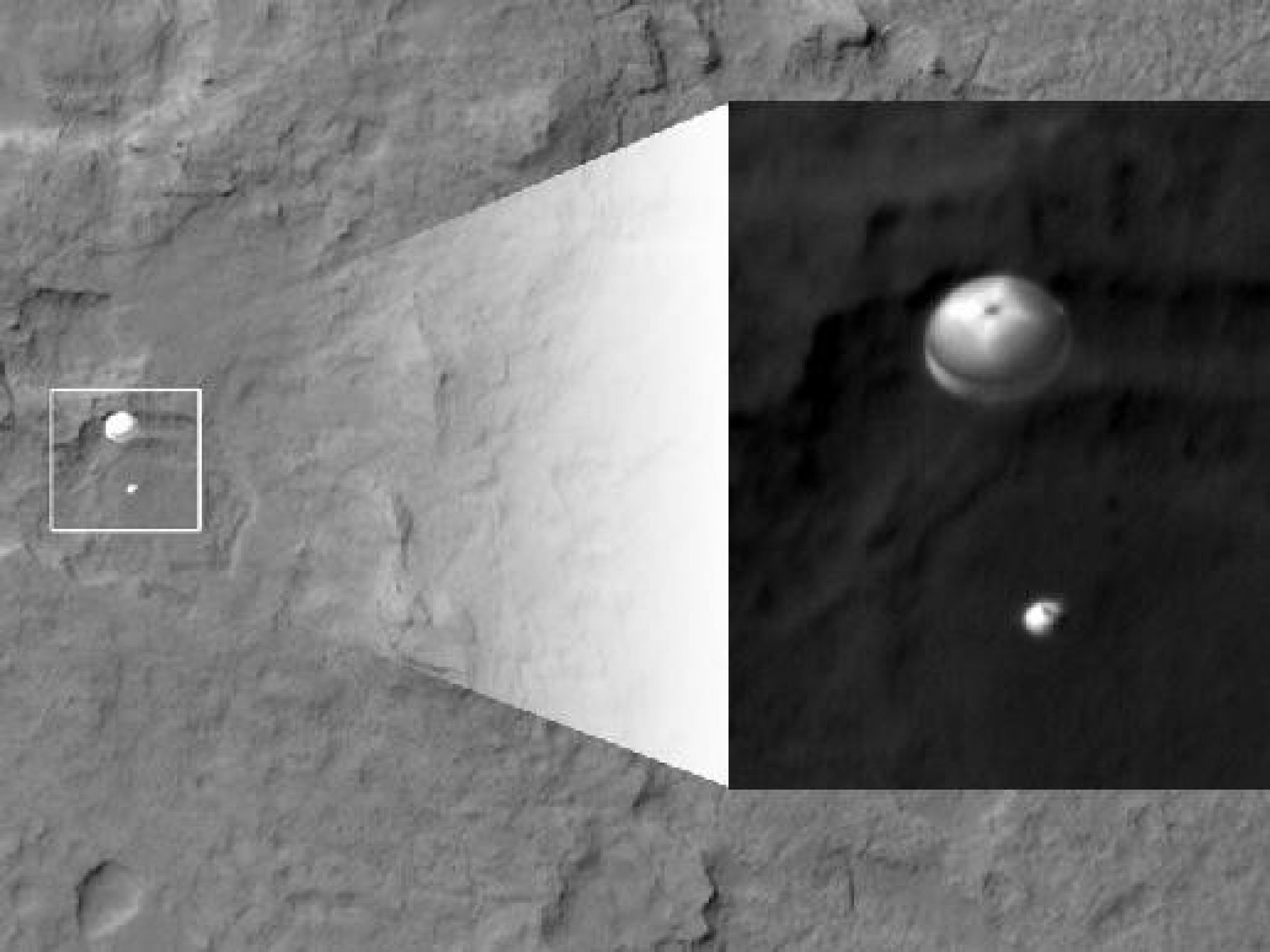
NASA's Curiosity rover and its parachute were spotted by NASA's Mars Reconnaissance Orbiter as Curiosity descended to the surface on Aug. 5 PDT (Aug. 6 EDT). The High-Resolution Imaging Science Experiment (HiRISE) camera captured this image of Curiosity while the orbiter was listening to transmissions from the rover. Curiosity and its parachute are in the center of the white box; the inset image is a cutout of the rover stretched to avoid saturation. The rover is descending toward the etched plains just north of the sand dunes that fringe "Mt. Sharp." From the perspective of the orbiter, the parachute and Curiosity are flying at an angle relative to the surface, so the landing site does not appear directly below the rover. The parachute appears fully inflated and performing perfectly. Details in the parachute, such as the band gap at the edges and the central hole, are clearly seen. The cords connecting the parachute to the back shell cannot be seen, although they were seen in the image of NASA's Phoenix lander descending, perhaps due to the difference in lighting angles. The bright spot on the back shell containing Curiosity might be a specular reflection off of a shiny area. Curiosity was released from the back shell sometime after this image was acquired.
Early Color Image from Curiosity's Descent
Photo: NASA/JPL-Caltech/MSSS

Early Color Image from Curiosity's Descent

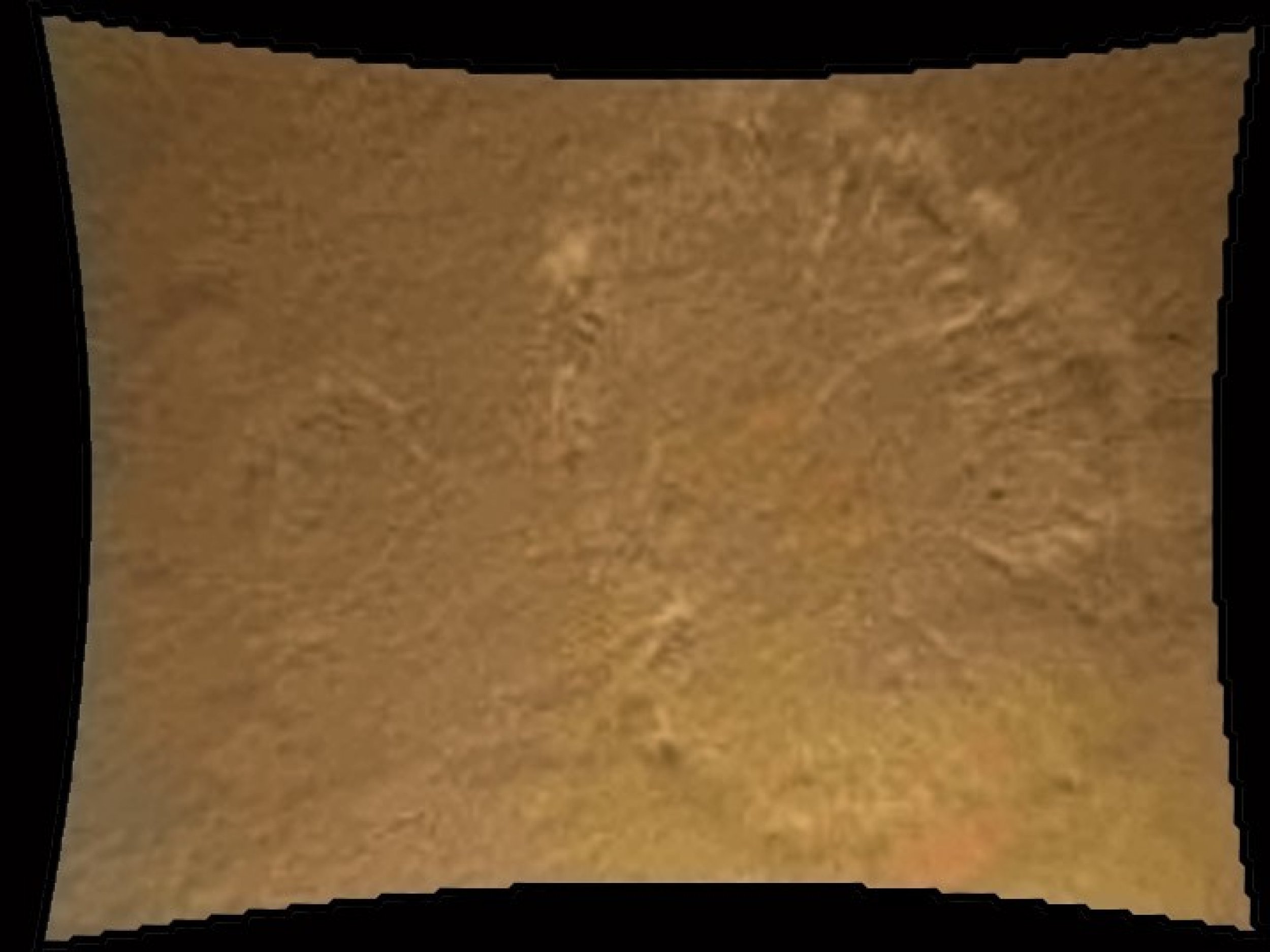
This color thumbnail image was obtained by NASA's Curiosity rover during its descent to the surface on Aug. 5 PDT (Aug. 6 PDT). The image from Curiosity's Mars Descent Imager illustrates the roughly circular swirls of dust kicked up from the Martian surface by the rocket motor exhaust. At this point, Curiosity is about 70 feet (20 meters) above the surface. This dust cloud was generated when the Curiosity rover was being lowered to the surface while the Sky Crane hovered above. This is the first image of the direct effects of rocket motor plumes on Mars and illustrates the mobility of powder-like dust on the Martian surface. It is among the first color images Curiosity sent back from Mars.
Curiosity Color Close-Up upon Landing
Photo: NASA/JPL-Caltech/MSSS

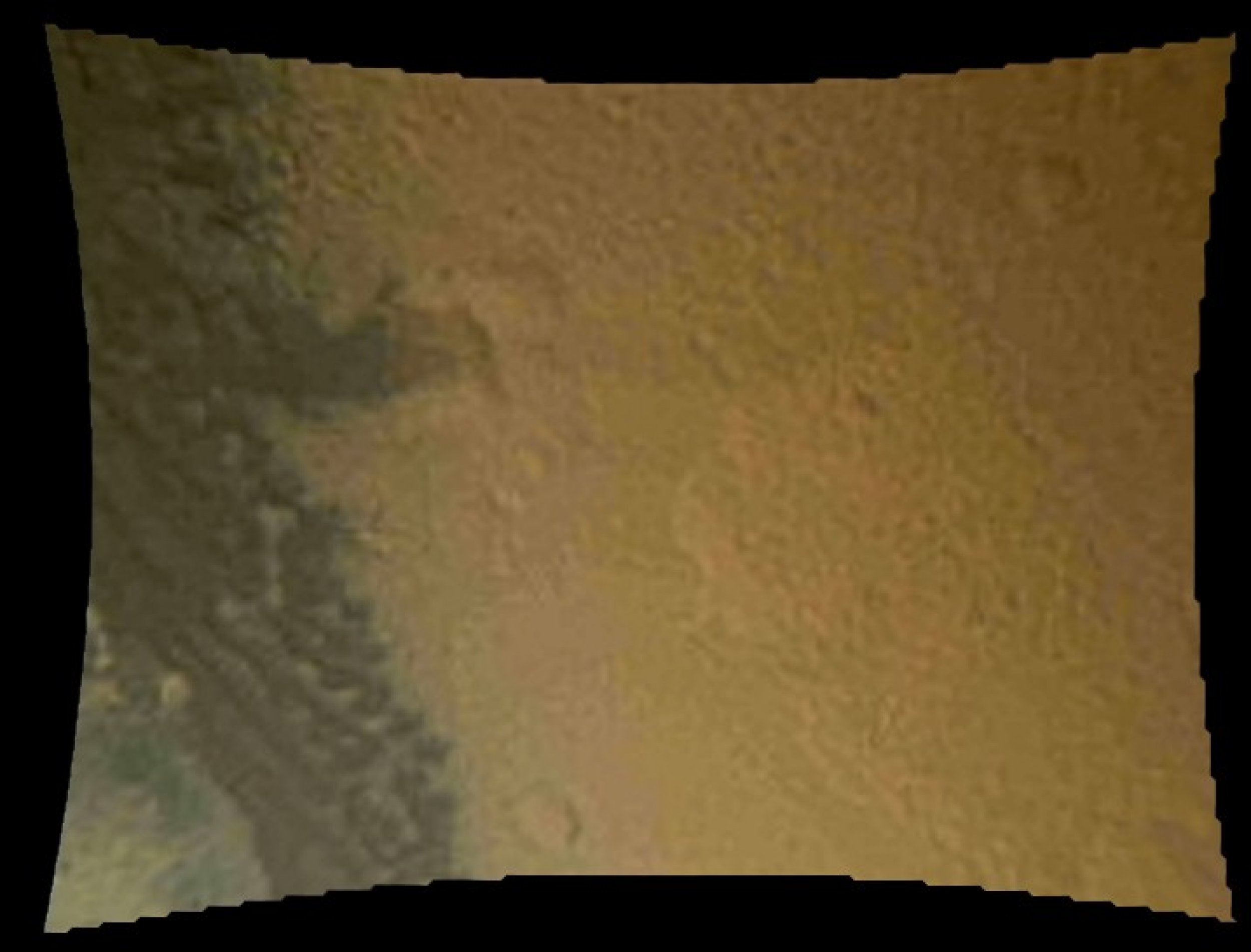
Curiosity Color Close-Up upon Landing

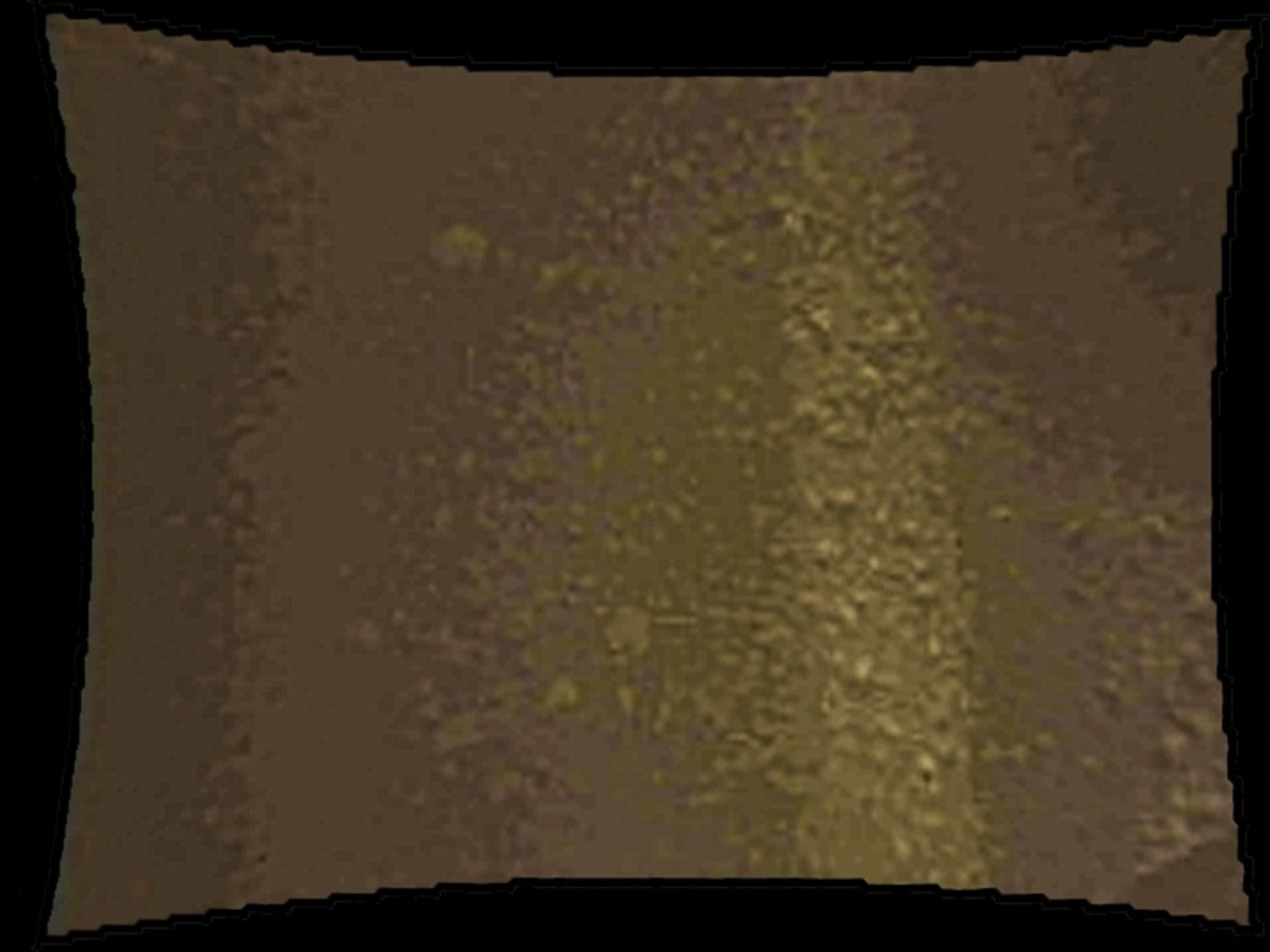
This color thumbnail image was obtained by NASA's Curiosity rover during its descent to the surface on Aug. 5 PDT (Aug. 6 EDT). This image was obtained by Curiosity's Mars Descent Imager and is representative of the images acquired once the Curiosity rover was resting on the surface of Mars after touchdown. It illustrates a narrow sunlit strip of the pebble-covered surface while the rest of the view is in the shadow of the rover. It was taken seconds after touchdown. The camera is about 70 centimeters above the ground when the rover's wheels are on a flat surface. Hundreds of MARDI frames were captured during descent.
Curiosity Sails to Mars as Heat Shield Falls Away
Photo: NASA/JPL-Caltech/Univ. of Ariz

Curiosity Sails to Mars as Heat Shield Falls Away

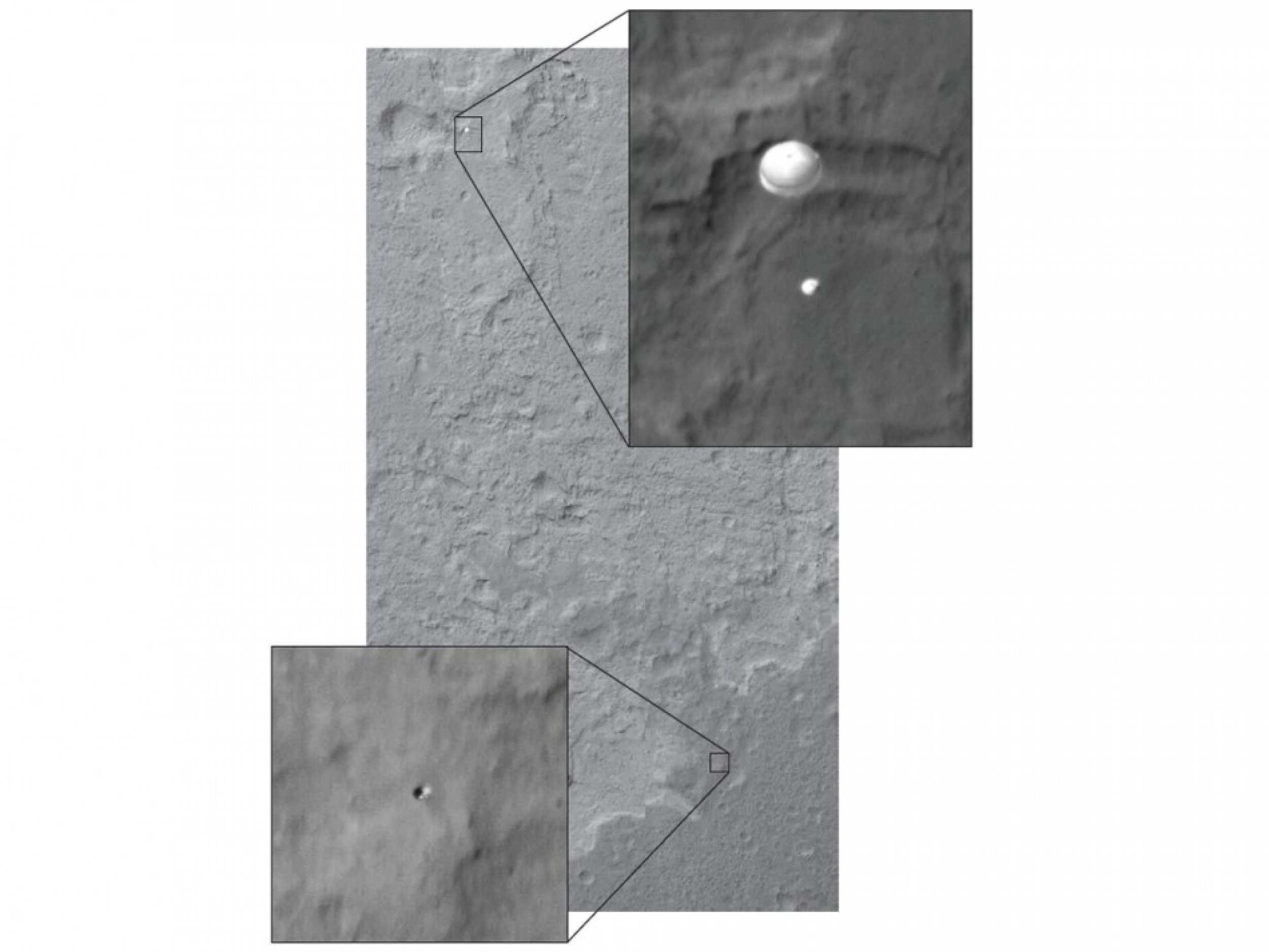
Late last night, in the morning hours of Aug. 6, as NASA's Curiosity rover fell to the surface of Mars, NASA's Mars Reconnaissance Orbiter (MRO) captured an image of the rover gliding on its parachute. The image was taken with the orbiter's High-Resolution Imaging Science Experiment (HiRISE) camera. On Tuesday, the MRO team located another object in this image -- not present in prior images of the same region -- which is the right size to be the rover's heat shield. The heat shield was ejected from the rover and its back shell before this image was taken. The team thinks the heat shield is still in free flight, because, if it were to have already hit the surface, it would have kicked up a dust cloud. The HiRISE image of NASA's Phoenix lander on its parachute also captured the heat shield in free fall.
Curiosity's Early Views of Mars
Photo: NASA/JPL-Caltech

Curiosity's Early Views of Mars

This image shows one of the first views from NASA's Curiosity rover, which landed on Mars the evening of Aug. 5 PDT (early morning hours Aug. 6 EDT). It was taken through a "fisheye" wide-angle lens on one of the rover's Hazard-Avoidance cameras. These engineering cameras are located at the rover's base. As planned, the early images are lower resolution. Larger color images are expected later in the week when the rover's mast, carrying high-resolution cameras, is deployed.
Martian Surface Below Curiosity
Photo: NASA/JPL-Caltech/MSSS

Martian Surface Below Curiosity

This color thumbnail image was obtained by NASA's Curiosity rover during its descent to the surface of Mars on Aug. 5 PDT (Aug. 6 EDT). This image from Curiosity's Mars Descent Imager reveals surface features including relatively dark dunes, degraded impact craters and other geologic features including small escarpments that range in size from a few feet (meters) to many tens of feet (meters) in height. The image was obtained one minute 16 seconds before touchdown. This is but one of hundreds of frames that were acquired during the descent to the surface.
Curiosity's Heat Shield in View
Photo: NASA/JPL-Caltech/MSSS

Curiosity's Heat Shield in View

This color thumbnail image was obtained by NASA's Curiosity rover during its descent to the surface of Mars on Aug. 5 PDT (Aug. 6 EDT). The image was obtained by the Mars Descent Imager instrument known as MARDI and shows the 15-foot (4.5-meter) diameter heat shield when it was about 50 feet (16 meters) from the spacecraft. It was obtained two and one-half minutes before touching down on the surface of Mars and about three seconds after heat shield separation. It is among the first color images Curiosity sent back from Mars. The resolution of all of the MARDI frames is reduced by a factor of eight in order for them to be promptly received on Earth during this early phase of the mission. Full resolution (1,600 by 1,200 pixel) images will be returned to Earth over the next several months as Curiosity begins its scientific exploration of Mars.
Behold Mount Sharp!
Photo: NASA/JPL-Caltech

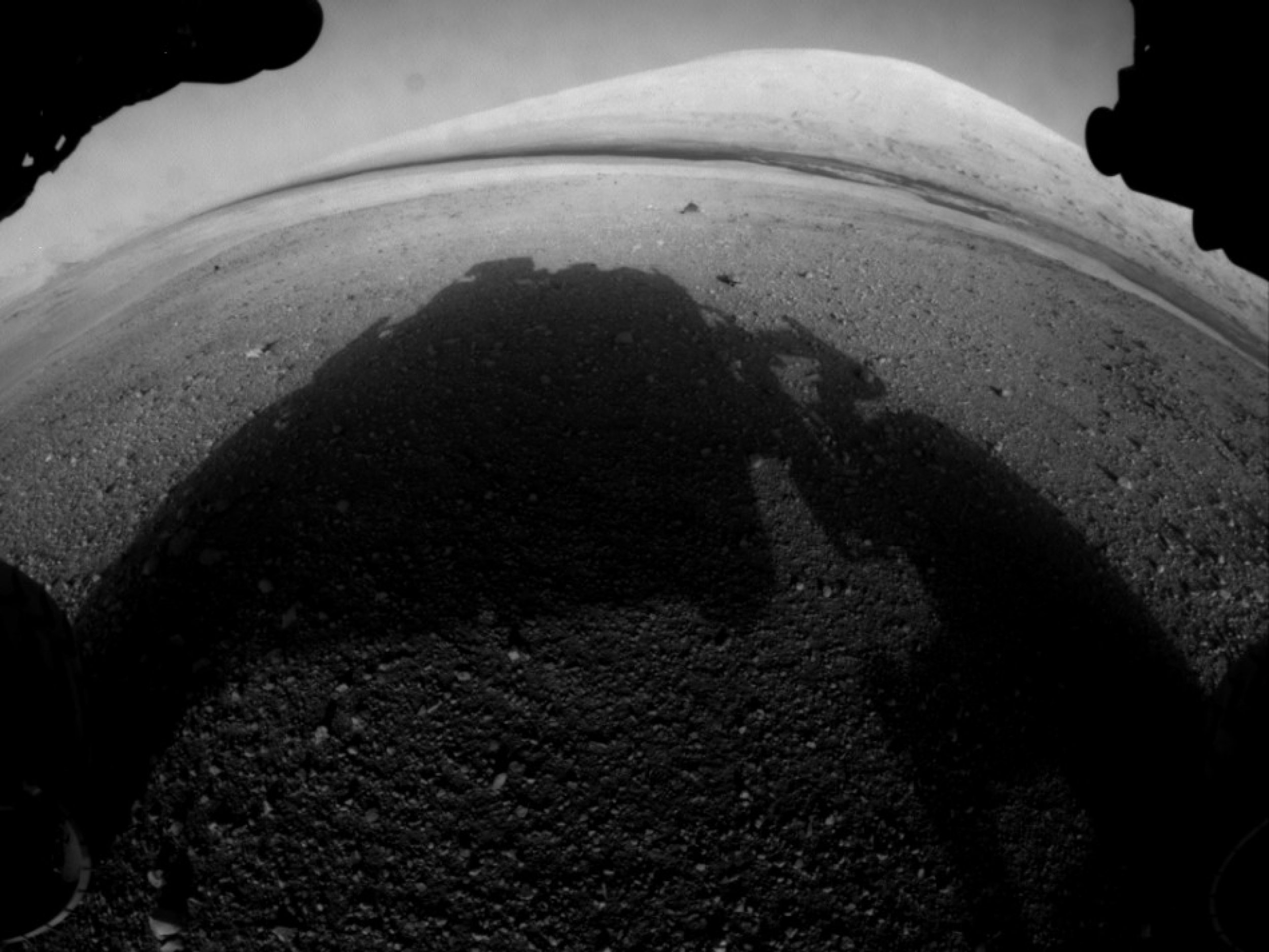
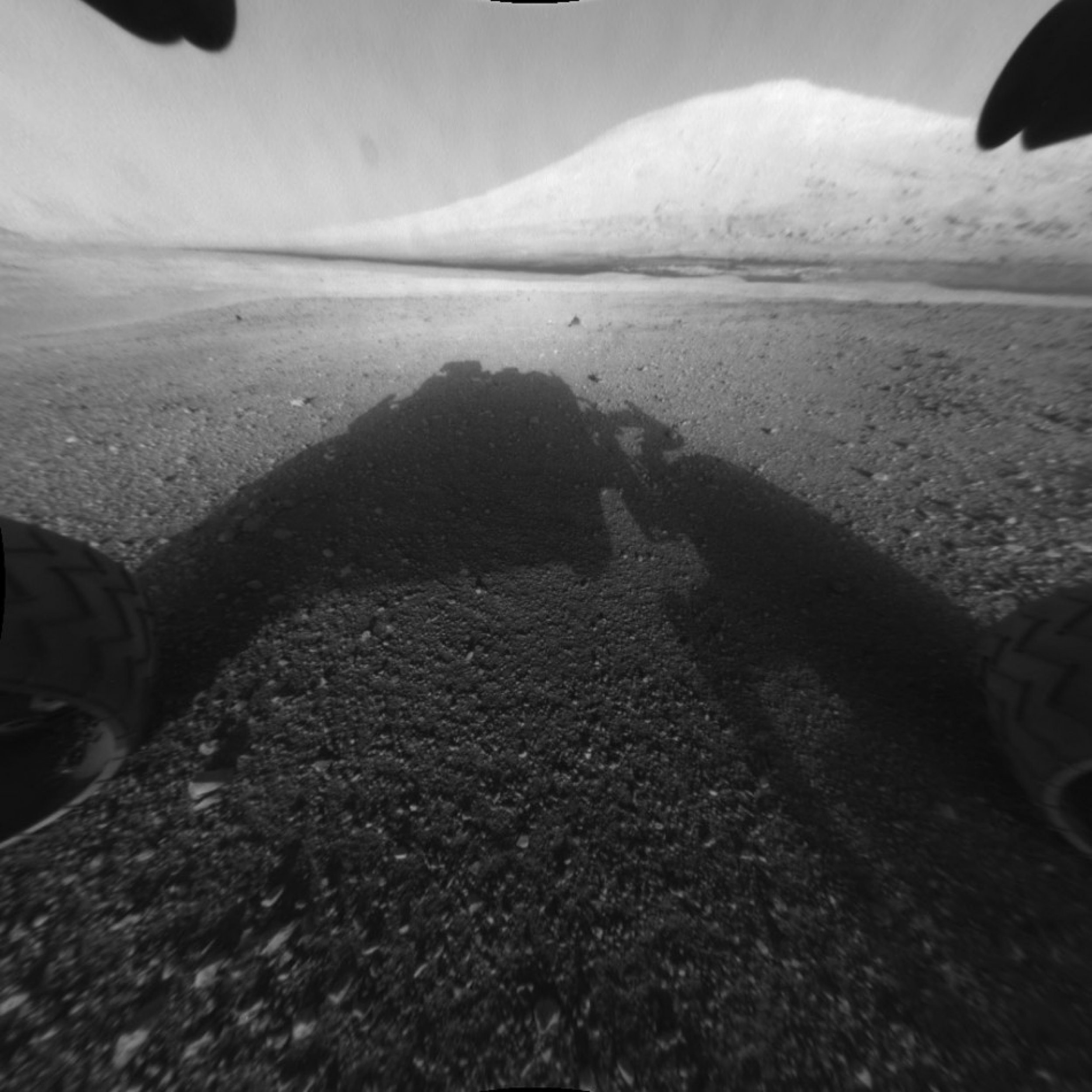
Behold Mount Sharp!

This image taken by NASA's Curiosity shows what lies ahead for the rover -- its main science target, Mount Sharp. The rover's shadow can be seen in the foreground, and the dark bands beyond are dunes. Rising up in the distance is the highest peak Mount Sharp at a height of about 3.4 miles, taller than Mt. Whitney in California. The Curiosity team hopes to drive the rover to the mountain to investigate its lower layers, which scientists think hold clues to past environmental change. This image was captured by the rover's front left Hazard-Avoidance camera at full resolution shortly after it landed. It has been linearized to remove the distorted appearance that results from its fisheye lens.
Looking Back at the Crater Rim
Photo: NASA/JPL-Caltech

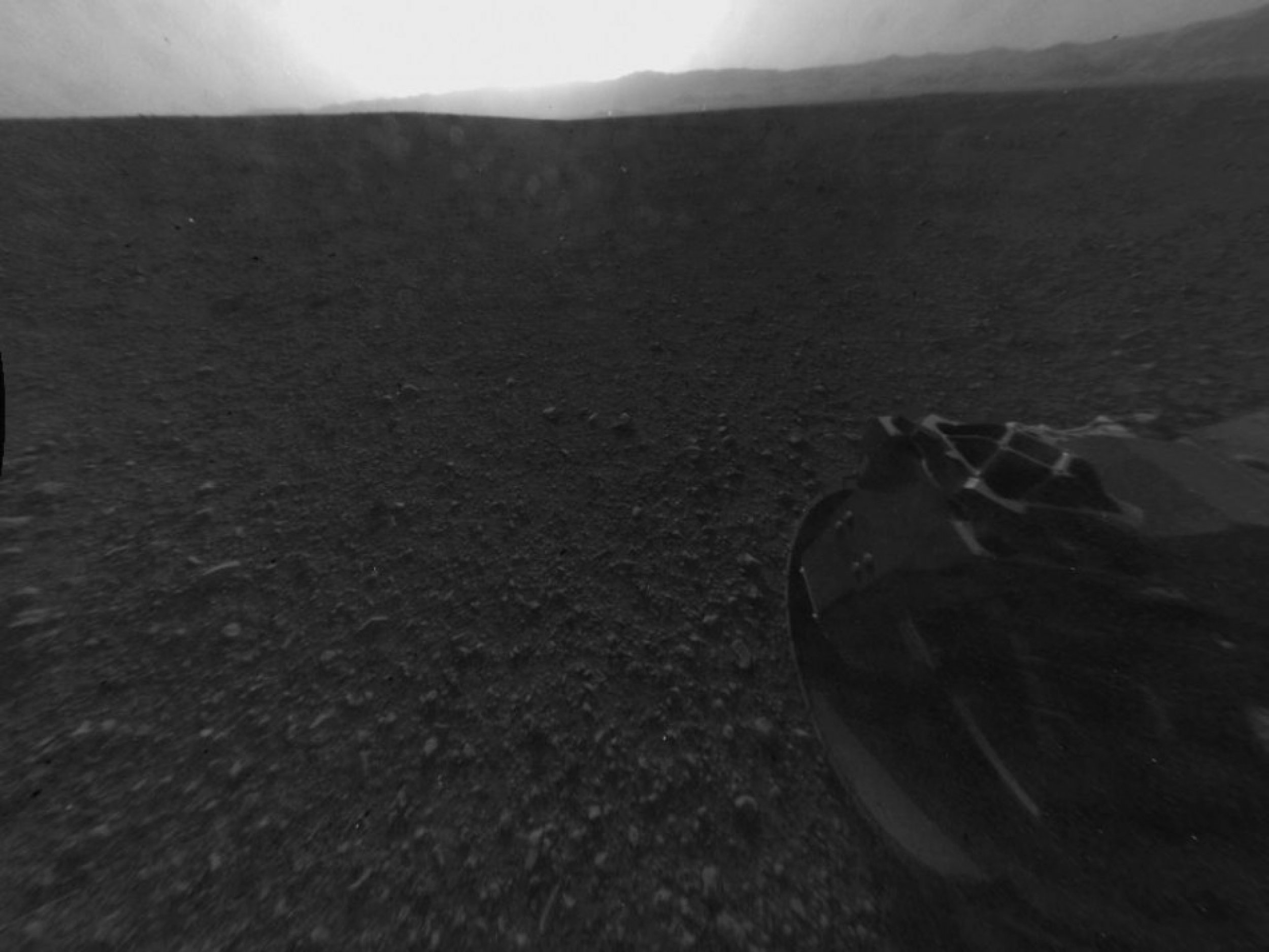
Looking Back at the Crater Rim

This is the full-resolution version of one of the first images taken by a rear Hazard-Avoidance camera on NASA's Curiosity rover, which landed on Mars the evening of Aug. 5 PDT (morning of Aug. 6 EDT). The image was originally taken through the "fisheye" wide-angle lens, but has been "linearized" so that the horizon looks flat rather than curved. The image has also been cropped. A Hazard-avoidance camera on the rear-left side of Curiosity obtained this image. Part of the rim of Gale Crater, which is a feature the size of Connecticut and Rhode Island combined, stretches from the top middle to the top right of the image. One of the rover's wheels can be seen at bottom right.
Curiosity's First Color Image of the Martian Landscape
Photo: NASA/JPL-Caltech/Malin Space S

Curiosity's First Color Image of the Martian Landscape

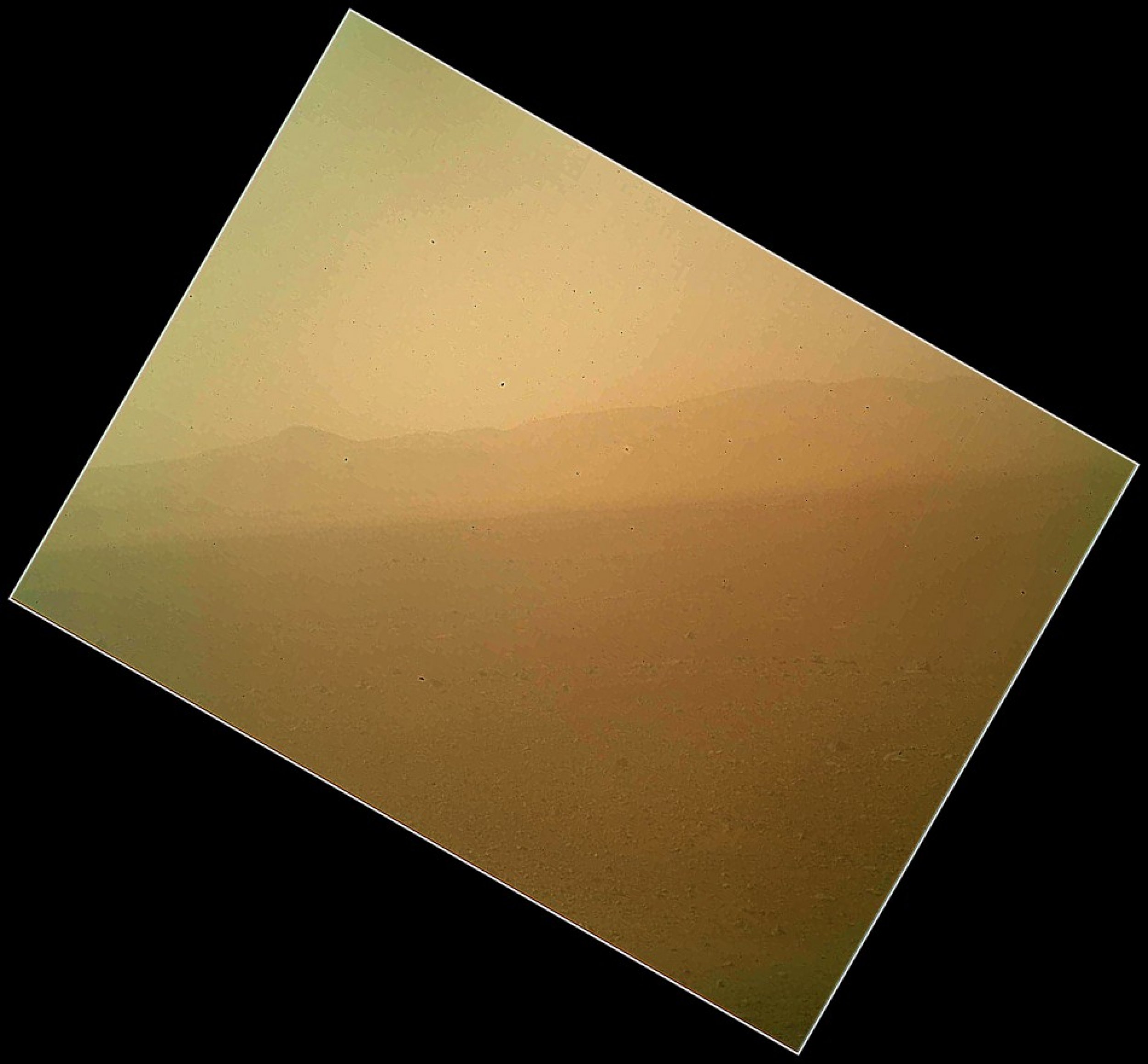
This view of the landscape to the north of NASA's Mars rover Curiosity was acquired by the Mars Hand Lens Imager (MAHLI) on the afternoon of the first day after landing. (The team calls this day Sol 1, which is the first Martian day of operations; Sol 1 began on Aug. 6, 2012.) In the distance, the image shows the north wall and rim of Gale Crater. The image is murky because the MAHLI's removable dust cover is apparently coated with dust blown onto the camera during the rover's terminal descent. Images taken without the dust cover in place are expected during checkout of the robotic arm in coming weeks. The MAHLI is located on the turret at the end of Curiosity's robotic arm. At the time the MAHLI Sol 1 image was acquired, the robotic arm was in its stowed position. It has been stowed since the rover was packaged for its Nov. 26, 2011, launch. The MAHLI has a transparent dust cover. This image was acquired with the dust cover closed. The cover will not be opened until more than a week after the landing. When the robotic arm, turret, and MAHLI are stowed, the MAHLI is in a position that is rotated 30 degrees relative to the rover deck. The MAHLI image shown here has been rotated to correct for that tilt, so that the sky is "up" and the ground is "down". When the robotic arm, turret, and MAHLI are stowed, the MAHLI is looking out from the front left side of the rover. This is much like the view from the driver's side of cars sold in the USA. The main purpose of Curiosity's MAHLI camera is to acquire close-up, high-resolution views of rocks and soil at the rover's Gale Crater field site. The camera is capable of focusing on any target at distances of about 0.8 inch (2.1 centimeters) to infinity. This means it can, as shown here, also obtain pictures of the Martian landscape.

Finally, NASA's Curiosity Rover, the most advanced Mars rover ever, kissed the surface of the Red Planet Sunday. With Curiosity now safely on the surface of Mars after its spectacular entry into the Martian atmosphere, NASA unveiled a low-resolution, color video from Curiosity on Monday that showed what someone, had they been aboard the spacecraft, would have seen during the last couple of minutes of the historic landing.

Scientists and engineers at NASA's Jet Propulsion Laboratory were left spellbound when the scientist in charge of the camera, Michael Malin, showed off thumbnails of the video flashing on the big screen on Monday afternoon. The recording began with the protective heat shield falling away and ended with dust being kicked up as the rover was lowered by cables inside an ancient crater, the Associated Press reported.

Curiosity landed at 10:32 p.m. (1:32 a.m. EDT, Aug. 6) near the foot of a mountain that was three miles tall and 96 miles in diameter inside the Gale Crater. Since then, the rover has sent back a number of pictures, including black-and-white views of the rocky ground in front of the rover.

Still more pictures are anticipated in the next several days, including a panorama of Curiosity's surroundings and a higher-resolution version of the video from Curiosity's Mars Descent Imager, also called MARDI.

The MARDI camera is mounted on the rover's chassis, looking down toward Mars' surface. The video was assembled from 297 still images taken during the last two and a half minutes of Curiosity's flight, according to NBC News.

The full video "will just be exquisite," said Michael Malin, the chief scientist of the instrument.

At first, NASA had to use small cameras designed to capture hazards in front of Curiosity's wheels. Although the early pictures were fuzzy, they were just enough to have scientists thrilled.

The photos show "a new Mars we have never seen before," said mission manager Mike Watkins. "So every one of those pictures is the most beautiful picture I have ever seen."

An image from the High Resolution Imaging Science Experiment (HiRISE) camera aboard the NASA's Mars Reconnaissance Orbiter (MRO) captured the Curiosity rover still connected to its 51-foot (almost 16 meter)-wide parachute as it descended toward its landing site at the Gale Crater. Click here for more information.

The image was taken while MRO was 211 miles (340 kilometers) away from the parachuting rover. Curiosity and its rocket-propelled backpack, contained within the conical-shaped back shell, had not deployed yet. At the time, Curiosity was about two miles (three kilometers) above the Martian surface.

"It's just mind-boggling to me," said Miguel San Martin, chief engineer for the landing team.

The mission is managed by JPL for NASA's Science Mission Directorate in Washington. The rover was designed, developed and assembled at JPL. 

Have a look at the video from Curiosity, looking down on the red planet during its historic landing:

Click the slideshow to see new Mars photos released by NASA.

Must Read:

NASA Lands Car-Sized Rover Beside Martian Mountain: Photos Celebrating Curiosity 

NASA's Curiosity Rover Lands Successfully On Mars: First Image From The 'Red Planet'