By | September 14 2012 2:09 PM

1 of 11
Michael Kors Spring 2013
Photo: Reuters

Michael Kors Spring 2013

Michael Kors Spring 2013
Photo: Reuters

Michael Kors Spring 2013

Michael Kors Spring 2013
Photo: Reuters

Michael Kors Spring 2013

Michael Kors Spring 2013
Photo: Reuters

Michael Kors Spring 2013

Michael Kors Spring 2013
Photo: Reuters

Michael Kors Spring 2013

Michael Kors Spring 2013
Photo: Reuters

Michael Kors Spring 2013

Michael Kors Spring 2013
Photo: Reuters

Michael Kors Spring 2013

Michael Kors
Photo: Reuters

Michael Kors

Clunker trade-ins boost July U.S. auto sales
Photo: Reuters

Clunker trade-ins boost July U.S. auto sales

DETROIT - The punishing four-year decline in U.S. auto sales may have reached a turning point this week -- just as Michael Papa handed over the keys to his 1996 Ford Explorer for a government-sponsored trade-in.

Papa, a Detroit-area restaurant owner, and thousands of other Americans took advantage over the past week of the U.S. government's Cash for Clunkers incentive of up to $4,500 to trade in older gas-guzzlers for newer, more fuel-efficient cars.

The sudden rush of demand at car dealerships long empty of customers quickly exhausted the $1 billion allocated for the program and drove U.S. auto sales to their highest level of 2009, analysts and industry executives said.

I wasn't really looking for a new car, but that was a big incentive. That was the driving force to finally get rid of (the old car), said Papa.

His Explorer had 150,000 miles on it and averaged 15 miles per gallon. The Ford Escape he got in return posts average fuel economy of 24 miles per gallon.

Without the incentive, we would have waited another year until the car finally died for good, Papa said, while waiting to pick up the Escape at the Dean Sellers Ford dealership in Troy, Michigan.

Analysts see the success of the program turbocharging July auto sales, one of the earliest snapshots of pent-up consumer demand. The House of Representatives approved on Friday a $2 billion extension of the program and the Senate is expected to act on the bill.

July industry sales appear to have received a nice boost over the past few days from the government's scrappage incentive, Barclays Capital analyst Brian Johnson said in a research note on Friday.

A Reuters poll of 12 analysts shows that U.S. July auto sales taken before the launch of the clunkers program showed a median forecast of 10 million vehicles on an annualized basis.

That would be up from 9.7 million in June and the strongest total since December's 10.3 million annualized sales rate.

Barclays' Johnson said that, if the initial $1 billion was exhausted in the past week, July's annualized sales rate could reach the 12 to 13 million vehicle range.

AutoNation Chief Executive Mike Jackson said it was too early to quantify the impact of the government incentive, but said it was certain to drive sales above 10 million and to the highest levels of the year.

This is the kind of buyer that comes to market once in a decade. They buy these things and keep them forever, Jackson told Reuters. It really is incremental business and that's why it's a brilliantly conceived stimulus program.

The July results are expected to support the view the auto industry has bottomed out after a downturn that forced General Motors Co and Chrysler into bankruptcy and saddled other automakers with deep losses.

The return of new car shoppers comes at a time when dealer inventories have been driven to unsustainably low levels, opening the door to further production increases.

U.S. auto sales have dropped to their lowest since the early 1980s with about 4.8 million sales in the first half of 2009. Sales totaled 13.2 million vehicles last year.
FORD SHINES

Ford Motor Co, the only U.S. automaker operating without emergency U.S. government loans, is seen posting sales declines of 5 percent to 10 percent, according to analysts.

That would be the smallest decline of the top six U.S. automakers and could support the view U.S. consumers are reacting favorably to Ford's decision to avoid a government bailout.

In the last week, once the (Cash-for-Clunkers) program became official, the sales pace was elevated noticeably, Ford sales analyst George Pipas told Reuters.

The average value of the vouchers has been closer to $4,500 than to $3,500, suggesting the total units involved in the program would be less than the 250,000 estimate that has been widely circulated, Pipas said.

Industry tracking firm Edmunds.com expects GM to report a 20 percent drop in July sales, with Chrysler Group sales down nearly 40 percent, Toyota Motor Corp down 15 percent and Honda Motor Co Ltd down 14 percent.

GM emerged from bankruptcy on July 10 by selling most of its assets to a new company funded by the U.S. Treasury. Chrysler exited bankruptcy in June by completing a similar sale to a group led by Italy's Fiat SpA.

Chrysler last week started offering sales incentives of up to $4,500 per vehicle, or zero-percent financing for six years, in a bid to increase demand post-bankruptcy.

Value is the primary motivator for most sales today, said Jesse Toprak, an analyst at Edmunds.com. Glimmers of hope about the economy and the buzz generated by the Cash-for- Clunkers program are also working in the auto industry's favor.

(Reporting by Soyoung Kim, additional reporting by Kevin Krolicki and David Bailey; editing by Gunna Dickson and Andre Grenon)

Anna Hazare's Campaign Awakens India's Middle Class
Photo: IB TIMES

Anna Hazare's Campaign Awakens India's Middle Class

Mahesh Kundu paid 2,500 rupees for a driving licence, Rupam Bhatia 5,000 rupees to be admitted to hospital and Vishrant Chandra 6,000 rupees for a marriage certificate. These are the commonplace bribery stories experienced by middle-class Indians who have poured into the streets to say enough is enough.

Corruption in India is as old as the Ramayana, when the evil demon Ravana bribed a guardian of hell to avoid punishment in the ancient Indian epic. What is unprecedented is the spontaneous middle-class anti-graft movement coalescing around hunger-fasting activist Anna Hazare, a soldier-turned-social activist who has sparked an Indian spring of rebellion against politics as usual.

Tens of thousands of people have joined peaceful protests across the country, forcing a weak and fumbling government and an equally hapless opposition to try to placate growing frustration and anger at the political class.

Anna Hazare has raised our inner conscience, said Vishrant Chandra, a 35-year-old sales manager at Sun Life insurance in New Delhi, who had his own story to tell.

A marriage certificate cost 6,000 rupees, said Chandra, smartly dressed and wearing a sticker saying, Anna. We are with you, as he described his brush with corruption.

Agents outside the marriage certificate office roam around. Those are the ones you pay, said Chandra as he wiped sweat from his forehead in the sweltering sun at the Ramlila ground, where Hazare lay on a public stage in the sweltering monsoon heat in the second week of his fast.

India has a long history of civil action movements, topped by Mahatma Gandhi's non-violent campaign that led to the end of British colonial rule. But this is a rare instance of India's middle class putting aside their material concerns to take to the streets for a political cause.

The near-double-digit economic growth India has enjoyed since the economy was opened up in the early 1990s has elevated millions of people to the middle class. They have long been apolitical, with many of them shunning the ballot box and forking over bribes to get by, sustaining a system where corruption became an unchallenged way of life.

What is happening is a collective guilt, Shekhar Kapur, a critically acclaimed Indian film maker, told CNN-IBN. Many of those who are coming out haven't voted or were not of voting age. They realise they have to take charge to change society.

Can this movement, in other words, transform a deeply embedded culture and make bribery socially unacceptable?

I OPTED TO BRIBE

In small, discreet ways, it has already begun to do so. A Web site set up last year to anonymously report bribes, I Paid A Bribe (www.ipaidabribe.com), has received 13,000 reports, most linked to the police.

When I was departing for U.S. from Mumbai Airport. Customs officer asked me to pay $100 because my wife's last name was not changed to mine in her passport. I opted to bribe because it was 1 a.m. ... and we were travelling with our new born baby 2 months old, said one anonymous post dated Aug. 18.

A series of high profile scandals -- including the disastrous mismanagement of the Commonwealth Games and the sale of lucrative mobile phone licences that cost the state possibly $39 billion in lost revenues -- appear to be a key tipping point.

Corruption has been worsening in India over the years. Transparency International's corruption index in 2010 ranked India 87th, even with Albania and below China in 78th place. India was in 84th place in 2009 and 69th a decade ago.

Transparency's landmark 2005 study of corruption in India found that as many as 62 percent of all citizens have had first-hand experience in paying bribes or using influence peddling to get jobs done in public offices.

Everywhere you turn in India, from government to schools and hospitals to police, we have to tolerate corruption, said 49-year-old Rupam K. Bhatia, an optician who closed his business in Mumbai last Friday and turned away patients to attend a protest.

Hazare has given the government a deadline of Aug. 30 to pass draconian anti-corruption laws. The government says it can't do it that quickly -- anti-graft legislation has been in the works for the past 42 years.

This is just one finger, Bhatia said, holding up his index finger. This is five fingers. And this, he shouted, his face flushing as he clenched his hand, is the fight! This is individuals coming together to say that for too long we have accepted that corruption is everywhere.

Just this April I was in an accident, he said, holding up his wrist to show two large scars, and the police and the doctors demanded a bribe of 5,000 rupees just to allow me to hospital and write up a report.

MOVEMENT OR MUTINY?

Hazare wants the prime minister, judges, ministers, members of parliament and bureaucrats all to come under the scope of a powerful ombudsman. Prime Minister Manmohan Singh says such strict laws would undermine parliamentary democracy, and corruption can't just be waved away with a magic wand.

Indeed, Indian bureaucracy is almost a law unto itself, abetted by a lack of accountability, corrupt politicians and greedy businessmen. Part of the problem is the sheer density of India's regulatory regime, a legacy of British rule which created a ubiquitous bureaucracy to help tame an inherently unruly country.

That is one of the key challenges if this movement is to become a real turning point and not just one of India's many episodic mutinies.

Santosh Desai, a novelist and chief executive of Future Brands, thinks it can have a lasting impact.

Regardless of whether one agrees with the Anna Hazare movement or not, it would be difficult to deny that what we are seeing today is something very significant, he wrote in a column in the Times of India.

It does not represent the interests of a regional or narrow social group; although it is led by the middle class, corruption is an issue that affects everybody, particularly the poor. And finally, what we are seeing, perhaps for the first time, is a demand for law-making that comes from people rather than their representatives.

MIDDLEMEN AND SUBSIDIES

Corruption has hurt the poor most, and they had the fewest few recourses to fight it. Middlemen have skimmed off chunks of their wages and food subsidies targeted for the poor.

Nearly half of India's 1.2 billion population depend on farming for their livelihoods. Many of them rely on state subsidies and are reluctant to challenge local or federal governments over endemic graft.

That is why the rise of the urban middle class is a more dangerous challenge for the ruling Congress party, which has long relied on the rural poor for votes.

India's middle class will swell to 267 million people by 2016, from 160 million today, and will account for almost 40 percent of the country's population after 15 years, according to a report by the National Council for Applied Economic Research.

The number of Indians living in cities will almost double to 590 million by 2030 from 340 million in 2008, according to consulting firm McKinsey, which noted a chronic lack of spending that could lead to a breakdown of urban services. Having to pay bribes to get public services they should get free is helping to fuel the growing public outrage over corruption.

The protesters also express remorse over paying bribes, saying they have been too complacent, too lazy to stand in queues for services and would rather pay someone off or avoid a traffic ticket by paying off the police.

Yesterday bribery was accepted, today it's not, said Sanjeev Sahay, 39, a litigation lawyer at the High Court in Delhi, who took his two small children to the protest.

You do it because everyone does it. No one likes to give a bribe. Say you need some building permits, if you pay 10,000 rupees you'll get it in two days, if you don't the authorities will slap you with 20 objections and you spend months trying to fight them.

The middle class has always had a much higher tolerance because it could pay the bribes. This has now broken. Enough is enough.

Mahesh Kundu, a 24-year-old software developer in Gurgaon, and his colleagues use an office chatroom to discuss how to take part in the Hazare protests without affecting their software project.

We set up a working shift so we could join Anna and protest while not affecting our work. Our superiors supported us, he said.

Like many protesters in Delhi, Kundu laments having once paid a middleman 2,500 rupees to avoid the bureaucratic process of obtaining a driving license.

I don't feel good about it. Everyone does this. It's really as much driven by laziness to get stuff done quickly. We have to start changing this. Set good examples.

BofA to pay $33 million to settle charges over bonuses
Photo: IB TIMES

BofA to pay $33 million to settle charges over bonuses

Bank of America Corp has agreed to pay $33 million to settle charges that it made false and misleading statements to investors about bonuses at Merrill Lynch & Co, the U.S. Securities and Exchange Commission said on Monday.

Bonuses paid at Merrill and other banks became a hot-button issue last year with a public outcry and several investigations, including one by New York Attorney General Andrew Cuomo and other state prosecutors.

Cuomo's office said last week that $33 billion was paid in bonuses at nine banks, including Merrill, that were among the first recipients of U.S. taxpayer money to help them survive.

In announcing the civil charges and settlement with Bank of America, the SEC said the bank had neither admitted nor denied the allegations. The agency said its investigation was continuing.

Marshall Front, chairman of Front Barnett Associates investment counseling firm in Chicago, said the settlement did not change the fundamental outlook for the bank but was a concern for its chairman, Kenneth Lewis.

This is not something that I would worry about as an investor, Front said. Ken Lewis should worry about it, but not an investor.

In a lawsuit filed in Manhattan federal court, the SEC said Bank of America told investors that Merrill had agreed not to pay year-end performance bonuses or incentive compensation before the January 1, 2009, merger of the firms without Bank of America's permission.

But, in fact, Bank of America had authorized Merrill to pay discretionary year-end bonuses, according to the SEC. Merrill paid $3.6 billion in bonuses for 2008 despite losing $27.6 billion that year.

As Merrill was on the brink of bankruptcy and posting record losses, Bank of America agreed to allow Merrill to pay its executives billions of dollars in bonuses, David Rosenfeld, associate director of the SEC's New York Regional Office, said in a statement. Shareholders were not told about this agreement at the time they voted on the merger.

The SEC said Bank of America misled investors in proxy statements soliciting votes of shareholders on the proposed acquisition of Merrill. The agency said the bank had already contractually authorized Merrill to pay up to $5.8 billion in bonuses for 2008.

Bank of America said the settlement represents a constructive conclusion to this issue.

This is an important step forward for Bank of America and allows us to focus our energies on enhancing stockholder value by continuing to execute our strategies for the long-term success of our business, the bank said in a statement.

Cuomo, New York state's top legal officer, said on Monday that we want to be clear that our investigation of these and other matters will continue.

Members of the U.S. Congress have expressed outrage over the Bush administration's involvement in the deal between Bank of America and Merrill. Some have accused Federal Reserve Chairman Ben Bernanke and former Treasury Secretary Henry Paulson of coercing Lewis to go ahead with acquiring Merrill despite the investment bank's deteriorating finances.

(Reporting by Grant McCool and Phil Wahba; additional reporting by Elinor Comlay in New York and Rachelle Younglai in Washington; editing by John Wallace)

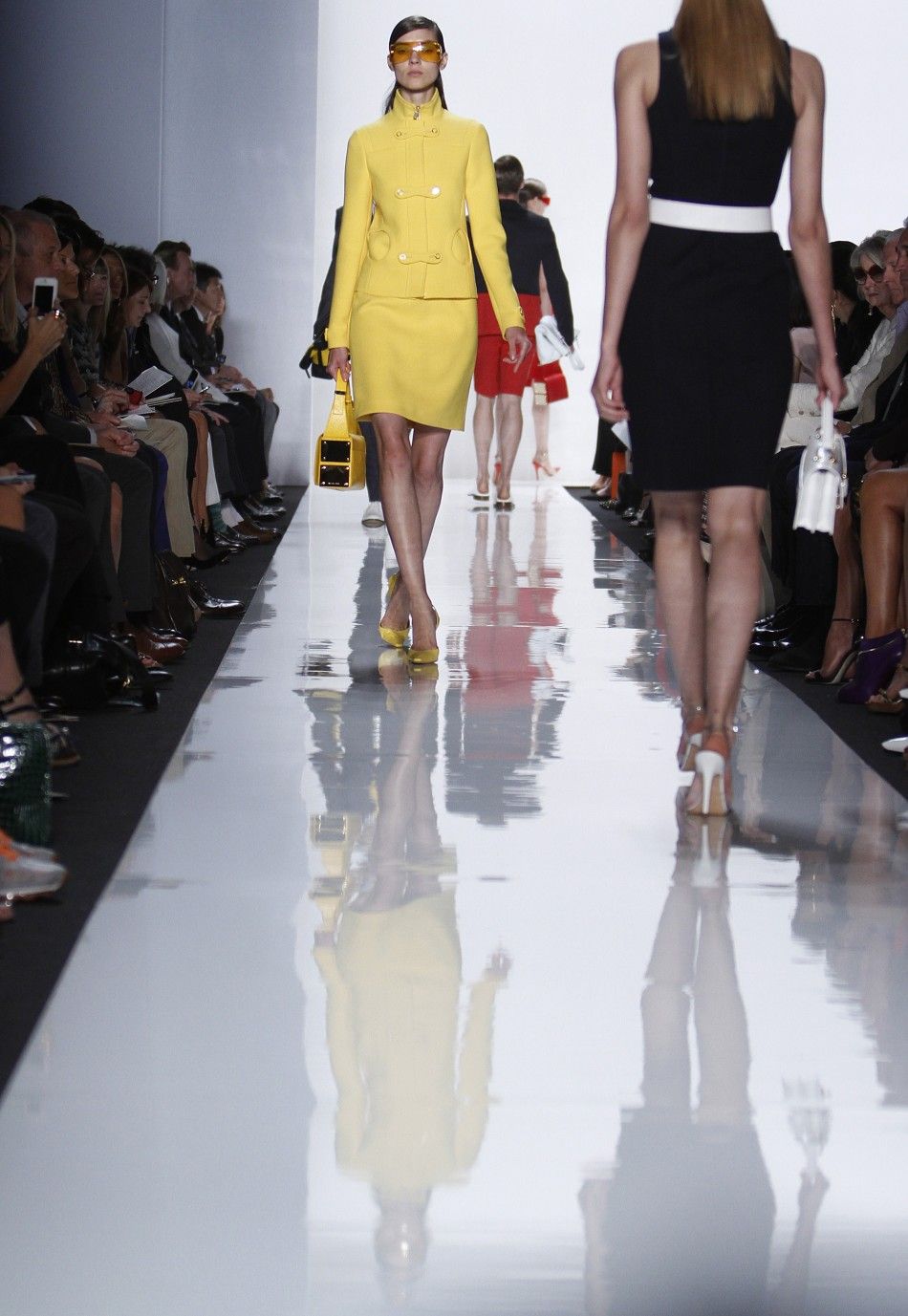
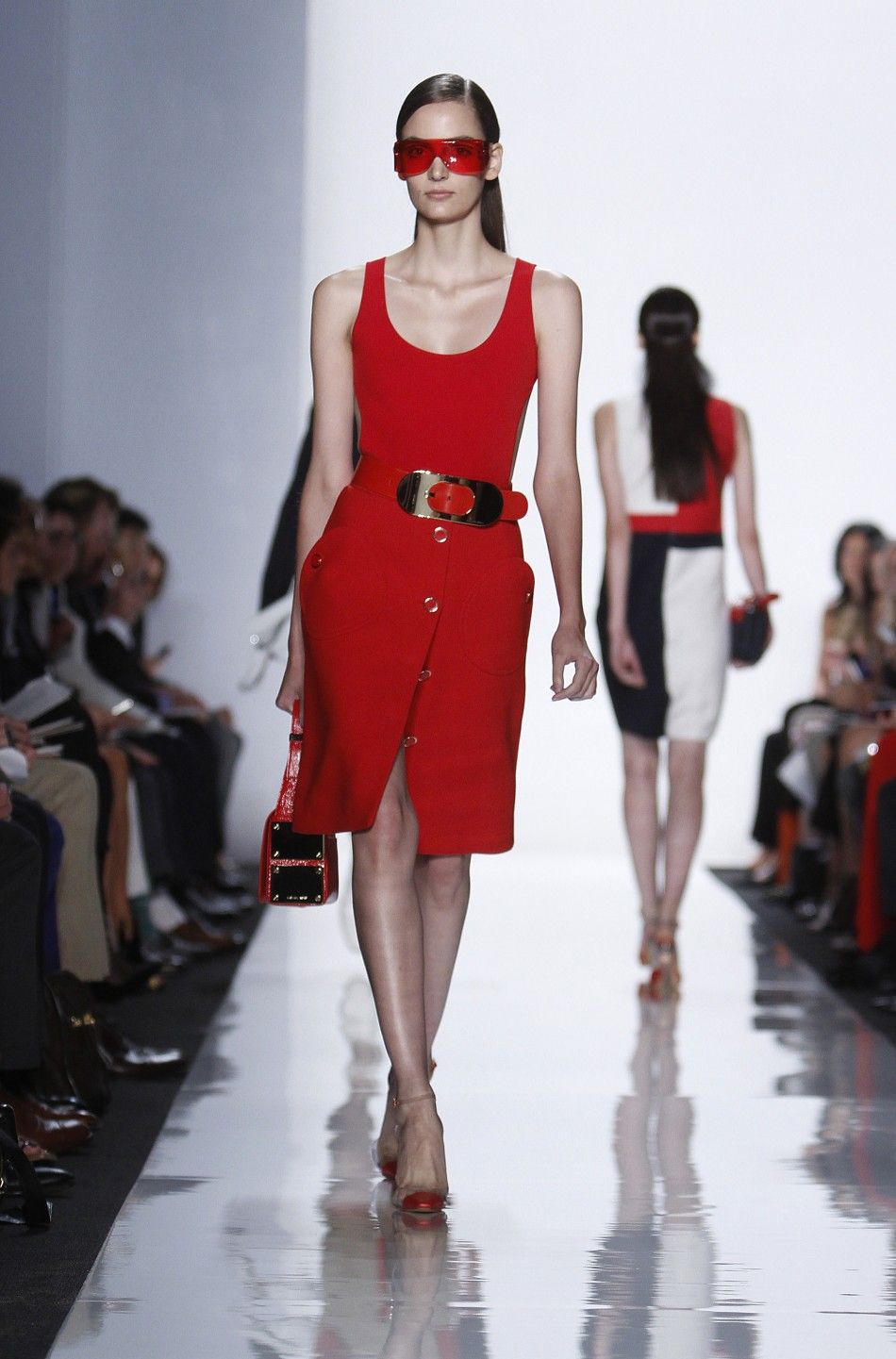
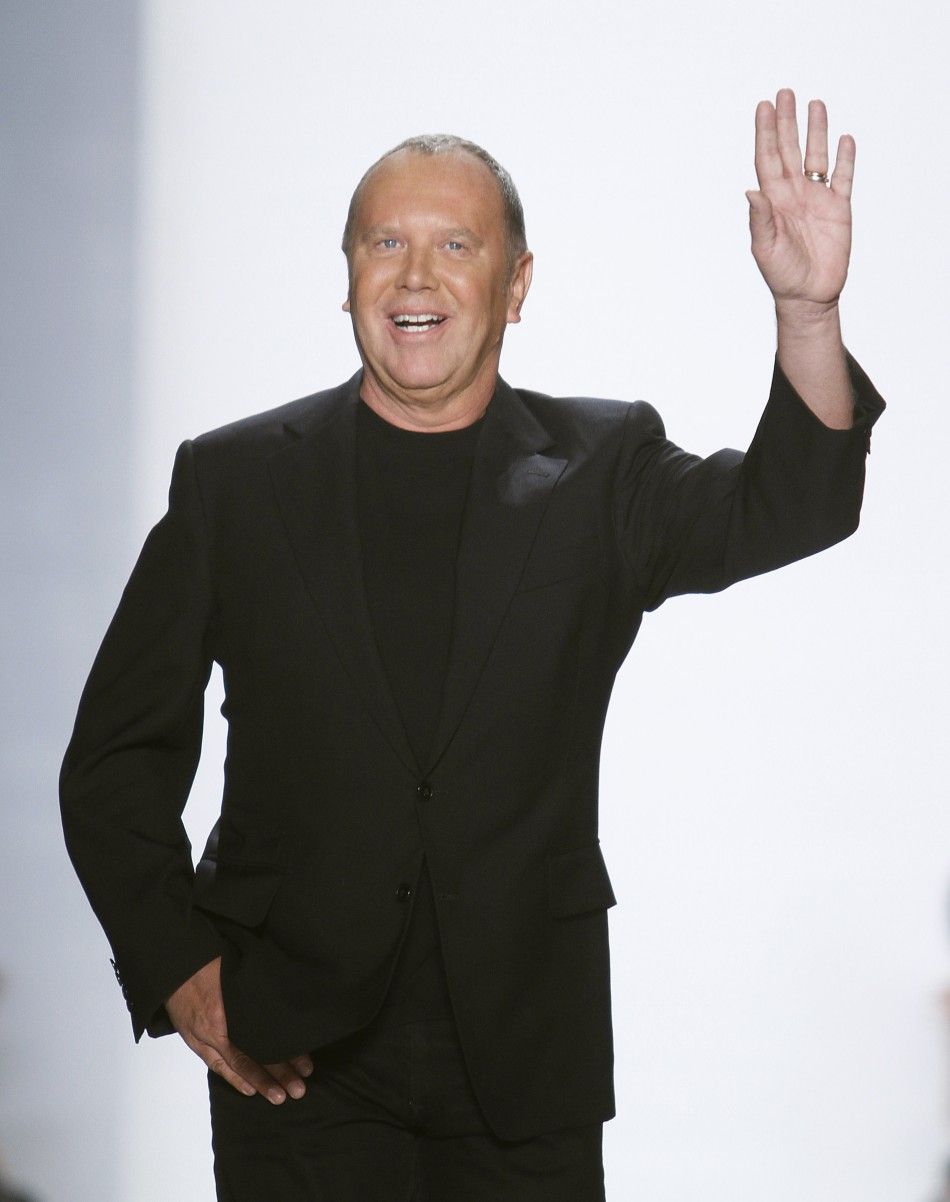
Having gone public almost a year ago in December and since hit $53.55 per-share as of Friday afternoon, Michael Kors went public again on Wednesday, this time with his Spring 2013 collection at New York Fashion Week. Predominantly with strong stripes and sunny colors, Kors based his collection from the feelings he gets when visiting the West Coast and the result was mod meets nautical.

"You could be sitting at the Beverly Hills Hotel, by the pool, and you could find this entire palette whether it's the palm green, the turquoise of the pool, the yellow of the sky - of the sun," Kors told The Associated Press. "And I love all the architecture that we see whenever I go out to California. This collection is kind of this hybrid blend of big city tailoring and sharpness with really a lot of the spirit and the mood that you would find in Palm Springs or Los Angeles."

While the silhouettes remained simple and modernist, Kors played with proportions of the stripes and their alignment, ranging between thicknesses and switching from horizontal to vertical in red, navy, green, white and yellow.