By | February 08 2012 4:19 PM

1 of 10
Taj Mahal
Photo: Wikimedia Commons

Taj Mahal

The Taj Mahal, regarded as the pinnacle of Mughal architecture, was built in Agra, India, between 1631 and 1648. The white marble structure has a sublime symmetry that incorporates architectural elements of Persia, Turkey and India. It was built as a tomb for Mumtax Mahal, the wife of Mughal emperor Shah Jahan, who died during childbirth. Her tomb is enclosed by the distinct dome in the center of the complex, with is surrounded by gardens and a reflecting pools. A set of sandstone walls form a boundary.
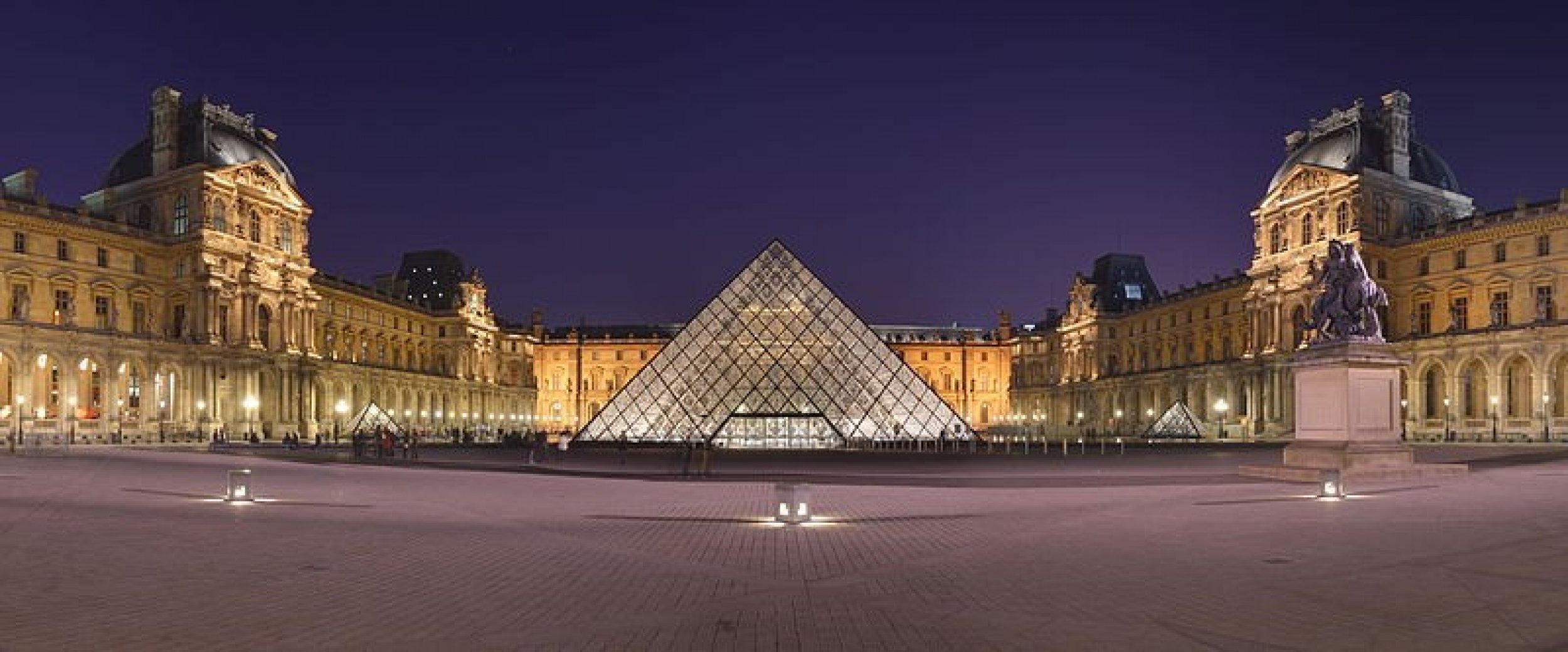
The Louvre
Photo: Benh Lieu Song

The Louvre

The world’s most visited art museum melds the new and old in a striking juxtaposition. Architect I.M. Pei was commissioned to design a glass pyramid in the center of the Louvre’s plaza, which visitors enter to eventually ascend into the museum. The combination of classical architecture and modernism was controversial, but it has eventually become iconic.
Love Sculpture
Photo: Wikimedia Commons

Love Sculpture

Robert Indiana’s bold, red “Love” sculpture was originally commissioned for a Christmas card, but has since been reproduced in dozens of locations around the world. One of its first locations was in Philadelphia's “Love Park.” The letters have also been translated into Hebrew and Italian.
Ponte dei Sospiri
Photo: Wikimedia Commons

Ponte dei Sospiri

The Ponte dei Sospiri, or “Bridge of Sighs,” in Venice was actually named for the nearby prisons, as convicts would have one last glimpse of the outside world from the bridge, according to legend. Its reputation has since softened, with locals now believing that a kiss on the bridge at sunset will lead to eternal love.
Chrysler Building
Photo: Flickr

Chrysler Building

The Art Deco tower on the Manhattan’s east side remains one of its most cherished. Although the metallic crown and eagles are meant to evoke the automotive industrialization, the building has a certain delicacy that has made a favorite among critics and New Yorkers.
Neuschwanstein Castle
Photo: Wikimedia Commons

Neuschwanstein Castle

The Neuschwanstein Castle in Bavaria, Germany served as a model for Disneyland’s Castle, becoming synonymous with the fairy tale image. It was commissioned by Ludwig II of Bavaria as a tribute to the opera composer Richard Wagner.
Casa di Giuletta
Photo: Flickr

Casa di Giuletta

Casa di Giuletta has developed a reputation as the house of the Capulets in Verona, Italy, from the Shakespeare play Romeo and Juliet. Among its notable features is Juliet’s balcony, where she reputedly called out for Romeo. There is also a large bronze statue of Juliet in the courtyard of the house, along with a museum inside the house.
Trevi Fountain
Photo: Wikimedia Commons

Trevi Fountain

The baroque fountain in Rome is replete with statues and cascading water. The history of the site dates back to the Roman Empire, when the fountain marked the end of an aqueduct. As the legend goes, if one throws a coin into the fountain, he or she is guaranteed to return to Rome.
Niagara Falls
Photo: Wikimedia Commons

Niagara Falls

The massive falls, which span New York State and Ontario, Canada, deliver over four million cubic feet of water each minute for hydroelectric generation. The destination generates not only electrical sparks but many romantic ones, too.
No. 5 France
Photo: Wikimedia Commons

No. 5 France

With 25 days of annual leave plus 10 public holidays, French get a total of 35 paid days off.

Design evokes emotion. The hallmarks of beauty -- symmetry, form and context -- create a mood that surpasses the merely physical form. Beyond design, context -- whether reality or mythology -- builds on reputation and has lionized particular locations. Here are 10 sites that epitomize notions of romance.