

In the post-pc era, Apple set to rule
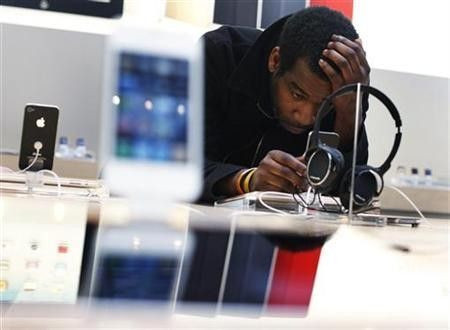
With the range of new devices emerging from Apple, executives are quick to tout a post-PC consumer world where users roam free from their desktops with tablets and smartphones.
But this is also a world that Apple is also poised to dominate, analysts say.
The Cupertino Calif.-based company is armed with two assets that will help it not only to gain valuable market share, but to even help define what this new era will look like.
First is the iPad. Since the launch of the first iPad in 2010, Apple has gone to define the tablet market and create a whole industry from scratch.
Apple has created a company the size of EMC in one year if iPad were its own company, Bernstein's Stacy Rasgon told investors.
On top of that, the market is set to get even bigger.
Analysts expect perhaps 215 million units being sold in 2015, for a compounded annual growth rate of 66 percent.
Consumer interest is staggering, Bernstein said, with 20 percent of individuals surveyed by the firm saying they'll by a tablet in the next 12 months.
We have never seen such a high purchasing intent for a new category in the past.
Apple will dominate tablets for the foreseeable future, they write, with the iPad having sold 19.5 million units in year one, triple the comparable metric for the iPhone, and double what Netbooks did, despite a higher price for the iPad.
To compete with the iPad, prices will need to come down and this is going to be difficult for competitors to do.
The other weapon is Apple's arsenal is the iPhone. New smartphones can do almost everything a PC can do, as far as media-consumption at least, and the iPhone is the category leader.
Although the smartphone industry growth overall should cool off a tad this quarter, Piper Jaffray analysts believes smartphone unit growth will still be 91 percent for Apple in the June quarter, and 55 percent for the industry overall.
Apple announced a number of improvements to its iPhone platform earlier this month that could help it cement its position.
The iCloud will allow customers to manage and purchase media and apps without the use of a computer, and also help Apple tie all of its platforms together.
This poses a high-barrier of entry for other smartphone competitors who cannot coalesce their services around a single cloud.
RIM has attempted to but their app-store hasn't gone anywhere, leaving Google Android based phones and potentially the Microsoft-Nokia duo to challenge.
So far they haven't made a dent in Apple's iTunes platform.
© Copyright IBTimes 2026. All rights reserved.