‘SpongeBob’ TV Show Still in Hot Water for Kids’ Low Attention Spans
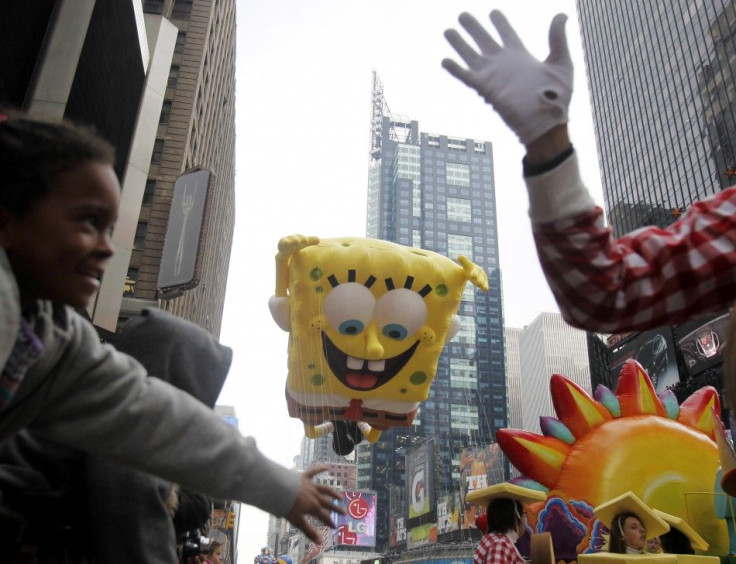
Nickelodeon's SpongeBob SquarePants, was the target of a study published Monday, which suggested that the hit animated TV series may be rotting your four-year-old's brain by lowering their attention spans.
The quality of what children watch is just as important as the quantity, Dimitri Christakis, a pediatrician at Seattle Children’s Hospital, said in an interview with MSNBC.
In a new study, published in the medical journal, Pediatrics, it’s about changing the channel from Nickelodeon to PBS, researchers say.
“Most parents worry too much about how much TV their children watch and not enough about what they watch,” says Christakis. “It’s not about turning the TV off. It’s about changing the channel.”
In the study, researchers Angeline Lillard and Jennifer Peterson of the department of psychology at the University of Virginia, recruited and randomly assigned 60 four-year-old preschoolers, most of whom were white and middle- or upper-middle-class, into three separate groups.
One group watched nine minutes of the adventures of the much-loved, SpongeBob, a Krabby Patty fry cook character who lives in a pineapple under the sea, while another group watched nine minutes of the slower-paced PBS show Caillou, a PBS cartoon about a preschool boy.
During the study, complete scene changes took place every 11 seconds in the fast-paced show, compared to every 34 seconds in the slower-paced program, the study authors said.
Both groups were designed to capture the attention of children ages two to five before getting ready for school, while the third group took on the task of drawing.
According to the study, 15 percent of those who watch SpongeBob achieved the problem-solving task, compared to 35 percent of those who watched the educational cartoon, while 70 percent succeeded among those who spent their study time drawing.
The SpongeBob group also had a lower ability to delay gratification and to follow rules than did the other groups.
Immediately afterward, the researchers tested what psychologists call “executive function” in the children. “What executive function basically measures is your ability to stay on task, to not be distracted and to persist on task,” Christakis explained to reporters.
The study authors added that, “If television has long-term effects on executive function, then one might see small short-term effects; even adults report feeling less alert immediately after watching television.”
Nickelodeon spokesman David Bittler disputed the findings and remarked, “SpongeBob SquarePants” is aimed at kids aged 6-11, not four year olds.
© Copyright IBTimes 2026. All rights reserved.
- MOST READ