Gas Prices Rising in 2012: Can the Government Do Anything to Stop the Increase?
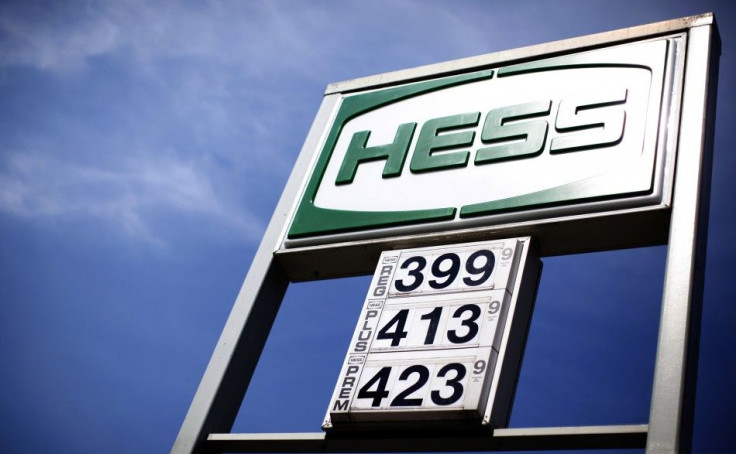
Economic reports are breaking President Obama's way -- unemployment and joblessness are down, the stock market and GDP are up -- but there is one little fly in the petroleum, as it were, that could sap momentum from the economy and prove to be a troubling issue for Obama in the Presidential election campaign this year: rapidly rising gasoline prices.
U.S. regular gasoline prices hit an average of $3.59 in the week of Feb. 14-20, according to the U.S. Energy Information Administration. That's up nearly seven cents from the previous week. And in the traditionally slow month of February, it's up more than 40 cents from a year ago -- a factoid that Obama's likely rivals in November, Rick Santorum and Mitt Romney, repeat every chance they get on the campaign trail. In their view, the President is allowing gas prices to rise by not encouraging more drilling for oil offshore and onshore.
But can the Obama administration do anything to alleviate rises in gasoline prices?
In a word, no, said Bill Wicker, the communications director of the U.S. Senate Committee on Energy and Natural Resources. The government has little power to mitigate prices of a commodity that is globally priced in nature, Wicker noted.
Not only that, some analysts added, by trying to hold gas prices down artificially, the government might actually encourage more gas consumption at a time when rising prices are indicating that a long-term policy to minimize the use of oil and the U.S. dependence on other countries for gas is in the public interest. The problems are too big, the problems are too deep that are causing the prices to go up, said Patrick DeHaan, a senior petroleum analyst at GasBuddy.com. And unfortunately, any sort of attempt to put a Band-Aid on the problem to temporarily alleviate prices will actually make things worse in the long run.
CAPPING GAS PRICES/MORE REGULATION
When applying simple Economics 101 lessons here, the realization is that there is little the U.S. government could do to immediately reign in prices. Especially through methods of more regulation for the oil and gas industry, like capping gas prices.
The free market will adjust, DeHaan explained. Oil companies will start to diminish their output if prices are capped. In turn, supply will drop. This will lead to shortages and higher prices.
Nothing really works, DeHaan said. It's just the free market.
TAX REBATES
Ron Klain, a former chief of staff to Vice President Joe Biden and senior adviser to Obama on The American Recovery and Reinvestment Act of 2009, penned an editorial on Bloomberg on Monday. In it, he proposed an idea of a pocketbook protection plan.
The plan: If the national average jumps to more than $4 a gallon -- which, according to the EIA, has about a 25 percent chance of happening -- the government would enact an additional payroll-tax cut of one percent. That, Klain wrote, would amount to as much as $50 per person. It would stay in effect for at least 90 days and until gas dropped below $4 a gallon.
How would this be funded? Klain proposes funding his idea through a surcharge on corporate taxes on profit gained from the higher gas prices. Profits would still remain at highest-ever levels even with the surcharge, and the political benefits for the Obama campaign with the middle class would prove important.
But that theoretical policy, too, has its doubters.
It's just another politician's attempt, DeHaan said. Whether it's Newt Gingrich saying he's going to bring back $2 gas or President Obama. I view the attempt to bring down the price of gas as relatively foolish and avoiding the problem that got us here in the first place -- our intense demand for crude oil.
REDUCING DEPENDENCE
OK, then. How to reduce dependence on crude oil?
Wicker said the U.S. is slowly moving in that direction. For example, the number of natural gas rigs in Texas has quadrupled in the past three years alone. There has been development in Utah. DeHaan said North Dakota's oil output has risen 550 percent in the last five years.
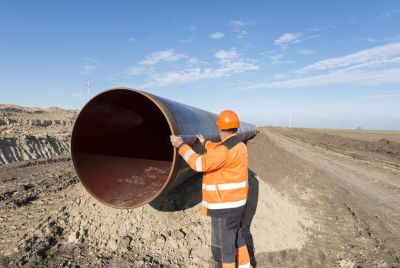
Then there's the issue of the Keystone XL pipeline, which has become political fodder for Republicans who attack Obama for not creating jobs and not promoting energy independence. Santorum goes from one campaign stop to another, denouncing Obama's radical environmentalist policies. Newt Gingrich, another Republican candidate, has charged the Obama administration someday will want to control what kind of car consumers can purchase.
But all of this goes along with underwhelming support from analysts for the project. The Keystone pipeline could make it easier to export crude overseas from an oversupply in states like Colorado, Texas and others. And it may in turn simply drive up prices.
It may add some short-term jobs, but the long-term costs of what is trying to be done here are going to cost far more jobs and are going to cost economic improvement, DeHaan said.
There are good prospects for new sources of crude oil, like in Utah and North Dakota. But developing them and producing pipelines for maximum production will take time.
UNIVERSAL GASOLINE?
DeHaan said one method of oversight could be a simple solution. For example, he said, gas prices in spring typically increase because of the switch to cleaner-burning summer gasoline. That federal mandate leads to 15 different types of gasoline being used throughout the U.S. during the summer. Instead, DeHaan said the measure should change. Have one type of gasoline the entire year.
It may cost us more in the short term in the next year or two while refineries prepare, he said, but in the long run, there will be no reason for these rapid price increases every spring because of the switchover.
STRATEGIC RESERVE
Could the government look to shrink prices by opening up the Strategic Petroleum Reserve? It's not likely, even if gas prices do climb to more than $4 a gallon.
One reason: Its output would be about two million barrels a day, which wouldn't come close to the U.S. demand of about 80 million barrels a day, Wicker said.
Another reason: the crude oil would have to be refined. That cost would make it difficult for a big dent in gas prices.
Even if we did open it up, I can't imagine it would make a huge impact, DeHaan said. There is tightness in gasoline supply, and it would do little to alleviate that tightness.
© Copyright IBTimes 2026. All rights reserved.
- MOST POPULAR IN Economy & Markets