

Currency Wars 2013: China Takes Aggressive Stance On Currency Tension With Japan, As Yen Sinks To New Low Against The US Dollar

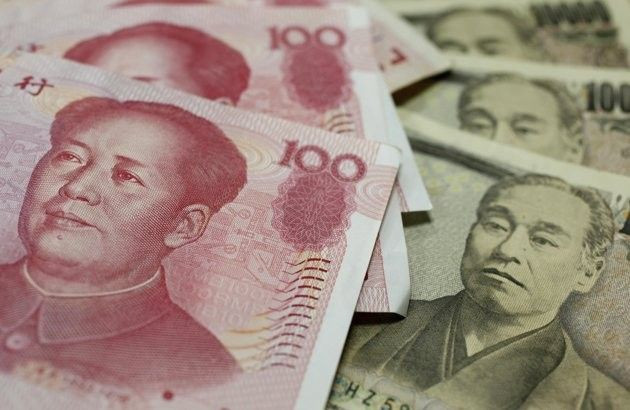
China has been less vocal than other emerging market economies in recent months in voicing discontent about developed countries’ loose monetary policy. But as the Japanese yen slumped to the lowest level against the dollar in more than three years on Thursday, Beijing probably decided that enough was enough.
On Friday, China’s Commerce Minister Chen Deming said he’s concerned at the risk of competitive devaluations and warned that emerging markets will be the ones left to pay the price for currency wars.
Speaking at the National People’s Congress, China’s rubber stamp parliament, Chen said deliberate depreciations of major currencies “will have a big impact on China and other emerging nations.”
“I am worried about inflation, about competitive currency depreciation and about the negative spillover effects of excessive issuance of the main currencies,” Chen said, responding to a question about the impact a weakening yen would have on China’s foreign trade.
Earlier this week, Gao Xiqing, president of China's giant sovereign-wealth fund, warned Japan against using its neighbors as a "garbage bin" by deliberately devaluing the yen.
“Treating the neighbors as your garbage bin and starting a currency war would not only be dangerous for others but eventually be bad for yourself," Gao said in a Wall Street Journal interview. "I would hope that [Japan] doesn't do that as a responsible government."
Global worries over competitive devaluation have been on the rise since Japan’s freshly installed prime minister, Shinzo Abe, who’s determined to stimulate a moribund economy, and has ordered Japan’s central bank to be more expansionary. The Bank of Japan has agreed to a two percent inflation target and to make open-ended asset purchases from 2014.
The yen has weakened about 14 percent against the dollar in the past three months. The currency hit a three-and-a-half-year low against the dollar in Asia on Friday, with the greenback fetching 95.42 yen in Tokyo afternoon trade.
The value of a currency can make or break a country's economy. In the wake of the global financial crisis, boosting economic growth has become a major priority. Rather than taking pride in a rise in their currency as a sign of market confidence in their economic policies, many countries seem content for their currencies to depreciate.
A weaker exchange rate makes a country’s exports cheaper, potentially boosting a key source of growth.
The commonly understood definition of a currency war is when one country or multiple countries begin to specifically target their exchange rates and this starts that tit-for-tat reaction that goes around the entire neighborhood as other countries attempt to improve their own competitiveness.
When you get caught up in a currency war, there are no real winners. So far, these global tensions over exchange rates haven't moved onto that more dangerous round, involving retaliatory trade protectionism.
The ‘Hot Money’
Behind the rhetoric of global currency wars, as we’ve pointed out in an earlier article, lies a more fundamental concern that loose monetary policy in the developed economies will lead to rapid and destabilizing capital inflows to the emerging world.
Leaders in emerging economies, led by Brazil, have long criticized the U.S. for launching successive bond-buying programs to stimulate the American economy since the financial crisis in 2008.
This tidal wave of Western money -- Brazil’s President Dilma Rousseff called it a “tsunami of cheap money” -- not only pumps up asset markets, such as stock and bond exchanges, in emerging countries but it also makes controlling inflation that much more difficult and puts unacceptable upward pressure on emerging market currencies, weakening exports and growth.
For developing countries like Brazil, “the result is a dangerous build-up of leverage and finance consumption that ultimately proves to be unsustainable,” said Neil Shearing, chief emerging markets economist, at Capital Economics, in London.
The past two periods of large inflows to emerging markets culminated in the Asian Financial Crisis of 1997-98 and the Eastern Europe crisis of 2008-09.
There have been signs of rising capital inflows in China as well. The country’s central bank reported on March 5 that companies and individuals sold a record 684 billion yuan ($109 billion) worth of foreign exchange and bought an equivalent amount of Chinese currency in January.
China also holds more than $3 trillion in foreign exchange reserves, the world’s largest, making the country particularly vulnerable to depreciation-related losses.
Yi Gang, deputy governor of China's central bank, said last week the country was hopeful a currency war could be avoided, adding, at the same time, it "is fully prepared" for a currency war, Xinhua News Agency reported.
© Copyright IBTimes 2026. All rights reserved.