

Apple Explores Motion Controls for Video Capture Devices
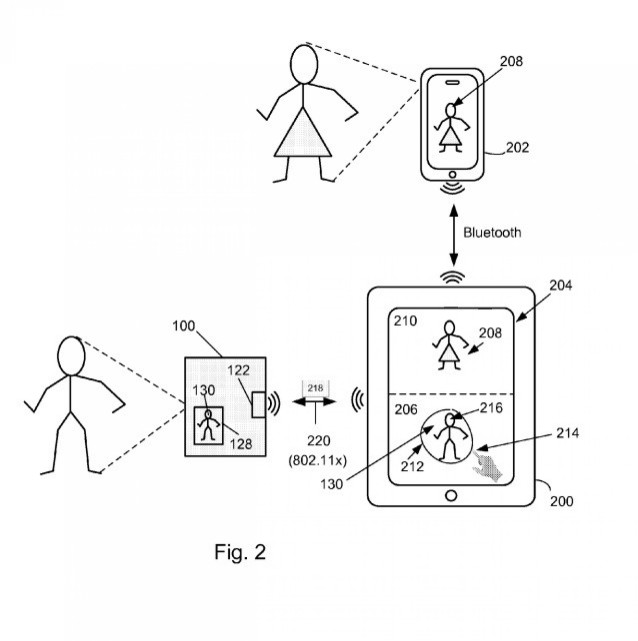
Apple is exploring the use of real-life gestures to control video recording and editing, according to a new patent published Oct. 27.
Titled Real Time Video Process Control Using Gestures, the patent outlines possible methods of interacting with video capture devices. The system will use cameras already attached to iPhones, iPads and Mac computers to interact with these devices from a distance. Though the technology may have other applications, the patent is focused video capture and editing.
According to the patent, Apple says a big problem with portable video capture is the lack of editing capability on the device itself. Though users can preview their recorded images or video on touch screens there is a limited editing ability. Most camcorders need a computer to process the video after it is captures.
Unfortunately, due to the portable nature of these devices, immediate access to a host computer can be difficult or impossible, The patent said. Therefore, there is a need to provide an efficient method and apparatus for using a small form factor video capture device to process video data in real time.
The system could interpret 3D and 2D gestures to edit video in real time using infrared sensors, or the camera itself. Not only would this be useful in post-production editing, but also in real-time when the video is still being captured.
Gestures could be used to tell the camera when to start capturing video, or what to zoom in on. This would solve some problems, since touching video capture devices often shakes the camera.
The patent gives an example of two tennis players volleying the ball. The camera would establish an implicit association between the two and realize when one player is hitting the ball the other is not. Then it would be able to zoom in on one player when he or she hits the ball and then the other, depending on the perimeters set by the users.
Another goal of the new technology is to minimize the dependence on touch screen devices as they become smaller and thus have less real estate to put touch buttons on. Anyone who has tried to text on an iPhone can appreciate the effort.
This goes along with Apple's strategy of providing computers and devices for creative endeavors. Macs have long been the go to machine for graphical designers with their support of the powerful Adobe Creative Suite. Famous super-band Gorillaz produced an entire album on the iPad, titled The Fall. Putting editing capabilities on mobile devices is just a natural evolution of this philosophy.
Gesture controls is already a technology in the consumer marketplace. The most notable example is Microsoft's Kinect peripheral for the Xbox 360. The device contains a camera that interprets gamers' movements and translates them into game controls for Kinect-specific games.
If motion-based controls are put onto the iPhone it will surely have applications beyond video capture and editing, but no word on what those applications will be used.
© Copyright IBTimes 2026. All rights reserved.