MF Global’s Mass Layoff Only First Rumbling of Upcoming Storm
Bankruptcy Trustee Likely To Engage in More Unpopular Actions
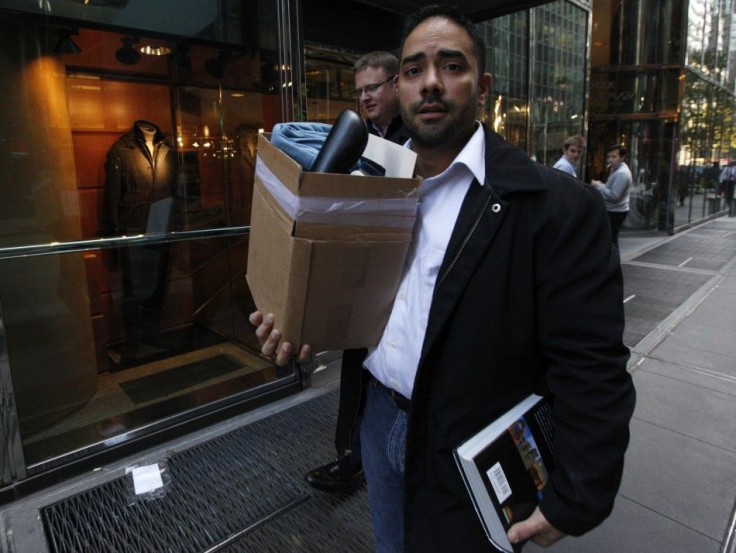
As was bound to happen, the vast majority of employees at now-bankrupt broker-dealer MF Global were laid off Friday, a scene that bookends one of the saddest chapters in the once-mighty firm's denouement.
James W. Giddens, the bankruptcy lawyer who has been tasked with defending the interests of certain creditors as MF Global's bankruptcy trustee, made the announcement to employees Friday. Suddenly, 1,066 people found themselves out of work, mostly in the Chicago area. Final paychecks will be sent November 15 and there will be no severance, setting up thousands of families for a Dickensian Thanksgiving Day dinner of food-stamp-bought turkey brined in tears.
As wretched and unpopular as the decision to send over a thousand breadwinners into the street, it's likely just the beginning of unpopular decisions for Giddens.
Compiled for your reading pleasure is a list of seven unpopular actions we'll probably see the MF Global liquidation trustee undertake:
1. Throw the little people under the bus
As a trustee appointed to ensure the execution of the Securities Investor Protection Act within the context of a large bankruptcy, James Giddens finds himself practicing an arcane branch of law few others have handled before. His mandate, first and foremost, is to protect the assets held in securities trading accounts, then make sure creditors of all kinds get paid.
At some point he will have to sort out the order in which bondholders, banks, vendors and employees will get paid. A major sticking point is sure to be the fate of customers with assets in commodity and futures trading accounts (more of that in a bit).
Regardless, the lowest of the low in terms of unsecured creditors are generally the smaller vendors: the people who made MF Global's TV ads, managed their taxes, ran human resources workshops and sold it special software. Those people, many of them small companies, are unlikely to see themselves included in any final disbursement.
As for the teacher's retirement funds and small-time investors, among others, that were MF Global's stockholders: forget it.
2. Pay the big banks (and himself) first
In making decisions on how to divide whatever assets he is able to recover, Giddens will consult the various creditors who are actually owed. Creditors with larger claims will bandy together to hold even greater clout, forming a creditor's committee.
This is all par for the course in bankruptcy proceedings, and makes a certain sense: Giddens cannot be possibly expected to deal face-to-face with each one of the tens of thousands of creditors, many of them openly emotional about getting their money back. The sinister aspect of this arrangement, however, starts to show up when the list of those large creditors becomes public. JPMorgan, M&T Bank, Bank of America, and $16 billion-dollar hedge fund Elliott Management Corp. are in the five-member committee. Technology provider Caplin Systems is thrown in for good measure.
Besides having the interests of these big institutions, Giddens, of course, has to think of himself. His boss, Manhattan white shoe law firm Hughes, Hubbard and Reed is no charity: Giddens' personal billing rate is reportedly $980 per hour. He will likely take a bit of a pay cut (10 percent is customary) and give up the usual custom of billing the daily steak dinner and chauffeured ride home to the client, but otherwise will make sure to get paid first. Indeed, as of November 3rd, just a few days after the bankruptcy, he was already asking the courts to approve his invoice.
3. Pick winners and losers
Because Giddens is wading into an area of law so largely untreaded by the rest of the profession, he will have to answer some truly bizarre, unusual questions. Should everyone share in any losses equally, or should bigger investors take proportionally larger hits? Should speculators and day traders with agricultural commodity accounts, who formed the bulk of MF's trading business, take a larger loss than farmer-brokers using accounts to hedge against unpredictable catastrophes? Should unsecured creditors necessarily be paid last, even after the banks who took advantage of MF Global's desperation near the end to extract usurious (but secured) loan terms? These are just some of the riddles Giddens will have to solve.
Among the thorniest issues to be resolved is the protection afforded to the assets of costumers holding commodity and futures trading accounts. Under Giddens' direct SIPA mandate, he does not specifically have to address these people's claims over those of, say, Deutsche Bank.
If, as suspected, MF Global's leadership took the highly illegal step of looting assets from these customer accounts in the firm's final days to try and save the company, the clusterfudge will keep forensic accountants busy well into Sarah Palin's second presidential term.
The view over the past few days has turned increasingly sour for bondholders too. Fitch Ratings released a report Friday estimating they are likely to recover as little as 10 cents on the dollar in the company's bankruptcy.
4. Keep the money tied up for years
This one seems to be the given no one wants to admit. Because of the suspected malfeasance in the last days of MF Global, there might not be enough cash to go around for everyone.
"Giddens can't let out more than a low percentage of assets before he knows what he owes to all commodity customers," Stephen Harbeck, president of the federally-backed corporation that insures MF Global's securities accounts, said to Bloomberg News earlier this week.
The problem is particularly acute, as discussed above, for people with commodity and futures trading accounts.
"Commodities people really do not have the protection securities customers have," Harbeck said in an earlier article to Reuters.
Indeed, people that thought their money was already home-free might even be affected. Earlier this week, Bloomberg News reported how several small investors who closed accounts with MF Global in October were mailed checks they are now unable to cash.
5. Scare off potential saviors
As demonstrated by the mass layoff today, Giddens has one directive and one directive only: to make costumers and creditors whole. He has no interest or obligation to see if MF Global can be saved.
(Some would argue that the compensation structure for a bankruptcy trustee, who is paid by the hour, actually encourages the opposite: the creation of unnecessary, nasty and destructive legal battles).
It is unlikely Giddens will allow any company wishing to keep MF Global somewhat whole to proceed without badgering the potential suitor about all the legal liabilities they'd be undertaking. In fact, Giddens has a track record of being one of those legal liabilities. As the bankruptcy trustee for Lehman Brothers (a job he is still executing, more than four years since he took it on), he sued white-knight investor Barclays for $11 billion he claims the British firm received as an illegal "windfall" during the sale.
6. Sue people who had no hand in the debacle
"Clawback," a term people following the debacle of Bernie Madoff's Ponzi scheme are probably familiar with, is legalese for suing the people who actually made money before the whole financial house of cards went kaput. Before the current rash of Wall Street firm failures, it was used almost exclusively to make executives pay back any insane compensation packages they'd awarded themselves at the very end, just as they were shutting the door behind them on their crumbling palaces of finance.
In the Bernie Madoff case, Irving Picard, the bankruptcy trustee, expanded the legal reach of the concept to sue large investors who made money before the scheme unraveled. Picard's argument was that large investors cannot claim to have been unaware Madoff was a fraud, since their size and sophistication belies their claims of ignorance.
A third legal case that should trouble anyone who made large amounts of money with MF Global is the one being brought by Frederick Grede, trustee of bankrupt brokerage Sentinel. Sentinel was found to have fraudulently moved client money around before its downfall. Grede argued that due to this, it does not matter if clients were 'lucky' enough to have withdrawn their funds before the implosion or if they were left holding the bag of losses: the fraud was against everyone and everyone should share the hit.
In practical terms, this means suing the 'lucky' people to pay everyone else.
Any last-minute lenders to MF Global could also see themselves defendants in a massive lawsuit. In an article for Forbes, Francine McKenna speculated on the dynamics surrounding the last days of MF Global, when the firm not only drew down on its $1.3 billion line of credit, but received an additional loan from a yet-to-be-identified party for $300 million. McKenna convincingly argued that the last-inning lender probably received assets from consumer accounts as collateral, perhaps unknowingly. Since MF Global had no right to pledge those in order to receive the loan, the mystery lender who provided a lifeline to MF on its final weekend would likely end up the target of legal action.
7. Nuke PriceWaterhouseCoopers
Hours after the bankruptcy, the government regulator in charge of overseeing MF Global was declaring the firm's finances a mess, noting it had "discovered a significant shortfall in its segregated funds account."
The CME Group, which runs the Chicago Board of Trade exchange where MF Global specialists plied most of their business, washed its hands clean, stating it had completed an actuarial review of MF Global a week before the fall and that "it now appears that the firm made subsequent transfers of customer segregated funds in a manner that may have been designed to avoid detection."
The question, of course, is, where were the accountants?
While it is unlikely that Giddens will have the authority to sue PriceWaterhouseCoopers, who did the books for MF Global, there are other actions he may choose to take.
Providing information to the FBI or SEC that indicates PwC was in on the fraud could be catastrophic for the company. To wit, Arthur Andersen, the last of the large accountancies to go out of business, was undone by a federal fraud conviction, even though that ruling was later overturned.
And if you think today's thousand-plus lay-offs were bad, consider PriceWaterhouseCoopers has 175,000 employees worldwide.
Still, at least one positive outcome could emerge from all this mess.
The Calming of the Commodities
As The Wall Street Journal noted Friday, the collapse of MF Global has caused a depression in the trading volume across several commodity markets.
It is estimated some $2 billion in assets are being held within commodity trading accounts: money that speculators in wheat, gold and crude oil futures are not able to use at the moment to play the market. Even more money is staying quiet, expecting either market distortions or a massive sell-off to emerge in coming days.
If commodity speculators do step away, the end result might be calmer commodity markets that more closely reflect the reality of the goods they trade, instead of the volatile pits that were partly behind worldwide food riots in 2008, global oil insecurity, and the fetishization of gold as a currency unit.
See, who said lawyers were all bad?
© Copyright IBTimes 2026. All rights reserved.
- MOST POPULAR IN Global Markets