

U.S Home Buyers Beware - This Is Not Your Father’s Housing Market
Column
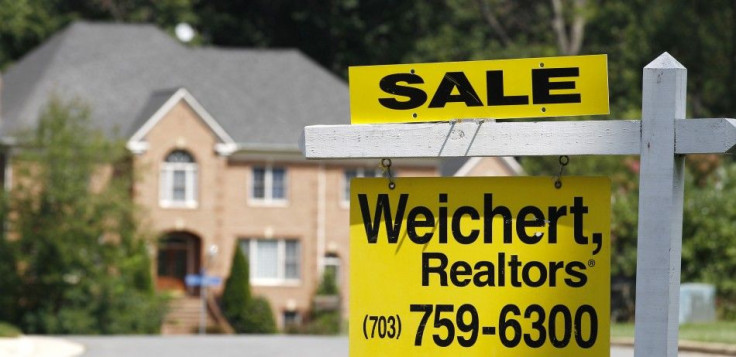
It's a cliché, but it's also a truism: there's nothing like owning a home.
Home ownership provides many advantages and, at least since World War II, owning a home has become part of the American dream.
However, if you're calculating that a home purchase in the immediate years ahead -- 2012, 2013, 2014 -- will position you for a capital gain...you need to think more-carefully about that next, major step.
In other words, this is not your father's house market.
The United States used to be an economy and social environment characterized by commercial givens -- basically, economic realities you could count on. An example: Real, median incomes will increase. Another: Median U.S. home prices will increase over a 10-year span.
Not so today -- at least early in the globalization era. For example, housing does not appear to be that slam-dunk, no-doubt-about-it, appreciating asset that it was for decades -- basically since the end of World War II in 1945 to the start of the Great Recession in 2007.
Much of the expansion in home ownership -- and by extension, much of the gain in home prices prior to 2001 -- stemmed from public policies that not only supported investment in public goods (including education and infrastructure), they also lessened corporate capitalism's harsher elements. What's more, maldistribution in income and wealth and gross economic distortions were reduced by both progressive tax policies and a modest social welfare state.
Well, needless to add, those progressive policies have been under siege since 2001 -- laying bare corporate capitalism's harsher elements -- and, not surprisingly, home ownership rates have fallen, and with it home prices.
Propspective Home Buyers: Do Your Homework
So what's the appropriate stance for prospective home buyers in this sluggish and uncertain U.S. housing market? Do your homework.
As a preface, very few rules will stop a couple or someone who has found their 'dream house.
So if you've found it, and you feel you're going to be in the house for more than a decade, market conditions and cautions listed here aren't likely to stop you from purchasing it.
However, for those who haven't identified their dream house, keep in mind the following:
1 Buy the minimum house you need. The mantra now is not how much house you can afford, but the minimum amount of house you need. True, if the market suddenly recovers, that $500,000 luxury home could appreciate into a $700,000 bonanza. However, if your local market stagnates, that luxury home could be worth $450,000 -- or even less -- in real terms, which means you'll struggle to recoop your initial investment. Lesson: Take on only as much house as you need, to minimize your downside risk.
2 Research the town/city/county. Have you researched and evaluated the local economy of the town, city, or county your prospective home is in?
In politics, there's an axiom: All politics is local. The same with real estate. If the local economy is strong and likely to experience job growth, the value of your home will benefit. The reverse, the opposite.
Research the local economy carefully. Determine what the major industries are and their prospects. Are they likely to add employees in the next five to seven years or more likely to shed employees?
Of course, it's almost impossible to predict macroeconomic conditions 10 years out, but you get the idea: Based on what you know about the local employers, does the local economy have decent prospects for growth? In other words, does the local economy look more like Boston, where the prospects for growth are decent? Or like Las Vegas, where the local economy is not as strong?
3 Don't buy the best house in the neighborhood. Are you about to buy the best house or almost the best house in the neighborhood? In today's housing market, you have to get everything right, from a home purchase research standpoint. And one key research item is the value of your home vis-à-vis those on its street and in your potential new neighborhood. That's because a sub-par neighborhood can decrease the value of your pricey home ... and also make it harder to sell. Ideally, you want a house that's roughly in the middle, value-wise.
Lesson: Evaluate two houses to the left, two houses to the right, and a few across the street: if most are in worse condition than the one you're considering, skip it, and evaluate another house in a different neighborhood.
4 Are you prepared for $150 per barrel oil? Did you factor-in another oil shock into your commuting budget? True, oil prices have dropped considerably in recent weeks, to about $10 per barrel, pushing regular unleaded gasoline down to about $3.30 per gallon. Hence, for now $5 per gallon gasoline is out of the picture. For now.
But what about 2012, 2013 and beyond? A $5 or $6 per gallon gas price is possible in the U.S. -- particularly if the nation's supply of oil from the Middle East is disrupted for a sustained period. Lesson: Stress test your commute. If the commute budget from your prospective house can't tolerate $6 per gallon gasoline, consider a house that's closer to work and/or near a mass transit system.
5 Can you switch to a second field at your new location? Did you assess your -- or if two people are working in the household -- each person's ability to shift to a second career, if required?
If you're thinking about buying a home, odds are you're pretty secure and/or established in your job/career field. However, in the globalization era, most citizens realize that economic conditions can change relatively quickly, and healthy sectors can become not-so-healthy in a hurry. Or, as professional recruiters say these days, In the globalization era, everyone has to have two fields.
Hence, in the town/city/county you've chosen to buy a home, evaluate how quickly you could switch to a second line of work, if your first field experiences an unexpected downsizing. Does your second field's work exist within a commutable range of your prospective new home? If not, you may want to consider a home that would allow for an easier transition to a second field.
As the Adage Goes, Preparation Pays Off
The Great Recession and the changes triggered by globalization have removed much of the economic tailwind from the U.S. housing sector -- realities that have made it much harder to realize home price gains.
Hence, it goes without saying that thorough due diligence is required when considering a home purchase today, and the above five factors represent a good start.
- -
© Copyright IBTimes 2024. All rights reserved.
-

Microsoft Expands Its AI Empire Abroad
-

Oil: 'Mother Of Corruption' In Venezuela
-

'Extreme' Climate Blamed For World's Worst Wine Harvest In 62 Years
-

Macron Warns 'Mortal' Europe Needs Credible Defence
-

Bitcoin And Crypto Price Review - Another Myth Gets Busted?
-

Mass Cancellations Loom Despite French Air Union Cancelling Strike
-

Mired In Crisis, Boeing Reports Another Loss
-

Recycled 'Zombie' Misinformation Targets US Voters
-

Hackers Leak Part Of Source Code Of El Salvador's Bitcoin Wallet
-

Azerbaijan Says 'Closer Than Ever' To Armenia Peace Deal Amid Border Talks


