

US dollar’s status under threat as China expands trade settlements in yuan
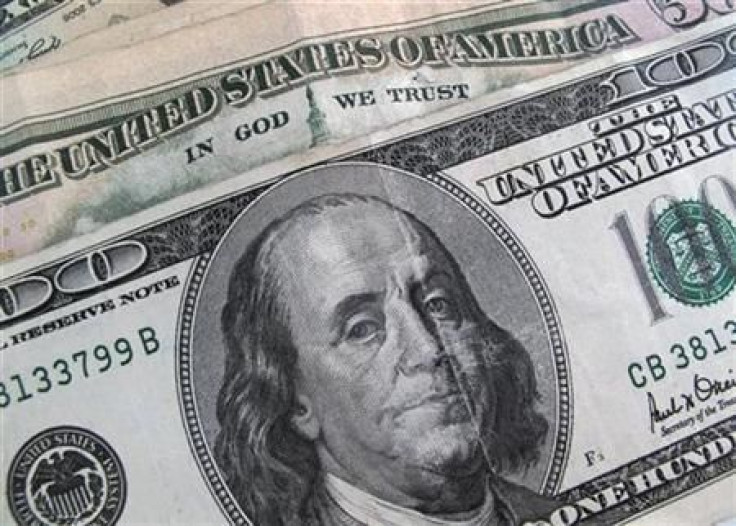
Chinese central bank said on Friday it will expand cross-border yuan trade settlements as part of Beijing's plan to reduce dependence on the U.S. dollar.
People's Bank of China (PBOC) official Fan Linchun said the central bank will enable as many as 5,000 companies operating in Guangdong province to use yuan for trade with Hong Kong, Radio Television Hong Kong reported on Thursday.
Fan, a deputy head of the yuan-trade settlement office at the central bank, said PBOC has already allowed cross-border yuan settlements in trade between Chinese companies and several countries in Asia and outside.
Separately on Friday, the chairman of the Bank of China wrote in a newspaper article Beijing should focus on gradually making yuan fully convertible to capitalize on the country’s strength and further internationalize the currency.
Late last month China and Russia agreed to allow their currencies to trade against each other in spot inter-bank markets, dealing a significant blow to the U.S. dollar’s position as the reserve currency.
Turkey and China said in October the two countries would use their own currencies for bilateral trade, effectively the excluding the greenback.
Chinese Prime Minister Wen Jiabao had said earlier in the year the vast Chinese asset holding in the U.S. dollar was a matter of concern.
Beijing gave the green light for the use of yuan for international trade settlement in July 2009 when the PBOC provided 650 billion yuan ($95 billion) in currency-swaps to Argentina, Belarus, Hong Kong, Indonesia, Malaysia and South Korea.
China also started talks with Brazil to put in place trade settlement in their own currencies to move away from the U.S. dollar. In a move to deflect criticism from trading partners, especially the U.S., China scrapped the yuan’s peg to the dollar in June this year, but the currency hasn’t appreciated as much as Beijing's aggrieved trade partners wanted it to.
China's accumulation of a gigantic $2.6 trillion foreign exchange holding was partly the result of the currency being not fully convertible. At a time when the general weakness in the U.S. economy and the Federal Reserve's money printing spree are raising serious doubts about the future of the greenback as the global reserve currency of choice, the Chinese project to make yuan fully convertible assumes significance.
The huge US debt, which is above $13 trillion according to official estimates, is clearly threatening the greenback’s position of pre-eminence and more and more people are now thinking about the unthinkable situation of a solvency crisis in the U.S. However, the greenback's status as the reserve currency helps the U.S. stave off a crisis by printing money. The U.S central bank expanded its asset purchase program last month, committing to buy another $600 billion of Treasuries over a period of six months to prop up recovery.
If fiscal and monetary policies prove insufficient to lift the economy from the pit, the only policy option could be to devalue the U.S. dollar, but this will trigger calls for replacement of the dollar as the reserve currency by another sovereign currency or a basket of currencies.
China had in 2008 called for a 'super sovereign reserve currency' to replace the U.S. dollar as the worst recession after the Second World War wreaked havoc in the global economy.
But the question remains how long it will take China to complete the full convertibility of their currency, removing one last barrier to its emergence as a reserve currency.
Reuters columnist Wei Gu wrote last year it appeared that the Chinese were going slowly in this direction, possibly to time yuan convertibility by 2020, the self-imposed deadline for Shanghai to become an international financial center.
One common misconception is Beijing can pull the trigger overnight, but in reality yuan convertibility is a lengthy process that has been going on for years and the end is not even close, Wei wrote.
She suggested that China is taking a cautious move, given that it doesn’t have right systems and tools in place to make yuan fully convertible too soon. China first needs to build domestic bond and money markets to absorb equity portfolio inflows, clearing and settlement systems for liquidity management, and forward exchange markets to make it easier to hedge against currency risk.
She also wrote that China's position as a trade surplus country makes its push for convertibility a little arduous task. Trade surplus countries are not in a strong footing to push the use of their currencies since buyers, not sellers, dictate which currencies they want to use.
Thus, investors should not expect too much business for the cross-border yuan settlement center program in Hong Kong, a big export market for China, Wei wrote.
However, analysts have pointed out that once yuan becomes fully convertible, countries importing Chinese goods will invariably have to have a reserve of yuan. And they will have to build up a yuan reserve by offloading their dollar reserves. If a major chunk of ASEAN countries and Latin American countries take this path, it will seriously dent the greenback's status as the global reserve currency.
China could be closing in on the greenback at a time when the other serious contender for the reserve status, the euro, started falling behind, weighed down by the European sovereign debt crisis.
© Copyright IBTimes 2024. All rights reserved.
-

Microsoft Expands Its AI Empire Abroad
-

Oil: 'Mother Of Corruption' In Venezuela
-

'Extreme' Climate Blamed For World's Worst Wine Harvest In 62 Years
-

Macron Warns 'Mortal' Europe Needs Credible Defence
-

Bitcoin And Crypto Price Review - Another Myth Gets Busted?
-

Mass Cancellations Loom Despite French Air Union Cancelling Strike
-

Mired In Crisis, Boeing Reports Another Loss
-

Recycled 'Zombie' Misinformation Targets US Voters
-

Hackers Leak Part Of Source Code Of El Salvador's Bitcoin Wallet
-

Azerbaijan Says 'Closer Than Ever' To Armenia Peace Deal Amid Border Talks


