By | September 05 2012 6:41 PM

1 of 9
Obama Says Assad Must Go, Orders New Sanctions
Photo: Reuters

Obama Says Assad Must Go, Orders New Sanctions

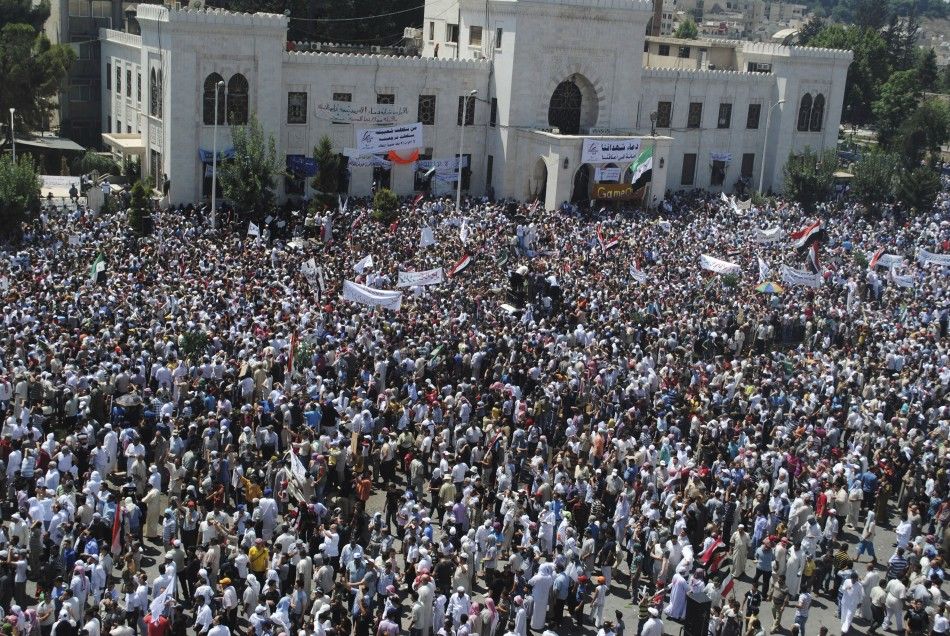
 The United States and European Union called on Syrian President Bashar al-Assad to step down Thursday, and U.S. President Barack Obama accused him of torturing and slaughtering his own people in what U.N. officials said could be crimes against humanity.

It was a dramatic sharpening of international rhetoric. Previously, major powers had urged Assad to reform rather than resign.

But with no threat of Western military action like that against Libya's Muammar Gaddafi, the five-month-old conflict between Assad and his opponents seems likely to grind on in the streets.

Putting faith in sanctions rather than force, Obama ordered Syrian government assets in the United States frozen, banned U.S. citizens from operating in or investing in Syria and prohibited U.S. imports of Syrian oil products.

Though U.N. Secretary-General Ban Ki-moon said Assad had assured him on Wednesday that military operations were over, activists said Syrian forces carried out further raids in Deir al-Zor and surrounded a mosque in Latakia Thursday.

The future of Syria must be determined by its people, but President Bashar al-Assad is standing in their way, Obama said. His calls for dialogue and reform have rung hollow while he is imprisoning, torturing and slaughtering his own people.

In a coordinated move, European Union foreign policy chief Catherine Ashton called on Assad to step aside and said the EU was preparing to broaden sanctions against Syria.

At the United Nations, Britain, France, Portugal, Germany and the United States said they would begin drafting a Security Council sanctions resolution on Syria. We believe that the time has come for the council to take further action, Britain's Deputy U.N. Ambassador Philip Parham told reporters.

U.N. human rights investigators said Assad's forces had carried out systematic attacks on civilians, often opening fire at close range and without warning, and committing violations that may amount to crimes against humanity.

A U.N. report issued in Geneva recounted complaints of indiscriminate shooting and of wounded people being put to death with knives or by being dumped in the refrigerated rooms of hospital morgues.

CRACKDOWN CONTINUING

The Security Council should consider referring the situation in Syria to the Hague-based International Criminal Court, the investigators said, adding that they had evidence against 50 suspects.

U.N. human rights chief Navi Pillay conveyed that message in a briefing to the council in New York later in the day. I ... recommended referral to the ICC, she told reporters. Diplomats said they would study the recommendation.

In a telephone call with Assad Wednesday, Ban joined a chorus of condemnation, expressing alarm at reports of widespread violations of human rights and excessive use of force by security forces against civilians.

The Syrian Revolution Coordinating Union, an activists' group, said security forces fired machineguns near a mosque in Latakia which was surrounded by armored vehicles.

It also said Assad's forces killed at least one man when they fired live ammunition to stop residents from marching after Ramadan prayers in the Mureijeh neighbourhood of Homs, 165 kilometers (100 miles) north of the capital Damascus.

Separately, it said security forces shot dead a man it identified as Ali al-Hussein and wounded six when they fired at a sit-in in the town of al-Ruhaibeh northeast of Damascus.

In New York, Syria's U.N. Ambassador Bashar Ja'afari accused the United States and European powers of waging a diplomatic and humanitarian war against Syria by imposing sanctions and demanding that Assad quit.

Britain's Parham told reporters the proposed U.N. sanctions would include an arms embargo, asset freezes and travel bans. But veto-holders Russia and China have so far opposed concrete measures against Damascus.

SANCTIONS IMPACT

Nadim Shehadi of London's Chatham House think tank said the shift in tone from Washington and Europe was significant, since it may encourage Syrians who saw previous calls for Assad to reform as an indication of support for him.

The previous messages from the West to Bashar al-Assad were ambiguous, Shehadi said. Now the West has hit at the very basis of the idea of his power, by telling him that we don't believe in you any more and you should leave.

Rosemary Hollis, Middle East politics lecturer at London's City University, said the move could rattle the regime. They will feel very isolated.

It may take time, however, for the diplomatic broadside, backed by sanctions, to have an impact on the 45-year-old president, who took power when his father President Hafez al-Assad died 11 years ago after three decades in office.

He has so far brushed off international pressure and survived years of U.S. and European isolation following the 2005 assassination of Lebanese statesman Rafik al-Hariri, a killing many Western nations held Damascus responsible for.

Despite the escalating international rhetoric and Western sanctions, no country is proposing to take the kind of military action NATO forces launched in Libya to support rebels fighting Gaddafi. That action has helped them take much of the country.

However, Syria's economy, already hit by a collapse in tourism revenue, could be further damaged by Obama's announcement. U.S. sanctions will make it very difficult for banks to finance transactions involving Syrian oil exports.

It will also make it challenging for companies with a large U.S. presence, such as Shell, to continue producing crude in Syria -- although the impact on global oil markets from a potential shutdown of Syria's 380,000 barrels per day oil industry would be relatively small compared to Libya.

Assad says the protests are a foreign conspiracy to divide Syria and pledged last week his army would not relent in pursuing terrorist groups.

U.N. INVESTIGATION

The U.N. investigators said Syrian forces had fired on peaceful protesters throughout the country, often at short range and without warning, killing at least 1,900 civilians, including children. Their wounds were consistent with an apparent shoot-to-kill policy, their report said.

The mission found a pattern of human rights violations that constitutes widespread or systematic attacks against the civilian population, which may amount to crimes against humanity, it said.

There was a clear pattern of snipers shooting at demonstrators, and in some cases targeting people trying to evacuate the wounded. In hospitals there were several reports of security forces killing injured victims by putting them alive in refrigerators in hospital morgues.

The United Nations plans to send a team to Syria this weekend to assess the humanitarian situation there, U.N. humanitarian chief Valerie Amos said on Thursday.

Apple's New MacBook Air with OS X Lion Coming in Weeks
Photo: Reuters

Apple's New MacBook Air with OS X Lion Coming in Weeks

Barclays Capital said its checks indicate it should see Apple Inc.'s new MacBook Airs over the coming weeks -- likely with the launch of OS X Lion which is due to ship in July.

Current MacBooks are powered by Mac OS X 10.6 (Snow Leopard), which was released in June 2009, and the OS X Lion represents a quantum leap forward in terms of OS advancement.

While product refreshes are generally a standard practice (faster, better, same cost), we believe the MacBook Airs could eventually replace the traditional white MacBook that remains in the line currently, said Ben Reitzes, an analyst at Barclays Capital.

Reitzes said Apple’s last MacBook Air refresh was in October 2010 where the company went to an all new design. He noted that several retailers are indicating that stock is low or unavailable for the current MacBook Airs -- supporting the near-term launch timing.

Reitzes noted that MacBook Airs do not use HDD’s and he expects many PC players to attempt to copy Apple’s form factor by 2012. He believes MacBook Air sales will accelerate significantly into the holidays and become much more prevalent as a percentage of Apple’s sales with each upgrade.

Reitzes believes the new MacBook Airs will help support his estimates for Mac sales growth of 24 percent year-over-year for the September quarter and 23 percent year-over-year for the December quarter.

The OS X Lion, which will only be available through the Internet and will come in downloadable version retailing for $29.99, includes a number of features that will make Apple's ultraportable MacBook Air more appealing for mobile users.

For instance, the Lion will feature Restart in Safari mode (the user will have the option to access a sandboxed version of the Safari browser directly from the lock screen, without having the need to log in), Resume (like iPhone users, Mac users will now be able to instantly resume an application where he/she had quit), Auto Save and Versions (Lion will not only automatically be able to save frequently what you’re working on but also it will save all versions of the file you’re working on) and AirDrop (a sort of Wi-Fi based peer-to-peer file moving utility that offers fully encrypted transfer with confirm to send and receive files function) but most importantly, it will offer automated syncing of important data and documents with iCloud, Apple's ambitious cloud-based music, video, photo and data automatic backup and push out service.

Reitzes said total PC unit volumes were indicated down 7 percent year-over-year for the week of June 12 to June 18 with Mac unit volumes indicated up 12 percent year-over-year. Mac shipments were up 10 percent last week with a growth of 14 percent year-over-year average over the previous four weeks.

Reitzes said NPD’s weekly data is a small subset of its monthly data; weekly data does include Apple store sales but not sales from Apple.com.

Reitzes still believes that a later than expected back to school promotion from Apple (started June 16, 2011 versus May 25, 2010 and May 27, 2009) could be the cause of some of the weaker year-over-year growth rates of late.

With regard to the entire PC market for the week of June 12 to June 18, NPD indicates that total unit sales in the U.S. were down 7 percent year-over-year in units (down 3 percent year-over-year in dollar sales) following a down 9 percent year-over-year performance last week and an average decline of 1 percent over the previous four weeks.

Notebook units were indicated down 7 percent year-over-year (versus down 9 percent year-over-year last week and an average decline of 2 percent over the previous four weeks) while desktop units are indicated -4 percent year-over-year (versus down 9 percent last week, and an average growth of 1 percent year-over-year over the previous four weeks).

Apple stock closed Wednesday's regular trading down 0.36 percent at $334.04 on the NASDAQ Stock Market, while in the after-hours the stock rose 0.02 percent to $334.10.

Must Read: Mac OS X Lion Gold Master release triggers pre-sale frenzy

Fifty Shades of Grey: Superman Henry Cavill as Christian Grey?
Photo: Facebook/nowhavefun.com

Fifty Shades of Grey: Superman Henry Cavill as Christian Grey?

Fifty Shades of Grey: Superman Henry Cavill as Christian Grey?
Taiwan Shares May Open Under Pressure
Photo: Facebook/nowhavefun.com

Taiwan Shares May Open Under Pressure

RTTNews - The Taiwan stock market has finished higher now in back-to-back sessions, collecting nearly 170 points or 3 percent on its way to a fresh 11-month closing high. The Taiwan Stock Exchange closed above the 7,100-point plateau, although investors are bracing for a modest decline at the opening of trade on Wednesday - perhaps handing that support right back.

The global forecast for the Asian markets is finally downbeat and could signal the end of several lengthy winning streaks in the region. Weakness among the commodity stocks is expected to weight heavily, while steel producers and technology shares could also ease on profit taking. The European markets ended firmly in the red and the U.S. markets also were mostly lower, and the Asian markets also are expected to move to the downside.

The TSE finished sharply higher on Tuesday, thanks to major gains among the construction, technology and paper sectors. Cement stocks also finished higher, as did the financials, food, textile and plastic stocks.

For the day, the index jumped 114.2 points or 1.62 percent to close at the daily high of 7,142.63 after opening at the low of 7,038.73. Volume was 5.61 billion shares worth 153.72 billion Taiwan dollars. There were 1,886 gainers and 553 decliners, with 144 stocks finishing unchanged.

Among the gainers, Founding Construction and King's Town Construction both were limit-up, while Yulon Motor added 3.06 percent and Taiwan Semiconductor Manufacturing Co was up 0.52 percent.

The lead from Wall Street is mildly negative as stocks closed Tuesday's session on a mixed note in reaction to the day's varied earnings and economic reports following a choppy trading session. The major averages closed on opposite sides of the unchanged mark, with the tech-heavy NASDAQ posting a modest gain.

On the economic front, consumer confidence deteriorated by more than expected in the month of July, according to a report released by the Conference Board this morning. The decrease reflected less favorable assessments of both current conditions and the near-term outlook. The Conference Board said that its consumer confidence index fell to 46.6 in July from an unrevised 49.3 in June. Economists had been expecting a much more modest decline by the index to a reading of about 49.0.

Also, the Standard and Poor's /Case-Shiller 20-City Composite Home Price Index fell at an annual rate of 17.1 percent in May compared to the 18.1 percent decrease reported for April. Economists had expected the report to show that prices fell 17.9 percent year-over-year. On a monthly basis, S&P said that 13 of the 20 metro areas reported positive returns, contributing to the first monthly increase by the 20-city composite since the summer of 2006. The 20-city composite index rose 0.5 percent for the month.

In earnings news, Valero Energy (VLO), Amgen (AMGN) and Manitowoc (MTW) reported earnings that beat analyst estimates. On the other hand, Office Depot (ODP) fell well short of analyst forecasts. Meanwhile, IBM Corp. (IBM) announced that it has entered into a definitive agreement to acquire SPSS Inc. (SPSS). The all-cash transaction has a price of $50 per share, resulting in a total cash consideration of approximately $1.2 billion.

The major averages saw further choppy movement to close out another low volume session. While the NASDAQ closed up by 7.62 points or 0.4 percent at 1,975.51, the Dow fell by 11.79 points or 0.1 percent to 9,096.72 and the S&P 500 slipped by 2.56 points or 0.3 percent to 979.62.

For comments and feedback: contact editorial@rttnews.com

Key facts about India's gold industry
Photo: Reuters

Key facts about India's gold industry


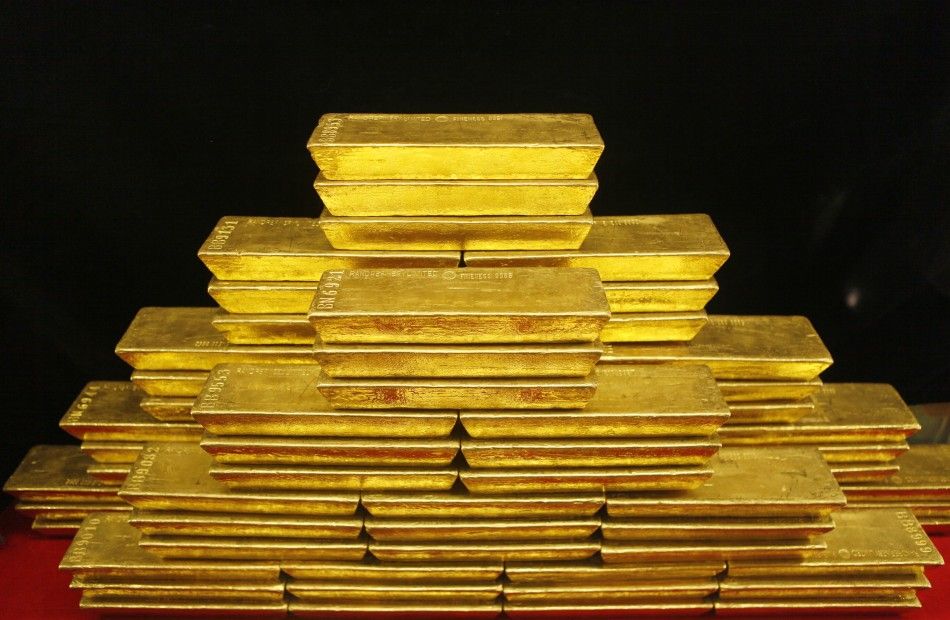
India's centuries-old gold industry is the world's biggest market for the metal, with imports meeting almost all the country's 800-900 tonnes per year requirements for jewellery and investment.

The market was only freed up in 1997, when the government allowed banks and other state-run trading firms to import the sensitive commodity directly.

Here are facts on the industry and changes taking place:

- India's gold imports rose 34.9 percent to 553 tonnes in the first half of 2011, according to the World Gold Council (WGC). Imports jumped 72 percent in 2010 to 959 tonnes.

- Imports are high but with a population of 1.2 billion, per capita consumption is relatively low. Per capita gold consumption is only 0.7 grams, half that of the United States and one-third of the Middle East, according to World Gold Council estimates.

- India's gold market is estimated to have more than 300,000 jewellers, mostly small, family-run businesses, a WGC study showed. Many jewellers are one-room shops with long-standing ties with customers, and items are often sold by weight.

- Only 31 state-run and private banks along with government trading agencies have licences to import gold because of its implications for foreign exchange flows.

- India's 2010/11 budget raised the import duty on gold and platinum to 300 rupees ($6.65) per 10 grams from 200 rupees previously, with the duty on silver raised to 1,500 rupees per kg from 1,000 rupees earlier.

- Investment purchases of gold have been rising faster than jewellery purchases. The WGC's latest data shows the investment to jewellery ratio was about 17:83 in the first half of 2011.

- Gold buying in the form of exchange-traded funds is rising. Launched in 2007, the total collection among seven fund houses is over 15 tonnes, nearly double the level a year ago.

- Large jewellery companies, such as Titan Industries, Reliance Jewels, Rajesh Exports and the state-run MMTC Ltd, are targeting the retail market with plans for hundreds of branded shops. They are hoping to attract sales from customers looking for a well-known name as a guarantee of quality.

- In 2009, India's gold market had its weakest year since trade was freed up in 1997. Record high prices and a failed monsoon meant imports fell 33 percent from the previous year to 480 tonnes, against an annual range between 600 and 800 tonnes in the previous five years.

Pound Regains Footing After Being Crushed By S&P Negative Downgrade
Photo: Reuters

Pound Regains Footing After Being Crushed By S&P Negative Downgrade


This is article is released weekdays under the heading Daily Fundamentals at 5pm EST on www.dailyfx.com

Pound sharply fell nearly 300 pips in the immediate aftermath of the S&P downgrading the outlook for the U.K. to negative from stable. The news overshadowed a better than expected retail sales print which kept the theme of improving fundamentals going for the economy.

Talking Points
• Japanese Yen: Services Sector declined Most In 12 Years
• Pound: S&P Lowers Outlook To Negative From Stable
• Euro: PMI Composite Rises To Eight Year High
• US Dollar: Philly Fed and Initial Jobless Claims on Tap

Pound Regains Footing After Being Crushed By S&P Downgrading U.K. Outlook to Negative From Stable


Pound sharply fell nearly 300 pips in the immediate aftermath of the S&P downgrading the outlook for the U.K. to negative from stable. The news overshadowed a better than expected retail sales print which kept the theme of improving fundamentals going for the economy. Consumer consumption rose 0.9% on a 3.5% gain in non-specialized stores. Also, an 11.9% increase in apparel sales from a year ago pushed the annualized figures up by 2.6%. However, the bleaker outlook by the rating agency is disputing the positive data and has traders worried that any recovery may not be that strong and may take the form of a u-shape rather than the preferred v-shape. Supporting a bearish bias was total business investment falling by 5.5% in the first quarter.

Standard & Poor's credit analyst David Beers said in a statement that We have revised the outlook on the UK to negative due to our view that, even assuming additional fiscal tightening, the net general government debt burden could approach 100 percent of GDP and remain near that level in the medium term. Markets are already concerned about the tax burden on consumer s going forward and if the government looks to extract more from Britons to offset their shortfall then the outlook for domestic growth will become dimmer and push out expectations for a recovery for the economy. We have seen sterling rise back above the 200-Day SMA at 1.5576 another break below the technical level would leave the 5/18 low of 1.5115 as the next form of strong support.

The Euro saw choppy price action as an improvement in the PMI reading help lift the single currency, but the pound's freefall would reverse those gains. The euro zone's services and manufacturing sectors contracted less than expected in May lifting the composite index to a eight month high of 43.9. The pace of the decline in new orders slowed which could be a sign that the economy is stabilizing and with the added efforts of the ECB improving the outlook for a recovery. After reaching as high as 1.3837 the EUR/USD dropped to 1.3740 and remains choppy as traders weigh the improvement in the outlook for the EZ economy against the impact of the dour outlook for the U.K. on their economy. Indeed, many had felt that the Euro-zone was lagging their neighbor in their recovery and the downgrade of the U.K. raises questions for their economy.

The U.K. downgrade added to the dour outlook by the Fed which could raise concerns over a global recovery and lend dollar support as traders look for safety. The FOMC minutes yesterday took the steam out of the improving outlook for the U.S. economy as they lowered their forecasts for growth in 2009 from a possible low of -2.0% to -2.5% and raised the upper bound of unemployment expectations to 9.2% from 8.5%. Therefore, we may see markets take their cue from today's fundamental data to see if it supports the central bank's new estimates. The Philadelphia Fed manufacturing indicator is expected to improve to -18.0 from -24.4 which would be the highest in eight months. The increase in activity will help ease some fears but as long it remains in negative territory optimism will be limited. The leading indicator gauge is also expected to improve to 0.8% from -0.3% and record the first positive reading in almost two years. However, initial jobless claims are expected to remain above 600,000 signaling that the labor market will remain a drag on any potential recovery. .

Will The EUR/USD Break 1.4000? Join us in Forum

Related Articles:

Risk Appetite and Dour FOMC Projections Weigh on Dollar's Future

To discuss this report contact John Rivera Currency Analyst: jrivera@fxcm.com


China milestones since 1989
Photo: Reuters

China milestones since 1989

China has undergone dramatic changes since the army crushed student-led pro-democracy protests centered on Beijing's Tiananmen Square on June 4, 1989.

It has broken out of diplomatic isolation, hosted the Olympics and put a man in space.

Here are some landmark dates following the demonstrations:

* 1990: Shanghai Stock Exchange, Communist China's first ever stock market, opens.

* 1992: Paramount leader Deng Xiaoping tours southern China to press for faster economic reforms and quell influence of Party conservatives opposed to market liberalization.

* 1995-96: China menaces Taiwan with war games ahead of island's first direct presidential elections, plunging bilateral ties to lowest ebb since detente began in late 1980s.

* 1996: China allows yuan to be convertible on current account, enabling free flow of money for imports and exports.

* 1997: Deng dies in February. British colony of Hong Kong reverts to Chinese rule in July. President Jiang Zemin visits the United States later that year, first trip by a Chinese head of state in more than a decade and breaking China out of diplomatic isolation in post-Tiananmen period.

* 1998: U.S. President Bill Clinton visits China. Zhu Rongji takes over as premier, reforming lumbering state-owned enterprises and laying off millions, cracking down on smuggling and revamping health care system.

* 1999: In May, NATO missiles hit Chinese embassy in Belgrade during war against Serbia, prompting angry Chinese to protest and stone U.S. embassy in Beijing. Falun Gong spiritual group is banned as a cult after besieging Chinese leadership compound.

* 2001: U.S. spy plane makes emergency landing in southern tropical island of Hainan after colliding with Chinese fighter jet. China joins World Trade Organization in November.

* 2002: Chinese Communist Party opens its doors to private entrepreneurs to become members. Hu Jintao succeeds Jiang Zemin as Party chief in Communist China's first peaceful transfer of power.

* 2003: Hu replaces Jiang as state president in March. SARS breaks out around the country in spring. China's first manned space flight blasts off from Gobi desert in October.

* 2004: Jiang hands over top job in military to Hu.

* 2005: Zhao Ziyang, who was ousted as Party chief in 1989 for opposing Tiananmen crackdown, dies after 15 years under house arrest. China frees yuan from dollar peg, letting it float within tightly managed band.

* 2006: Two ambitious but controversial projects, Three Gorges Dam and a railway to Tibet, are completed. China's foreign currency reserves, already world's biggest, top $1 trillion.

* 2007: Communist Party congress names two next generation leaders. China sweeps past Germany to become world's third-largest economy.

* 2008: Beijing hosts Summer Olympic Games in August, illustrating China's arrival on world stage. But the year is marred by devastating earthquake in Sichuan province in May and riots across Tibetan parts of the country in March.

Source: Reuters

(Compiled by Ben Blanchard and Benjamin Kang Lim; Editing by Nick Macfie and Dean Yates)

Pound Soars Ahead Of BoE Rate Decision, Euro Finds Support As Risk Appetite Returns on Alcoa Earnings
Photo: Reuters

Pound Soars Ahead Of BoE Rate Decision, Euro Finds Support As Risk Appetite Returns on Alcoa Earnings


This is article is released weekdays under the heading Daily Fundamentals at 5pm EST on www.dailyfx.com

The Pound pushed back above 1.6200 after falling below 1.6000 early yesterday as a pick up in risk appetite and overbought conditions inspired sterling bulls.


Talking Points
• Japanese Yen: Found Resistance at 93.60
• Pound: Higher Ahead Of BoE Rate Decision
• Euro: Higher As ECB Upbeat in Monthly Report
• US Dollar: Initial Jobless Claims On Tap.

Pound Soars Ahead Of BoE Rate Decision, Euro Finds Support As Risk Appetite Returns on Alcoa Earnings

The Pound pushed back above 1.6200 after falling below 1.6000 early yesterday as a pick up in risk appetite and overbought conditions inspired sterling bulls. The cable continues to find support ahead of the BoE rate decision where the central bank is expected to keep their benchmark rate on hold at 0.50%. Meanwhile, the U.K. Visible trade balance showed that the deficit narrowed to -£6263 from -£7137 as imports declined raising concerns over domestic growth.

The BoE may potentially add to their bond purchase program by as much as £25 billion as they look to take a final step in trying to ease credit conditions and stimulate growth. Banks still remain reluctant to loan money which has started to thwart the recovery in the housing sector. Indeed, we saw Halifax report home prices fell in June by 0.5% yesterday. The added measure could be seen as a negative and a sign that downside risk remain for the economy and a recovery isn't a forgone conclusion. Fears of a double dip recession is starting to emerge and if we see the efforts of the central bank fail to thaw credit markets and inspire growth then a depression scenario could become a possibility. However, if the MPC stands pat or closes the curtain on their quantitative efforts due to signs that economy is stabilizing and growth is returning, then we could see continued bullish pound sentiment. At the current G-8 meeting global leaders are talking of reversing recent stimulus efforts but still see the recovery as too fragile to consider initiating at this time and we could see similar talk from the BoE. 1.600 continues to provide solid support for the GBP/USD and the current bounce may lead to a test of resistance at 1.6372-20-Day SMA.

The Euro soared over 100 pips and threatening to test 1.4000 led by the first advance for equities in six days and an upbeat ECB monthly report. The central bank in their monthly report stated that current interest rates are appropriate and that economic risk remained balanced. Activity is expected to fall at a slower pace throughout the remainder of the year with growth returning by mid 2010. However, the German trade balance widened to 9.6B from 9.4B as imports fell 2.1% outpacing a small gain in exports. Final German CPI figures for May showed inflation at 0.1% which is on the verge of following the regional reading into negative territory. The central bank in their report stated that negative inflation will be a temporary phenomenon and will reverse as growth returns.

The dollar has come under pressure as risk appetite has picked up on the back of better than expected results from Alcoa. The world's largest aluminum maker kicked off earnings season on a positive note by posting a smaller than expected loss and predicted that Chinese and U..S. stimulus will help the company start generating cash flow. Corporate earnings will have a significant impact on risk appetite and dollar sentiment which makes 3COms release worth watching today. The economic docket will bring initial jobless claims which could also add to prevailing optimism if we see a print below 600,000. Conversely a worse than expected print could raise concerns that continued weakness in the labor market will limit the scope of a recovery and spark safe-haven flows. Wholesale inventories and ICSC chain store sales will provide insight into domestic demand and the potential earnings results from retailers.

Will The EUR/USD Fall Below 1.4000? Join us in the Forum

Related Articles:

Forex Trading the Bank of England Interest Rate Decision

To discuss this report contact John Rivera Currency Analyst: jrivera@fxcm.com


USD/JPY Technical Analysis 16 June 2009
Photo: Reuters

USD/JPY Technical Analysis 16 June 2009

USD/JPY 96.65 - 16 June

USD/JPY Open 97.81 High 98.57 Low 96.09 Close 97.84

Dollar/Yen descended sharply on Monday. The currency couple reached a top at 98.57, but failed to overcome the the 98.60 resistance, and closed the day lower at 97.84. On the 1 hour chart is seen that after the unconvincing break up of the triangle formed, the pair sharply dropped in early morning trading today and broke down the triangle. Short term signals are descending, with objectives towards 95.60. The CCI indicator has crossed down the 100 on the 1 hour chart, suggesting potential descending pressure with possible test of the next 94.50 support level.

Technical resistance levels: 97.65 98.55 99.80

Technical support levels: 95.60 94.50 93.15

Trading range: 96.55 - 97.15

Trend: Upward

Buy at 96.65 SL 96.35 TP 97.05

Already made +50 pips profit on USD/JPY today from the following signal:

5:44 GMT+1 Sell USD/JPY at 96.66 SL 96.92 TP 96.16 TP reached at 6:55 GMT.

Total today +169, yesterday +163, as shown at www.zifx.com/performance.php

"Fifty Shades of Grey" casting rumors are just that, rumors-- and author E. L. James took to Twitter to make sure that everyone knows it, whether it's concerning James Deen, Ryan Gosling or Ian Somerhalder.

Though the tweets have since been deleted, the New York Times best-selling novelist originally wrote:

"ALL CASTING NEWS [IS] NOT TRUE. ALL ARE JUST RUMOURS AT THE MOMENT. YES, SHOUTY CAPITALS. GRRR"

Reports broke Tuesday night that hunky boy-next-door porn star James Deen, 26, was officially in the running to be cast as the sadistic sexual deviant Christian Grey after novelist Bret Easton Ellis tweeted that he had "inside" information.

"Just got inside information that James Deen is actually in the running to play Christian in 'Fifty Shades of Grey' with E.L. James support," Ellis tweeted on Saturday.

"'Fifty Shades of Grey' will be budgeted at 12-15 million and James Deen is on the list of actors to play Christian Grey according to source," Ellis tweeted.

He added, "Fifty Shades of Grey movie will DEFINITELY be written by a woman and the budget will be below 15 million. Ana will be played by an unknown."

Famed porn star James Deen, whose real name is Brian Sevilla, was even getting excited about the rumors and wrote, "Deenagers unite!!!! RT @prefixmag Would you watch 'Fifty Shades of Grey' if the lead role was a porn star?"

But he must have gotten wind that E. L. James was upset about the rumors fluttering around the Internet and remarked, "There you have it. All further questions should be directed towards ms james RT @E_L_James ALL CASTING NEWS NOT TRUE. ALL ARE RUMOURS."

E.L. James tweeted a couple of months ago that casting for the "Fifty Shades" movie was premature since a director and producer hadn't even been chosen yet-and it is therefore impossible to cast a movie, even if James gets the final say.

Most people weren't happy to hear that porn star James Deen was in the running to play their favorite sadist, especially after James' husband recently said that he "thought" fan favorite Ryan Gosling was going to get the role.

It was even joked by some that casting James Deen in the role of Christian Grey would be a "hard limit."

Who do you think should be cast as Christian Grey?