Huawei Is Going To Trial In The U.S. The Case Has Been Building For Eight Years.
The Chinese technology giant faces charges tied to its Iran business as well as allegations involving trade secrets, sanctions and bank fraud.


Huawei Technologies is heading to trial in New York nearly eight years after U.S. prosecutors first charged the Chinese technology giant with misleading banks about its business in Iran, bringing one of Washington's longest-running criminal cases against a major Chinese company before a jury.
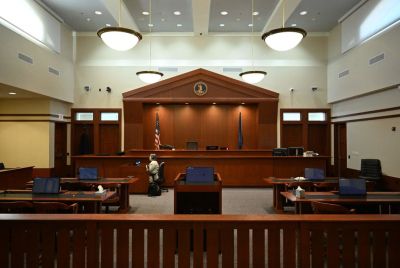
Jury selection begins Tuesday in federal court in Brooklyn before U.S. District Judge Ann Donnelly. Huawei has pleaded not guilty and denied wrongdoing. The trial is expected to last about three months.
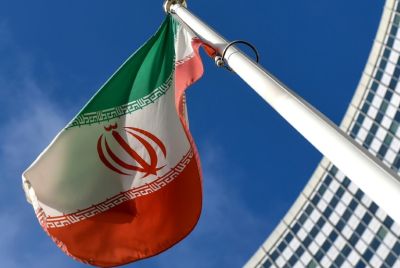
The case centers partly on Huawei's relationship with Skycom Tech, a company that operated in Iran. The U.S. Justice Department alleges Huawei used Skycom to obtain U.S.-origin goods, technology and services in Iran while misrepresenting the relationship between the two companies to financial institutions.
Prosecutors also accuse Huawei of sanctions violations, money laundering, wire and bank fraud, obstruction and racketeering. A 2020 superseding indictment added allegations that Huawei conspired to steal trade secrets from U.S. technology companies and made false statements about business activities in North Korea.
The indictment further alleges that Huawei helped install surveillance equipment in Iran that could be used to identify and monitor protesters during anti-government demonstrations in Tehran in 2009. If convicted, the company could also face forfeiture of property or proceeds prosecutors say were connected to illegal activity.
Part of the government's case grew from Reuters investigations into Huawei's ties with Skycom. The news organization reported in 2012 and 2013 that Skycom had offered to sell embargoed Hewlett-Packard computer equipment to an Iranian telecommunications company and that Huawei Chief Financial Officer Meng Wanzhou had previously served on Skycom's board.
Meng was arrested in Vancouver in December 2018 at the request of U.S. authorities, setting off a diplomatic dispute involving Washington, Beijing and Ottawa. She returned to China in 2021 after reaching a deferred prosecution agreement with U.S. prosecutors.
As part of that agreement, Meng acknowledged making false statements about Huawei's relationship with Skycom during a presentation to a financial institution. The Justice Department later dismissed the charges against her after the agreement expired, but the prosecution of Huawei continued.
The case also preceded years of U.S. restrictions on Huawei. The Commerce Department placed the company on its Entity List in 2019, restricting its access to U.S. technology, and Washington subsequently tightened controls further.
Huawei has rejected the criminal allegations as unfounded, with a company spokesperson telling the news agency ahead of the trial that the government's overarching narrative was "demonstrably false." China has also repeatedly criticized Washington's treatment of the company.
© Copyright IBTimes 2026. All rights reserved.
- Recommended For You