Sen. Mark Warner to Unveil His Most Ambitious AI Plan. It Requires Government Testing Before Powerful Models Launch
Warner has largely rejected proposals for a moratorium and stricter limits on AI, instead advocating for more transparency.

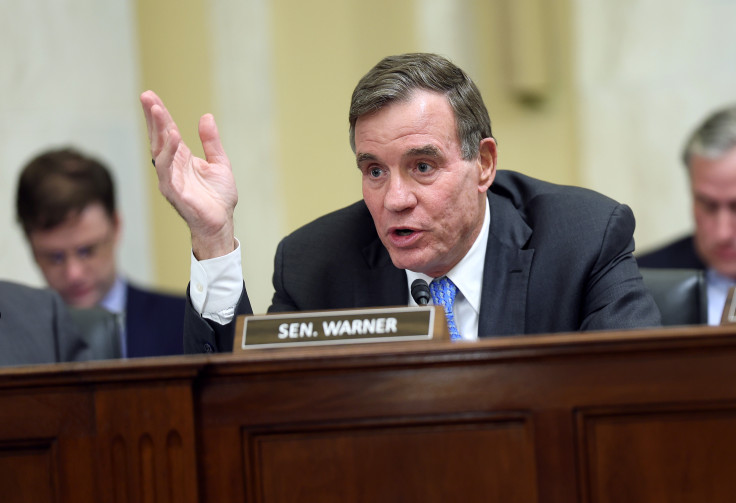
Sen. Mark Warner is rolling out one of the most comprehensive artificial intelligence policy proposals introduced in Congress this year, placing AI regulation at the center of both his legislative agenda and his 2026 reelection campaign.
The Virginia Democrat is introducing a broad AI legislative framework that would require government testing of the country's most advanced AI systems before they are deployed while also addressing concerns over energy use, consumer safety, financial stability and the technology's impact on American workers, according to a report first obtained by Axios.
Warner, who serves as vice chair of the Senate Intelligence Committee, has increasingly positioned himself as one of Congress' leading voices on artificial intelligence, arguing that lawmakers cannot afford to wait until the technology creates a major crisis before establishing safeguards.
"One lesson I've learned over years of overseeing the Intelligence Community is that our greatest national security failures often come when we recognize a threat but fail to act until after a crisis," Warner is expected to say during a Senate floor speech Tuesday, according to prepared remarks reported by Axios.
The centerpiece of the legislative package is the Secure AI Development Act, which would establish mandatory government testing requirements for frontier AI models before they are released. The proposal would also create a voluntary reporting system for AI safety incidents, allowing developers to disclose dangerous or unexpected behavior in advanced systems.
Among its provisions, the package would require large data centers to publicly disclose their energy consumption and water usage, an increasingly controversial issue as AI computing drives demand for massive facilities that consume enormous amounts of electricity and water. Certain federal tax incentives would also be linked to sustainability standards, encouraging companies to build more environmentally efficient operations.
The legislation also proposes new guardrails for consumer-facing AI agents while prohibiting federal agencies from purchasing AI systems capable of generating child sexual abuse material. In the financial sector, regulators would be required to evaluate and mitigate risks posed by AI-generated content that could destabilize financial markets.
Warner's proposal would also establish a workforce transition fund designed to help workers adapt to technological disruption. The fund would be financed by limiting certain tax incentives currently available to AI-related data centers.
The issue carries particular significance in Warner's home state. Virginia has become the nation's largest hub for data centers, with Northern Virginia hosting one of the world's highest concentrations of facilities that power cloud computing and artificial intelligence services.
That economic importance has placed the state at the center of a growing debate over the environmental and infrastructure costs of the AI boom. Virginia lawmakers have been weighing whether to repeal longstanding tax incentives for data centers as local communities raise concerns over electricity demand, water consumption and land use.
Unlike some Democrats who have called for stricter limits or temporary moratoriums on new data center development, Warner has largely rejected those proposals, even going so far as to label New York Representative Alexandria Ocasio-Cortez's call for an AI moratorium "idiocy." He instead has been advocating for stronger transparency requirements and sustainability standards while allowing the industry to continue expanding.
Warner is also expected to acknowledge the profound disruption AI could bring in the coming years while arguing that stopping its development is no longer a realistic option."I share the concern of many Americans that the impacts of this technology on our country and our culture could be catastrophic," Warner is expected to say.
"But let's be honest with ourselves ... we're not putting this genie back in the bottle. And the amount of disruption this technology will bring over the next five years is, frankly, beyond jaw-dropping."
© Copyright IBTimes 2026. All rights reserved.
- Recommended For You