SpaceX Will Spend Up To $100 Billion To Build a New Launch Facility
Elon Musk said the initiative would bring "probably 10,000 really exciting jobs" to the state.

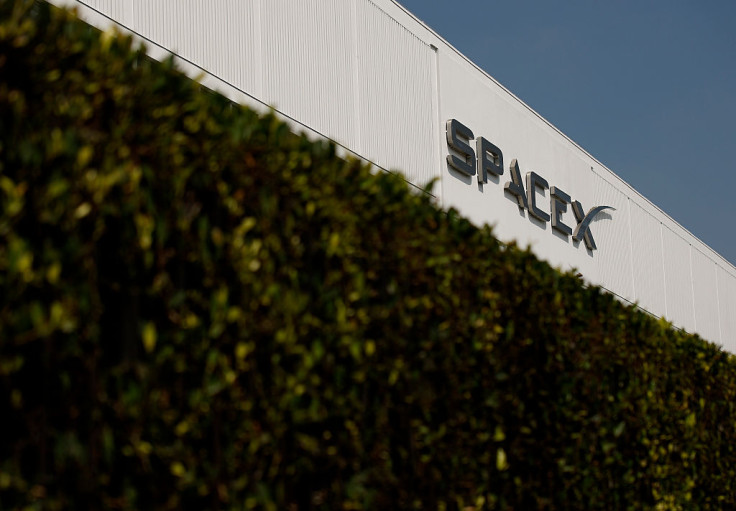
SpaceX announced on Tuesday it will spend up to $100 billion to build a new launch facility in Louisiana.
The company said in its website that Starbase "will be built to support thousands of Starship flights a year."
"This self-sustaining spaceport will have propellant production, power generation, deep-water shipping capabilities, vehicle processing facilities, and an airport."
Construction is set to start next year, with the first Starship launch projected for 2029. The project is set to create "more than 3,000 new jobs at Starbase, Louisana hiring heavily from nearby communities and utilizing Louisiana workers' extensive experience of building complex infrastructure in their unique environment," according to SpaceX.
Introducing Starbase, Louisiana – a high-cadence launch site that will enable Starship to open a pathway to the stars for humanity.
— SpaceX (@SpaceX) August 25, 2026
Thank you to @LAGovJeffLandry and the great people of Louisiana for all of their support as we work together on this audacious project →… pic.twitter.com/hq308hvg2g
SpaceX also said on Tuesday that it is pushing up the timeline to launch an AI-powered satellite.
"SpaceX, in partnership with Nvidia, has designed a space-optimized Vera Rubin NVL72 system for launch to orbit in Q4 next year, with significant scale in 2028," Musk said in a social media post. The previous goal was yo launch the satellites in 2028.
The company also announced it would be using the Nvidia processors "to accelerate the orchestration, code execution, and data processing that powers its next generation of agentic AI."
SpaceX is also seeking to revive mPower, a small modular reactor project that was abandoned in 2017 after years of development. The centerpiece is a roughly 120-foot-tall test facility outside Lynchburg, Virginia, designed to mimic the workings of a nuclear power plant without using nuclear fuel.
Applied Atomics co-founder Ben Kellie, a former SpaceX engineer who led engineering for the company's inaugural West Coast launch from Vandenberg, sees the dormant facility as a shortcut in an industry where developing new reactor technology can take years and consume billions of dollars.
"We're standing on the shoulders of giants here, right?" Kellie told The Washington Post. "We're starting with something that had $400 million in investment put into it, and significant time and effort. That's a leg up."
The renewed interest comes as the AI boom dramatically increases electricity demand. Data centers require enormous amounts of continuous power, putting pressure on electric grids and pushing technology companies to search for reliable sources that can operate around the clock while producing relatively low carbon emissions.
That search has helped revive interest in nuclear energy, including small modular reactors, or SMRs, which developers hope can be manufactured and deployed more quickly than conventional nuclear plants.
Applied Atomics' approach differs from some of the more experimental reactor technologies attracting Silicon Valley investment. Rather than relying on novel fuels and cooling systems, mPower is essentially a smaller version of the light-water reactors already operating across the United States.
© Copyright IBTimes 2026. All rights reserved.
- Recommended For You