Trump Says Oil Is Flowing Through Hormuz. Independent Trackers Show a Different Picture.
The Trump administration maintains that the U.S. Navy is assisting dozens of ships through the waterway at night and that many of those movements are not detected by commercial tracking services.


A widening dispute over how much oil is moving through the Strait of Hormuz is creating a murky picture of one of the world's most important energy corridors, particularly as the White House and independent shipping trackers offer dramatically different assessments of traffic through the waterway.
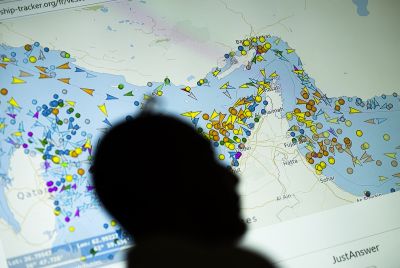
Ship-tracking service Kpler said traffic through the Strait of Hormuz "declined sharply" on Monday, with only five vessels crossing. That same day, the United States and Iran exchanged fire for the first time in a month, renewing concerns about the security of energy shipments from the Persian Gulf.
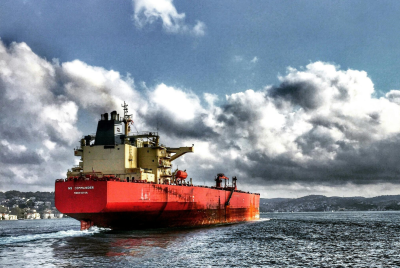
The Trump administration presented a starkly different account. Energy Secretary Chris Wright told CNBC that more than 17 million barrels of oil moved through the strait Monday, describing it as a record since the conflict began. The administration maintains that the U.S. Navy is assisting dozens of ships through the waterway at night and that many of those movements are not detected by commercial tracking services.
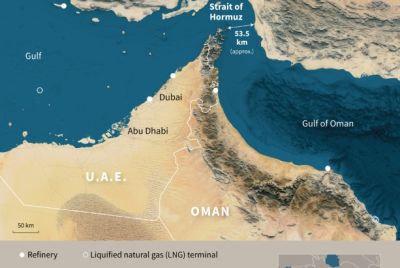
The competing numbers matter because the Strait of Hormuz, which is only about 21 miles wide at its narrowest point, is a critical passage for global energy supplies. Uncertainty about whether oil is moving freely through the strait can quickly influence crude prices, inflation expectations and the outlook for the global economy.
The disagreement has become increasingly political. President Donald Trump has repeatedly argued that the United States controls the waterway and said Monday that ships have been moving through at a much higher rate than independent trackers indicate.
"We've been averaging 30 ships a night [and] a lot of oil is coming out," Trump told reporters. On Wednesday, Trump went further, writing on Truth Social, "Should we change the name Hormuz Strait to TRUMP STRAIT???"
Independent data, however, continues to paint a significantly more constrained picture. Figures compiled by Oxford University's PortWatch project have shown fewer than five oil tanker crossings per day, with total vessel crossings remaining in the single digits for weeks.
Before the conflict, approximately 120 vessels, including dozens of tankers, crossed the strait daily, according to a Yahoo Finance report. TankerTrackers.com estimated Wednesday that an average of roughly 4.9 million barrels of oil per day has moved through Hormuz since a U.S.-Iran ceasefire broke down in mid-July. That estimate is far below Wright's claim of more than 17 million barrels on Monday.
Crude oil exports via the Strait of Hormuz per our tracking:
— TankerTrackers.com, Inc. (@TankerTrackers) September 2, 2026
- Pre-conflict era (2026-01-01 to 2026-02-28): 16.63 Mbpd
- Pre-US blockade conflict era (2026-02-28 to 2026-04-13): 3.45 Mbpd
- First US blockade (2026-04-13 to 2026-06-18): 2.72 Mbpd
- MoU effective era (2026-06-18…
Renewed U.S.-Iran tensions are again affecting energy markets. New attacks have pushed crude prices higher, with Brent oil moving above $95 a barrel. Another point of contention is where ships are traveling.
Tracking data indicates that much of the traffic that does make it through Hormuz is using the so-called Iranian Unilateral Scheme, a northern route closer to Iran's coastline. That could complicate assertions that Washington exercises effective control over shipping through the area.
Commercial tracking services acknowledge that their numbers are imperfect. Ships can disable their Automatic Identification System transponders, making movements harder to detect in real time. Kpler has said its estimates are therefore sometimes revised as satellite imagery and other information confirm previously hidden voyages.
Recent revisions have increased estimates of oil flows through Hormuz, but they still have not approached the Trump administration's claims of dozens of ships crossing nightly. "When a movement is confirmed late, it is backdated," Kpler explained, meaning newly discovered shipments are assigned to the dates when they actually occurred rather than counted as current traffic.
© Copyright IBTimes 2026. All rights reserved.
- Recommended For You