

6 in 10 Americans Call Themselves Working Class. Even Half of Upper-Income Adults Do.
Americans without four-year college degrees are considerably more likely to identify as working class.

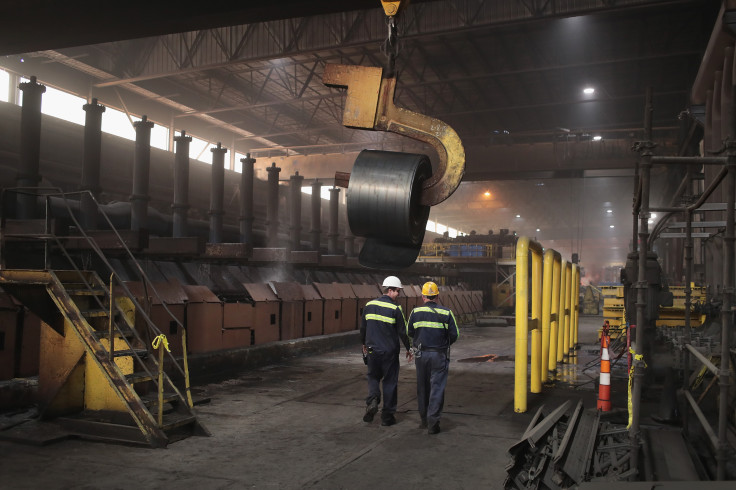
The image of America's working class as people without college degrees earning their living in factories, construction sites, or other blue-collar jobs doesn't fully capture how millions see themselves.
A new Pew Research Center analysis has found that 60% of U.S. adults said the term "working class" describes them extremely or very well, an identity that extends far beyond traditional definitions based on income, education or occupation.
The findings are based on a Pew survey conducted in January 2026, and show that people identifying themselves as working-class has increased in just two years. In 2024, 54% of Americans said the description fit them well.
Americans without four-year college degrees are considerably more likely to identify as working class, with 66% embracing the label compared with 50% of adults with bachelor's degrees. Middle-income Americans are the most likely to describe themselves as working class at 67%. But 57% of lower-income adults and fully half of upper-income Americans also say the term describes them well.
The findings illustrate just how elastic the meaning of "working class" has become in the United States. The phrase can refer to income, educational attainment or occupation. It can also encompass virtually anyone who primarily depends on working for a living, regardless of how much they earn.
Pew found that 50% of Americans who consistently pay their bills in full, have several months of emergency savings, and can comfortably meet their expenses still considered themselves working class. Among people Pew classified as blue-collar workers, 77% identified as working class. Yet 61% of workers in other occupations said the same thing.
Overall, 67% of Republicans and Republican-leaning independents described themselves as working class, compared with 55% of Democrats and Democratic leaners. Pew's analysis found that the partisan relationship remained even after accounting for factors including economics, occupation and education.
Among Americans without bachelor's degrees, 72% of Republicans and 61% of Democrats identified as working class. Among college graduates, the numbers fell to 56% and 44%, respectively. Pew found a 23-percentage-point partisan gap among upper-income Americans. Upper-income Republicans are about as likely as lower-income Republicans to identify as working class, while affluent Democrats are considerably less likely to adopt the label.
Sixty percent of Republicans experiencing few financial stresses identified as working class, compared with 39% of similarly comfortable Democrats. White adults are the most likely to identify as working class overall, at 62%, followed closely by Hispanic adults at 59%.
The figure stands at 54% among Black adults and 52% among Asian adults, with Pew noting that its Asian estimates represent English-speaking adults. Among White adults without bachelor's degrees, 71% call themselves working class, compared with 48% of White college graduates. But the education divide largely disappears among Hispanic and Black Americans.
In fact, 61% of Hispanic college graduates identify as working class, slightly higher than the 59% of Hispanics without four-year degrees who say the same. Among Black Americans, 58% of college graduates identify as working class compared with 53% of those without bachelor's degrees.
© Copyright IBTimes 2026. All rights reserved.