AI Companies Are Warning About Frontier Development. An AI Researcher Says Regulation is Key To Avoid ‘Catastrophe.’
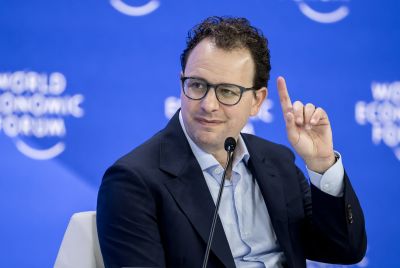
Stuart Russell, Distinguished Professor of Computer Science at the University of California, Berkeley said warnings from top AI executives should be taken seriously.
Researchers working closest to developing advanced AI systems are openly warning about the speed at which the technology is progressing and the possibility of humanity losing control.
The warnings from inside the industry have grown louder after Evan Hubinger, who leads alignment research at Anthropic, said he believed there was a greater than 10% chance that AI could "kill all humans" within the next decade.
Alex Turner, A former Google DeepMind employee became the latest AI researcher to warn that the technology could "kill all humans", saying that time may be running out to prevent such an outcome.
But can artificial intelligence actually bring about the end of humanity?
International Business Times spoke about the topic with Stuart Russell, Distinguished Professor of Computer Science at the University of California, Berkeley, and President of the International Association for Safe and Ethical Artificial Intelligence.
Asked whether warnings about human extinction were genuine or merely marketing hype intended to attract attention or make money, Russell rejected the question outright.
"I think this is an insulting and blatantly false claim," he said. "There is really no evidence, as far as I know, that the people who are saying these things do not believe what they are saying."
Russell went on to note that warnings about machines escaping human control predated today's leading AI companies.
He cited computer science pioneer Alan Turing, who warned in 1951 that humanity would have to expect intelligent machines to take control.
"If you think there is no risk of extinction, then you should explain why you think there's no risk of extinction," Russell said.
He was then asked whether machines more intelligent than humans could eventually rule over humanity or manipulate people into making decisions.
He described "loss of control" as the point after which human beings would no longer have a meaningful say in what happens.
"If you build systems that are more intelligent than humans, and you don't have a solution to this control problem, then we are going to lose control," he warned. "And then we're not going to have a say in what happens. And one of the things that may well happen is that we cease to exist."
Russell did not claim that extinction was certain or attach his own percentage to the possibility.
Instead, he said estimates such as 10%, 20% or 25% were based largely on individual judgement rather than a reliable mathematical calculation.
"This is just a gut feel, right? There's no mathematical calculation behind these numbers," he said.
However, Russell argued that even a 10% possibility of extinction should not be considered reassuring.
"It's only 10% chance of extinction, which is obviously horrific and totally unacceptable," he said.
He also warned that humanity was deploying increasingly capable AI systems without subjecting them to safety testing comparable to that required in aviation and other regulated industries.
Russell compared the development of super-intelligent AI to placing the entire human race aboard an experimental aircraft.
"The whole human race is getting on a plane that has never flown before, that has never been tested, and the flight is going to go on forever," he said.
"So it has to work perfectly forever the first time."
Russell said developers were constantly discovering problems and then racing to resolve them before they caused a catastrophe.
"The plane is being built while we're flying it because we are constantly discovering problems and then racing to fix those problems before they become real catastrophes," he said.
He argued that regulation offered humanity its best chance of avoiding such an outcome.
"To be completely honest, regulation is our best bet for avoiding catastrophe," Russell said.
He rejected the technology industry's frequent argument that regulation would suppress innovation, noting that aircraft, cars, buildings, elevators, food and water are all governed by safety rules.
"Everyone benefits from the fact that we regulate all these industries and innovation happens within those industries inside an envelope of safety," he said.
Russell's warning was conditional but stark: if humanity creates machines more intelligent than itself without first solving the control problem, humans could lose control of their own future.
© Copyright IBTimes 2026. All rights reserved.
- Recommended For You