

AI’s New Red Flag: US Dangles Pax Silica At Partners To Sideline China
Washington plans to inform partner nations that they cannot be part of Beijing-backed AI initiatives, Reuters reported.

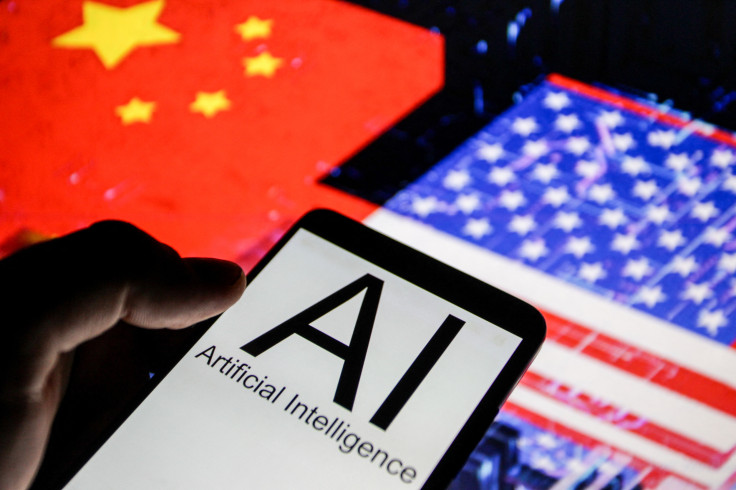
Washington is leaving no stone unturned as it prepares for the next big battle on the horizon. In the looming Artificial Intelligence (AI) battle, the US is preparing the groundwork to let its partners know that they can't have pacts with China if they are keen to join the US-led AI coalition. In other words, those who want to dabble with China can rest assured that they will be excluded from US-led AI initiatives.
An unnamed US aide confirmed that the Trump administration is planning to convey this to its partners in no uncertain terms. The proposed message is this: if you wish to align with a competing framework backed by China, you cannot hope to engage with the US-powered AI initiatives, Reuters reported.
Reuters also reviewed an internal draft of a planned missive. Washington had launched the Pax Silica initiative in 2025. The Trump administration's aim was to ensure supply chains for AI models, semiconductors and critical minerals, according to the news outlet's report.
The launch came amid signs of a brewing technology rivalry with Beijing.
Nearly two dozen nations have signalled their backing for Pax Silica, including Kazakhstan, a key potential source of critical minerals. Close allies of Washington including Japan, Australia and South Korea were also roped in.
But the trouble is that Kazakhstan had no qualms to join the China-led AI coalition also. This has not gone down well with the US policy makers. A draft letter prepared by the US State Department is to be reportedly sent to the 35 signatories of a US "AI Opportunity Statement" signed in June this year.
This includes members of the non-binding Pax Silica framework and other countries that have expressed interest to cooperate with the US in the expanding AI race, which has major geopolitical implications.
The US hopes to mount pressure on key countries to opt out of the China-backed initiative. This will ensure the isolation of China as the countries unleash a fierce race to develop vital AI platforms. The US envisages that military and economic dominance would follow suit if AI dominance is ensured. This is also the view of policy wonks, according to reports.
China had in July rolled out a perceived rival to Pax Silica, called "World Artificial Intelligence Cooperation Organization."
Chinese President Xi Jinping seeks to promote the communist nation's open-weight technology in an apparent bid to challenge the clout of the US in this sector.
Kazakhstan's move to join the China-led coalition has rattled Washington.
"To be part of everything is to be part of nothing. Signature of the Pax Silica Declaration is not merely a membership subscription, but a commitment," the letter says, according to the report. The letter, which does not name China, also demands countries to "choose deliberately" on AI.
"It cannot be held alongside membership in duplicative initiatives whose expectations conflict with our own," according to the draft letter.
The news agency report however mentioned it could not determine when Washington will shoot off the letter as well as if any amendments or tweaks were likely.
The US State Department refused to comment on "purportedly leaked internal documents."
China's embassy in Washington said the country opposes politicizing trade and technology issues. "Such actions will only stifle global AI advances and serve no one's interests," an embassy spokesperson said, according to the Reuters report. The Kazakh embassy in Washington also chose not to respond.
The Pax Silica pact aims to push Washington's allies and partners toward collaboration and envisage export controls. It aims to curb reliance on 'adversaries' for critical minerals, AI models and the semiconductor chips that power them.
The AI race assumed added dimension after Chinese open-weight AI models made significant strides against proprietary systems floated by US tech giants including OpenAI and Anthropic.
© Copyright IBTimes 2026. All rights reserved.