

Can China Copy Its Way To AI Dominance? Trump Administration Says Kimi K3 Is The Result Of Anthropic “Heist”

KEY POINTS
- Experts disagree on whether distillation alone could explain Kimi K3's rapid rise, with some suggesting earlier access to Anthropic's technology.
- U.S. officials also allege Moonshot circumvented export controls on Nvidia's advanced AI chips.
- China bans Nvidia chips as well as the country lags the U.S. in one crucial metric: compute.
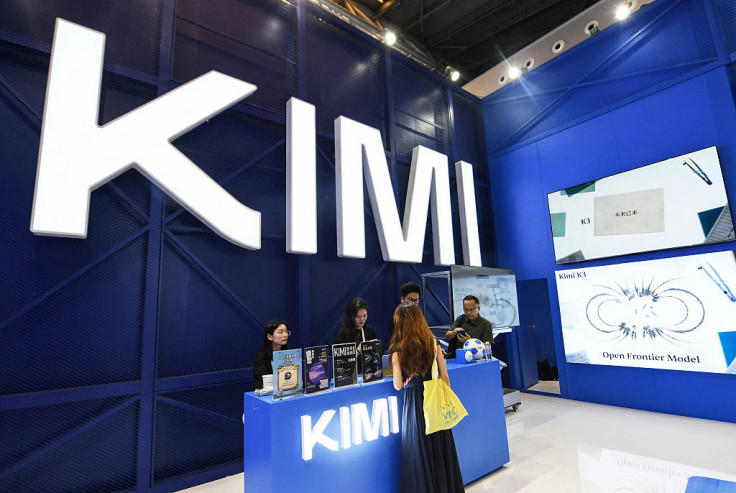
Beijing-based startup Moonshot AI recently sent shockwaves through the technology sector with the unveiling of Kimi K3, a massive 2.8 trillion-parameter system touted as the world's largest open-weight AI model. Kimi K3 delivers performance that approaches American frontier models like Anthropic's Fable but at a fraction of the cost to end users, demand for Kimi K3 exploded and forced the company to temporarily pause paid subscriptions due to compute constraints.
Kimi K3's release quickly drew the ire of the Trump administration. White House Office of Science and Technology Policy Director Michael Kratsios accused Moonshot of executing a "large-scale, covert industrial distillation" campaign against Anthropic's proprietary Fable model to build Kimi K3, alongside accessing restricted Nvidia GB300 AI chips. Treasury Secretary Scott Bessent threatened to sanction Chinese AI companies for stealing the intellectual property of American AI companies through a technical process known as distillation. Undersecretary of State Jacob Helberg called it a "heist of invaluable American [sic] Intellectual Property."
Distillation in an AI context often involves using prompts and responses generated by a larger 'teacher' model to train a secondary 'student' model through supervised fine-tuning, and is a technique used by virtually all AI labs during model development. When one company launches thousands of automated queries through application programming interfaces (APIs) to systematically replicate a rival's frontier model outputs, reasoning patterns and capabilities for the purpose of training their own model, often while switching access methods and IP addresses to evade detection, this is referred to as "adversarial distillation" by AI researchers.
Did Moonshot AI use adversarial distillation directed against Anthropic's frontier models to create Kimi K3?
Some experts like Braden Hancock, a researcher at the Laude Institute and co-founder of Snorkel AI, are skeptical. "I don't think you get a model this strong and this quickly on the heels of Fable doing strictly distillation," he told TechCrunch. "There's just not even frankly time, right? Fable's only been publicly available since July 1st. You can't distill that much data, train a model, and release it in two weeks."
Other experts like Ryan Greenblatt, chief scientist at Redwood Research, responded to this by writing, "Many people seem to be arguing this is implausible because Fable hasn't been out for long. But Moonshot could have obtained unauthorized access before Fable was released via actors with prerelease access (Glasswing) or possibly by hacking Anthropic directly." Greenblatt also pointed to test results indicating that Kimi K3's pretraining data may have involved distillation of older Anthropic models, although not necessarily Fable specifically.
Anthropic officially accused a different Chinese company, Alibaba, of adversarial distillation on an "industrial scale" earlier this year in a letter obtained by Ars, and sent to Senators Elizabeth Warren (D-Mass.) and Tim Scott (R-SC).
Distillation is only one side of the AI dispute between the U.S. and China over Kimi K3; hardware is the other, arguably more decisive, element. If Moonshot AI accessed restricted Nvidia AI chips to develop Kimi K3, it would mean the company defied not only U.S. export controls but a Chinese government ban as well. While the Trump administration banned these powerful chips in an attempt to thwart China's burgeoning AI industry, China banned them hoping to stimulate its domestic chip production.
Powerful chips are central to generating what is called compute—the physical resources required to run AI models such as electronic chips, electricity, high-bandwidth networking, and physical cooling facilities. And with China consistently nipping America's heels in AI model innovation, who ultimately wins the global AI race may come down to which side can leverage more compute. As Liang Wenfeng, founder of the Chinese AI company DeepSeek, explained on an investor call: "Our gap with the U.S. is mainly resources. The talent gap is essentially also a compute gap."
© Copyright IBTimes 2026. All rights reserved.