The Deportation Of a Colombian Activist Illustrates How Partisan Bogota-Washington Relations Have Become
Beto Coral, a Colombian activist and prominent critic of Colombian President-Elect Abelardo de la Espriella, was arrested by federal agents on June 16 at his home in Arizona
The deportation of Colombian activist Beto Coral signals a deeply partisan (and personal) tightening of U.S. and Colombian relations, according to political experts.
Coral, a Colombian activist and prominent critic of Colombian President-Elect Abelardo de la Espriella, was arrested by federal agents on June 16 at his home in Arizona and agreed to be deported to Colombia, where he arrived a month later.
The arrest was carried out under a direct order signed by U.S. Secretary of State Marco Rubio, who alleged that Coral's presence in the country "undermines U.S. foreign policy interests in Colombia's democratic processes."
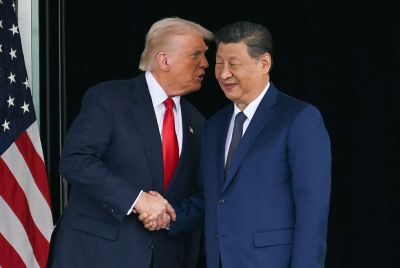
Political analysts view Coral's deportation as a reflection of the Trump administration's already-proven inkling to intervene in Latin American politics. It's also just one part of a broader alignment between the incoming de la Espriella and President Donald Trump, who strongly endorsed de la Espriella's campaign and had often clashed with his predecessor, President Gustavo Petro.
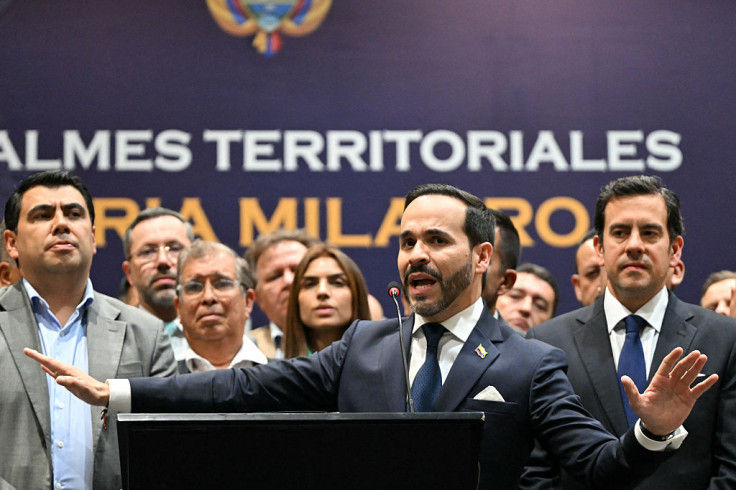
Colombian Vice President-elect José Manuel Restrepo visited Washington D.C. in July and met with myriad U.S. politicians and policy leaders. During the visit, a Colombian legally living in the United States was shot and killed by U.S. immigration officials — but the Colombian delegation offered no comment.
"The main risk is it seems like the incoming administration isn't willing to speak up for Colombians abroad if that conflicts with the Trump administration's immigration agenda," said Daniel Pareda, an analyst with the geopolitical consulting firm Colombia Risk Analysis.
The United States has long had an interest in Colombia ranging from combatting narcotics trafficking to accessing critical minerals, said Glaeldys González, an analyst for the Brussels-based International Crisis Group.
"There has always been this sense of alignment in those policy issues, but now you have to add this other component — a cultural and partisan component — that gives another sort of layer to the relationship that we had not seen before," González said.
Coral is one of several critics of U.S. allies that the Trump administration has deported on similar grounds, but Coral is the first tied to a foreign election, according to the New York Times.
In his order, first reported by the New York Times and later published by journalist Daniel Coronell, Rubio accused Coral of serving as an ally of left-wing Colombian President Gustavo Petro and attempting to wield the U.S. court system against a political opponent. The memo alludes to Coral's sordid history with Colombian President-Elect Abelardo de la Espriella, who was backed by Trump in the June election and is poised to strengthen Colombia's diplomatic ties with the United States.
The upside for de la Espriella in an allegiance with Trump is the potential to tap U.S. resources in his pledge to combat armed groups in Colombia, as well as significant U.S. business investment in Colombia that could spur economic growth.
"We look forward to working with President-Elect Abelardo de la Espriella's incoming administration to strengthen security cooperation and expand economic ties," Rubio wrote on X following the Colombia delegation's visit.
For the United States, de la Espriella's arrival will signal a new member for its Shield of the Americas, a Trump-led alliance of American countries that aims to combat international crime, drug trafficking and illegal immigration.
"It's a completely different regional moment that's much more aligned with the U.S. than before," González said.
But Pareda warned that the increasingly partisan nature of a relationship deeply rooted in executive power and politics might lead to instability between the two countries, which have enjoyed a relatively nonpartisan alliance for years.
"It's so ideological that my big fear is that it doesn't hold and it also harms our longstanding relationship with the U.S., or it might also harm our interest of regional integration," Pareda said.
It could also provide fodder for de la Espriella's political opposition, noted the analyst. During his term, Petro stressed Colombian sovereignty, including by refusing to accept Colombian deportees like Coral from the United States if they arrived in handcuffs. The outgoing president has referred to Coral as a "political prisoner."
Coral's arrest was carried out just a day after he participated in a protest against de la Espriella outside the University of Miami leading up to the second and final round of Colombia elections. More than one million Colombians who live outside the country remain eligible to vote in its elections.
Shortly before his arrest, Coral had filed a complaint with the FBI, alleging that de la Espriella — who had previously lived in Florida and worked as an attorney — had illegally recorded a phone call between the two of them. In Florida, both parties' consent is required in order to legally record a phone call.
On the call, Coral admitted to de la Espriella that he had fabricated claims against former Colombian President Álvaro Uribe in order to gain attention. Coral had already publicly issued retractions in 2023 after Uribe, legally represented by de la Espriella, had filed a defamation suit against him.
Coral had arrived in the United States on a tourist visa in 2015 and his petition for asylum was pending when he was deported. Coral's father was a part of the law enforcement team that killed notorious drug trafficker Pablo Escobar, and was later assassinated.
In a statement, the Department of Homeland Security said Coral broke the law by overstaying his initial tourist visa issued in 2015. (Coronell, however, reported that a judge approved a work permit and social security number in the United States while awaiting the result of his asylum claim).
Coral's arrest was met with reactions that split along partisan lines in the United States and Colombia.
Senator Bernie Moreno, a Republican who was born in Colombia and has praised de la Espriella, welcomed Coral's arrest.
"You can't come to the United States, claim asylum, and then act as a foreign agent to that very government while simultaneously undermining our foreign policy," Moreno wrote. "Have a nice life back in Colombia Beto!"
Coral's deportation "sends a message not only for Colombia but the whole region, that they will not tolerate this type of activity" in the U.S., ICG's González said.
"It fits into this narrative that people they consider are serving against U.S. interests will face the law, and facing the law means they will face deportation."
© Copyright IBTimes 2026. All rights reserved.
- Recommended For You