‘The Forever War’: White House Divided Over Strategy as Iran Conflict Enters Sixth Month
Trump explodes with expletives in White House meeting over the protracted Iran war
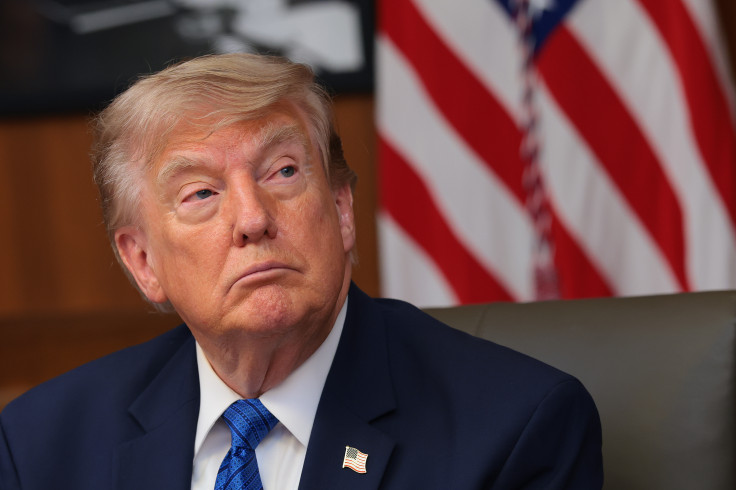
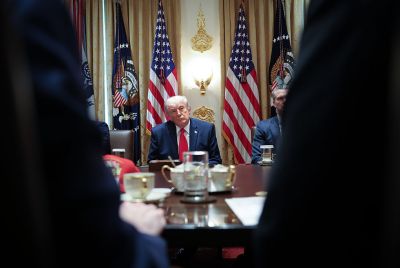
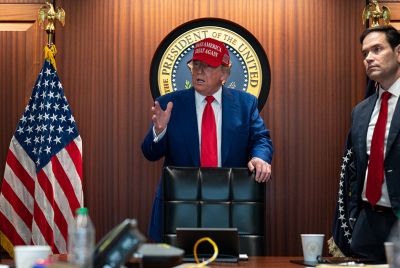
Donald Trump reportedly erupted during a meeting with senior national security officials last week as frustration mounted over the Iran war, with NBC News reporting that the president repeatedly swore over the lack of progress in a conflict that has now entered its sixth month.
According to NBC News, Trump's reported outburst reflected growing concern inside the administration that a military campaign launched on 28 February has evolved into the kind of prolonged overseas conflict he repeatedly vowed to avoid during his presidential campaigns.
Angry about his military options and frustrated that he can’t close a deal with Iran, President Trump erupted during a meeting last week with some of his top national security officials, yelling expletives, sources tell NBC News. https://t.co/liknOKmamk
— NBC News (@NBCNews) July 30, 2026
The report comes as the conflict has reportedly claimed the lives of 18 US service members and exposed widening disagreements among senior officials over both the war's objectives and what would ultimately constitute success.
NBC Reports Growing Frustration Inside the White House
NBC News, citing a US official and several people familiar with internal discussions, reported that Trump became visibly frustrated during a recent national security meeting, expressing anger over the lack of a clear path forward.
While the president has not publicly commented on the reported exchange, NBC said the meeting highlighted increasing divisions among advisers responsible for shaping US strategy.
One official quoted by the network said American forces had achieved 'a series of tactical victories' but warned they were now 'facing a strategic defeat without clear policy guidance or a decision about where this is going.'
That assessment points to what analysts increasingly describe as the administration's central challenge: winning military engagements without an agreed political endgame.
According to NBC, disagreements inside the administration extend beyond battlefield operations and into the broader purpose of the campaign itself.
Officials are reportedly debating several competing priorities, including:
- Preventing Iran's nuclear programme from advancing
- Protecting commercial shipping through the Strait of Hormuz
- Degrading Iran's missile and drone capabilities
- Deterring future attacks against US forces and regional allies
The absence of a clearly defined strategic objective has reportedly fuelled frustration at the highest levels of government.
A Trump ally familiar with the president's thinking told NBC that 'he did not intend this to be a long, drawn-out war,' underscoring the widening gap between the administration's original expectations and the reality now unfolding.
A Political Promise Faces Its Biggest Test
The reported frustration also carries political significance.
Throughout both his 2016 and subsequent presidential campaigns, Trump repeatedly criticised lengthy US military interventions abroad, promising to end what he frequently called 'forever wars.'
Now, more than five months into the Iran conflict, critics argue the administration risks becoming entangled in precisely the type of prolonged military campaign Trump once condemned.
Shirvin Zeinalzadeh, an associate professor at Arizona State University, described the situation as 'the slow unravelling of a promise.'
'Trump entered office pledging an end to America's forever wars, yet more than five months into this conflict, the very outcome he sought to avoid has materialised in full.'
While that assessment reflects the professor's analysis rather than an established fact, it captures concerns increasingly voiced by foreign policy observers as the conflict continues without a publicly defined exit strategy.
White House Rejects NBC's Account
The White House has strongly disputed NBC's reporting.
Press secretary Karoline Leavitt rejected the report, telling NBC, 'This is false.'
She added that Trump remains 'the final decision-maker' on matters of national security.
Her comments directly contradict NBC's portrayal of a president increasingly frustrated by internal disagreements and the pace of the conflict.
The White House has not otherwise elaborated on the internal discussions described in the report.
Strategic Questions Continue to Mount
Regardless of the reported confrontation, the broader strategic debate appears to remain unresolved.
Military analysts have long noted that tactical battlefield gains do not necessarily translate into lasting political success, particularly in conflicts lacking clearly articulated end goals.
As casualties increase and operations continue, questions remain over how success will ultimately be measured, whether military pressure alone can achieve US objectives, how long public and congressional support can be sustained, and whether diplomacy will eventually become necessary.
Those questions have become increasingly prominent as the conflict stretches into its sixth month.
NBC reports Trump is "exasperated" because he "did not intend this to be a long, drawn-out war" and there was "not a real strategy" for reaching an "endpoint." A U.S. official adds that while there have been "a series of tactical victories," the U.S. now risks "strategic defeat"… pic.twitter.com/lqW1TE7AL5
— Sina Toossi (@SinaToossi) July 30, 2026
Economic and Political Costs Continue to Grow
Beyond the battlefield, the war continues to carry wider economic and political consequences.
Analysts have pointed to ongoing volatility in energy markets, continued concerns over global shipping through the Strait of Hormuz and broader uncertainty affecting international markets.
Domestically, the administration also faces growing political pressure as lawmakers and commentators continue debating both the financial cost of the conflict and the absence of a clearly defined long-term strategy.
For Trump, the stakes extend beyond military policy.
His political identity has long been built around projecting decisive leadership while arguing that previous administrations kept the United States entangled in unnecessary overseas conflicts.
If the Iran war continues without a clear resolution, critics argue it could increasingly test one of the central pillars of that message.
For now, the administration continues to defend its handling of the conflict while disputing reports of internal turmoil.
At the same time, NBC's reporting suggests senior officials remain engaged in significant discussions over how to define success and how the campaign should ultimately conclude.
Whether the administration pursues continued military operations, a negotiated diplomatic settlement or another strategy remains uncertain.
What appears increasingly evident is that the longer the conflict continues without a publicly articulated endgame, the greater the political, military and economic challenges become for the White House.
IBTimes UK has not independently verified NBC News' account of the reported White House meeting. The descriptions of Trump's alleged remarks and internal disagreements are based on NBC's reporting and unnamed sources familiar with the discussions, while the White House has formally denied that the reported outburst occurred.
Originally published on IBTimes UK
This article is copyrighted by IBTimes.co.uk, the business news leader
- Recommended For You