The ‘Godfather of AI’ Warns Time Is Running Out For Congress To Regulate The Technology. He Gave a Specific Window
"Maybe a year, but not much more than a year," said Geoffrey Hinton.


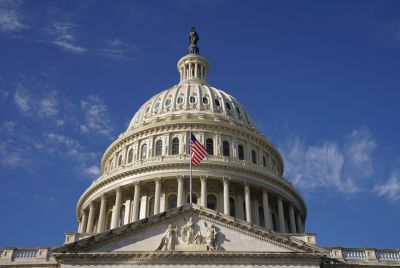
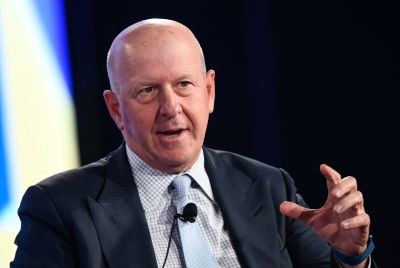
Geoffrey Hinton, known as the "Godfather of AI," said Congress is running out of time to regulate artificial intelligence before losing the ability to do so.
Speaking to lawmakers behind closed doors, Hinton said Congress has "maybe a year, but not much more than a year."
He went on to say that "if you look at predictions for when we'll get superintelligence," the timeline "used to be maybe 30 years, maybe 50 years" but then it kept getting lowered.
"Then it came down to maybe 10 years, maybe 20 years. Now people are saying, a lot of the researchers are saying only a few years," Hinton added.
Speaking to reporters after the briefing, Hinton said "AI has now reached the point where AI is designing better AI," a milestone known as recursive self-improvement.
"It is going to get out of control unless we do something. We need to slow down," he warned.
The warning took place just days after leaders of several major AI companies made an unusual public push to slow the pace at which increasingly capable models are developed. Anthropic CEO Dario Amodei last weekend called for frontier AI companies to give safety work more time to catch up with rapidly improving model capabilities, drawing support from Musk and OpenAI CEO Sam Altman.
Other companies said they are already collaborating. OpenAI's policy chief, Chris Lehane, told Bloomberg News that the company is working with Anthropic and Alphabet on AI Safety.
He went on to say that the companies have been in talks for several weeks and doesn't believe they need an antitrust waiver to coordinate. "It's better to try to work together to prioritize safety," he said.
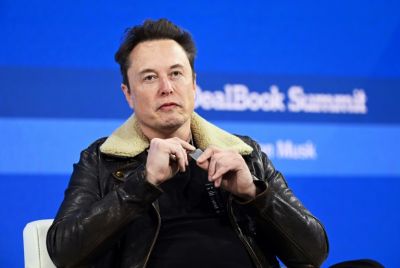
Elon Musk also said he wants for the world's biggest artificial intelligence companies to test each others' models before they are released.
A recent poll showed that most Americans acknowledge potentially serious dangers from increasingly powerful artificial intelligence, but there is less agreement over whether the United States should accept losing ground to China and other countries to reduce those risks.
A POLITICO Poll found 43% of respondents said it would be acceptable for the U.S. to fall behind other countries if doing so meant developing AI more responsibly and securely. Another 37%, however, said the country should not stand down from the international competition even if staying ahead required taking risks.
The divide was sharper among voters who backed President Donald Trump in the 2024 election, with 50% favoring continued competition and 38% saying it was acceptable to fall behind for safer development. The poll was conducted by POLITICO and independent polling company Public First.
© Copyright IBTimes 2026. All rights reserved.
- Recommended For You