

How Magnolia Pearl Uses Resale to Keep Rare Pieces in Circulation
Fashion is very good at making things disappear. A collection arrives, sells through, and gives way to the next. Samples are tucked away. A beloved piece vanishes after one brief season. The garment may still exist somewhere, folded in a closet or guarded by a collector, but to everyone else it becomes a rumor.
Magnolia Pearl has built part of its world around bringing those rumors back into reach.
Through Magnolia Pearl Trade, the company's in-house resale platform, pre-loved garments, specialty pieces, samples, and long-sold-out items can move back into circulation. The platform gives collectors a place to search for what they missed and gives garments a way to keep living after the first sale. It also connects defined parts of resale activity to the Magnolia Pearl Peace Warrior Foundation, the nonprofit behind the brand's charitable giving.
The company describes the idea in language that feels close to the clothes themselves: "It's a conduit for widening the reach of the circular economy, extending the mending beyond the hems."
That is the fashion idea at the center of the platform. The repair is not only stitched into fabric. It is built into the way the garments move.
The Beauty of the Already-Loved
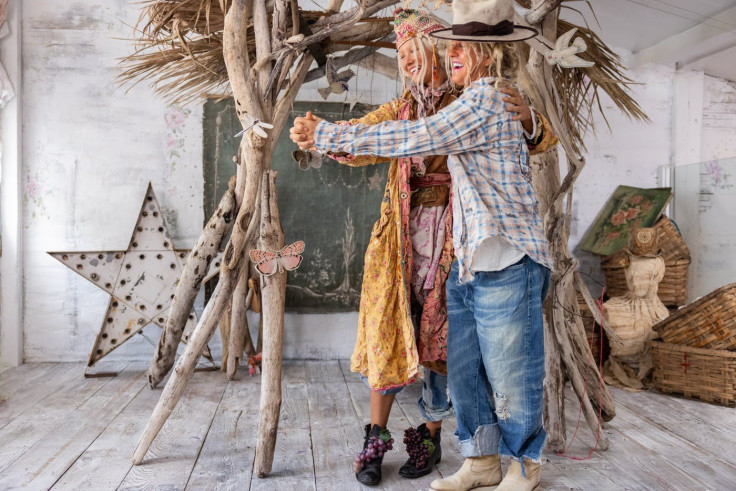
Magnolia Pearl's clothes do not depend on the fantasy of untouched perfection. Their beauty often comes from the opposite impulse: visible repair, washed softness, paint, patchwork, frayed edges, and the feeling of something found rather than manufactured into blankness. The garments can look as though they have already crossed a few lives before reaching the hanger.
That makes resale feel unusually natural for the brand. A pre-loved piece does not have to be explained away. It belongs to the aesthetic.
In many fashion markets, the secondhand garment is treated as the lesser version of the new one. With Magnolia Pearl, the distinction is less obvious. A piece may become more evocative because it has been worn, cared for, and released. The signs of life do not necessarily weaken the design. They can echo it.
This is why keeping rare pieces in circulation matters. A sold-out dress or sample does not have to become static. It can be found by someone who understands it. It can be worn again, styled again, repaired again, and folded into another wardrobe.
Magnolia Pearl Trade gives that process a brand-specific setting. Collectors are not simply browsing an endless resale feed. They are looking inside a world where the garment's context still matters.
The Afterlife of a Garment
The platform also gives Magnolia Pearl a more precise way to talk about circular fashion. Broad sustainability claims can become airy very quickly. Resale is clearest when described in practical terms: existing garments stay in use, rare pieces re-enter view, and samples or specialty items find wearers instead of remaining hidden.
That is enough. It does not need to become a sweeping environmental claim to matter.
The philanthropic layer makes the model more distinctive. Company materials state that 100% of certain third-party seller fees and 25% of the final value of specialty or brand-exclusive listings are donated through the Magnolia Pearl Peace Warrior Foundation. In other words, some of the value created when pieces circulate can be directed toward charitable work.
This gives the afterlife of a garment a second dimension. A collector may come to the platform because she wants the rare piece. She may stay because the transaction feels aligned with the brand's larger ethic of care. The clothing continues to move, and part of that movement can reach beyond fashion.
The strongest version of this story is not about guilt. It is not asking collectors to apologize for wanting beautiful things. It is asking whether beautiful things can be kept in use longer, passed with more intention, and connected to something more generous than possession.
Magnolia Pearl's answer is built into the platform. The rare piece returns. The sample finds daylight. The garment that might have sat unworn enters another life. The collector receives not only an object but a continuation.
That continuation is central to the brand's romance. Magnolia Pearl garments often look like fragments from a larger story: part prairie, part atelier, part poem, part memory. Resale lets those fragments keep moving. It refuses the idea that a piece has only one moment to matter.
In a fashion culture trained to chase what is next, Magnolia Pearl Trade turns attention back to what is already here. The dress in the closet. The jacket someone has been trying to find. The sample that never had its proper life. The garment with more to give.
The platform does not make rarity colder. It makes rarity circulate.
© Copyright IBTimes 2026. All rights reserved.