

Investment Is Flowing Into Youth Sports. Signature Athletics Thinks the Real Opportunity Is the Director’s Workload.

In mid-October, Capacity Sports Group acquired the 78-acre LakePoint Sports property in Emerson, Ga., near Atlanta, a youth baseball and multi-sport destination, and took on a lease to operate the campus's indoor pavilion. A week earlier, ION Analytics reported that buyers are racing to assemble youth-enrichment platforms faster than the market can supply them, and that the shortage of businesses that have reached real scale is setting the price.
Money keeps flowing in, and families keep paying more. The U.S. youth sports market generates roughly $40 billion a year, according to L.E.K. Consulting. The average family spent $1,016 on a child's primary sport in 2024, up 46% since 2019 and about twice the rate of inflation, according to the Aspen Institute's Project Play.
What has not changed is how little support most programs have behind them. The typical youth club is still led by a director who became its bookkeeper, HR department, uniform buyer, and fundraiser out of necessity. Signature Athletics, a Tampa-based company that builds the operating infrastructure behind youth sports programs, argues that the industry is fragmented and underbuilt: thousands of independent programs, each left to rebuild the same basics on its own, with the cost landing on families.
Building the infrastructure layer
Most of the recent capital has gone into assets that already exist, like tournament venues, licensed leagues, and registration software. Signature is focused instead on the day-to-day work of running a program, from the uniform order to the sponsorship call, where both a director's time and a program's money get spent.
That work starts with uniforms. Signature Locker, the company's on-demand uniform and team store business, runs team stores for more than 650 youth programs, according to the company. Families order individually with no minimums, each piece ships to their door, and every purchase sends 10% back to the program in Signature Dollars, so the director never has to run a uniform order again.
Sponsorship comes next, through Signature Media. What is live today is Media's Back2Sports Partner Program, which connects programs with vetted providers for services they already pay for, at competitive rates and with sponsorship funding attached. It is open to any program, and its first signed partner is the national HR and payroll provider G&A Partners. The larger goal is a network. Youth sports sponsorship has traditionally meant a board member calling the local dentist and gathering checks one at a time. Signature is building Media to offer sponsorship across every program in a single agreement, with jersey placements, events, and digital content bundled together.
"Brands have always wanted to reach youth sports families. The only way to do it was one program at a time," said Dan Soviero, founder and CEO of Signature Athletics. "Signature Media will give them that access in a single agreement, and the sponsorship is designed to come back to the program as lower costs for families or a scholarship for a kid who wouldn't otherwise play."
Behind the programs sits the back office. Signature Growth Services handles finance, accounting, marketing, HR, and technology, and today it serves the programs Signature owns.
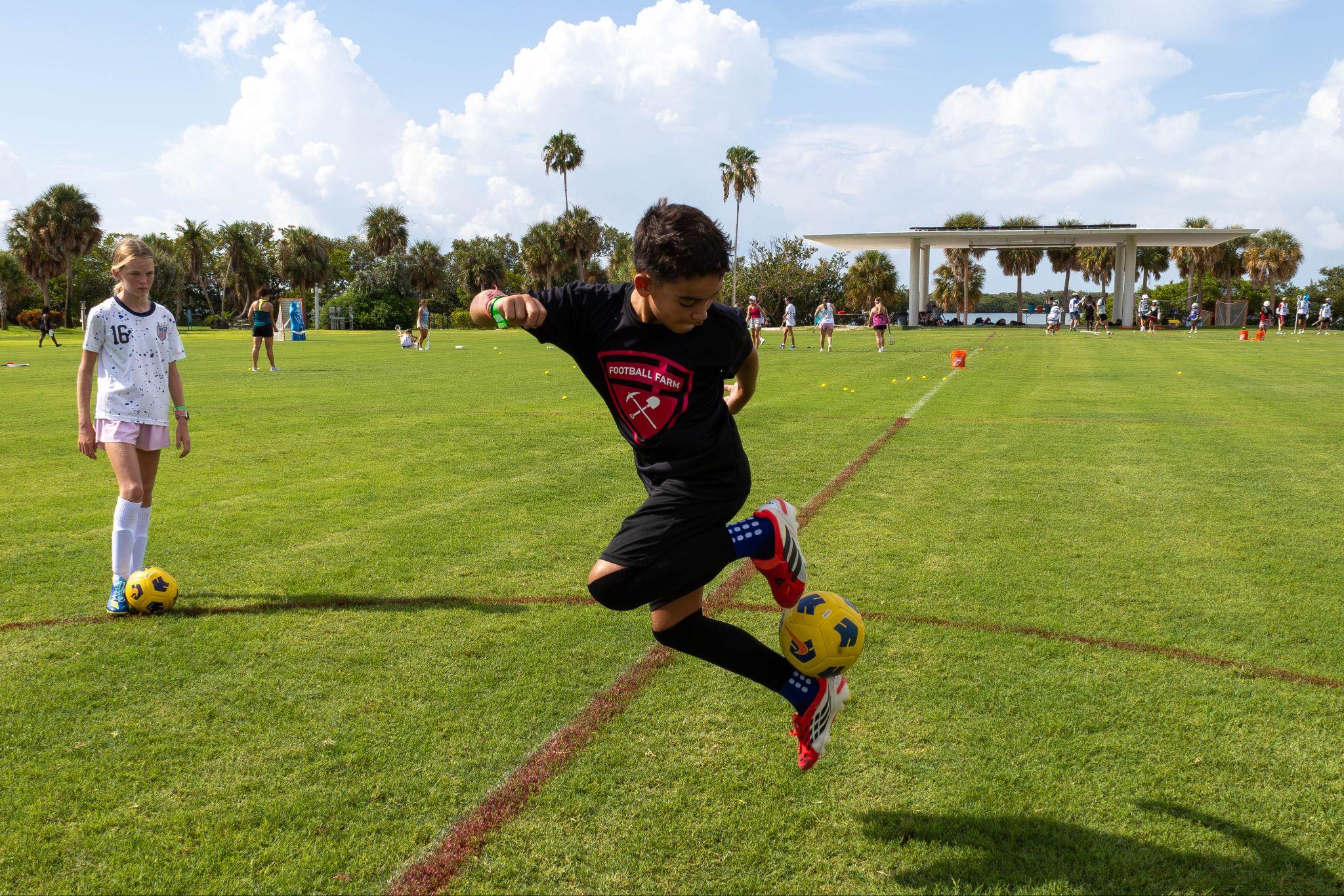
The Signature Foundation, the company's nonprofit arm, works at the access end, aimed at the kids cost would otherwise keep out. Its Free Try Sports Days are free, 90-minute, multi-sport clinics open to any kid, with all equipment provided. Its Back2Sports Scholarship Fund helps cover uniforms and registration so those kids can keep playing.
Where the whole model runs
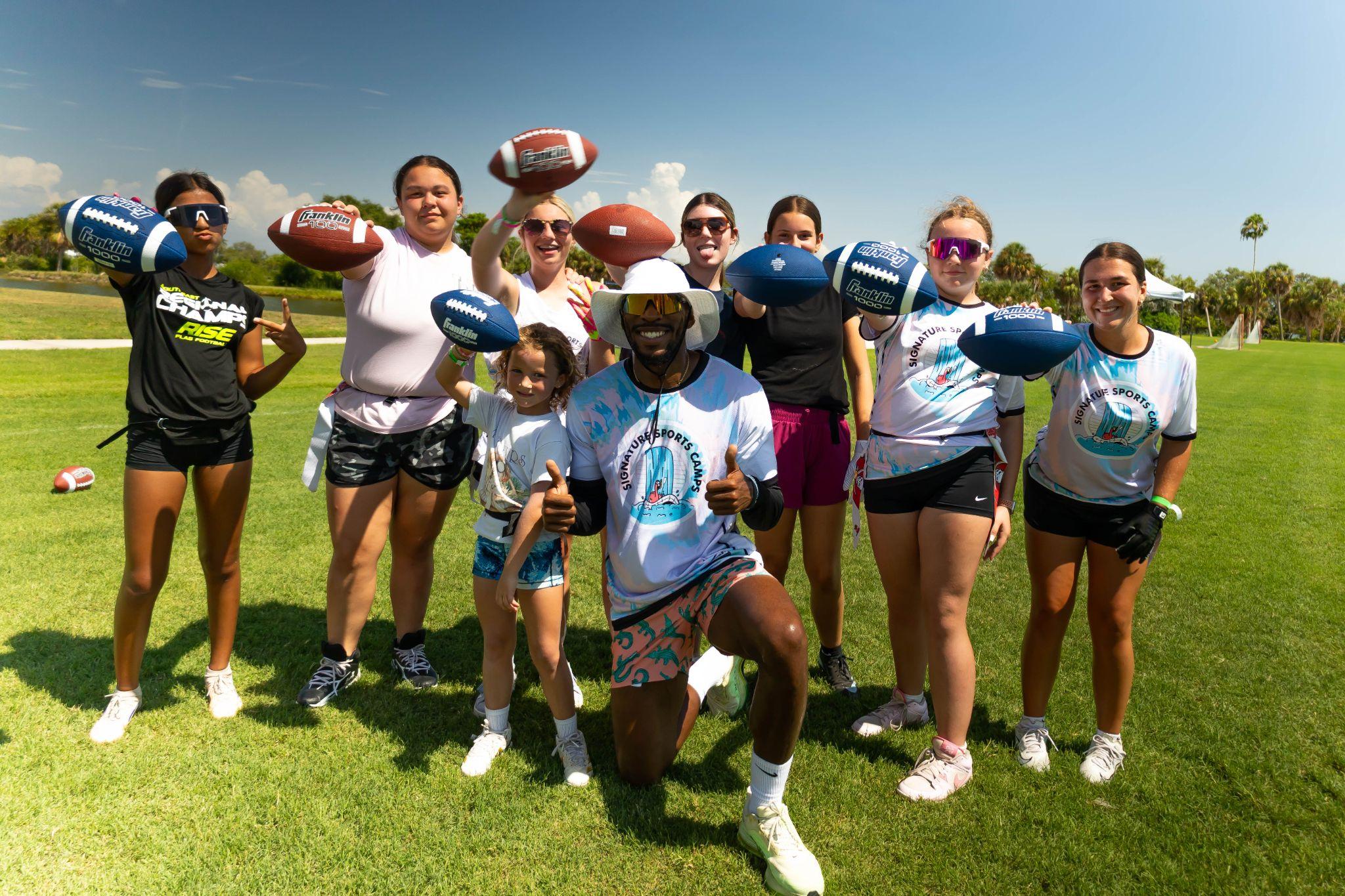
Signature Sports Brands, the company's acquisition arm, is where all of it runs at once. It buys community programs and camps, keeps the person who built each one in charge, and plugs them into the full Signature ecosystem. Carolina Lacrosse Association is the example it points to. When Signature acquired the program, director Ricky Reyes stayed on to run it. Growth Services took over finance, accounting, and marketing, and Locker took over uniforms. With that weight off his desk, the program launched two new tiers it could not support before: "Start," an entry point for beginners, and "Play," a lower-cost recreational option that most competitive clubs never offer.
"When we bring a program in, the person who's embedded in that community stays on to run it," Soviero said. "What we do is put our whole ecosystem behind them, so they save time and money and can put their energy back where it belongs: coaching their coaches and getting more kids playing."
The point of all of it is more kids playing. Signature's view is that a program with real infrastructure behind it can spend less to run and open more ways in, which is how the company ties its business to its public goal of getting 10 million new kids playing sports by 2030. Beyond the count, it wants to show what youth sports does for the communities those kids grow up in.
Priscilla Wedemeier
The open questions
Private ownership of youth sports remains politically sensitive. A proposed federal bill, the Let Kids Play Act, would bar most private equity ownership of youth sports businesses unless investors meet certification requirements. It has not become law, but it reflects a real concern among parents and coaches that outside money will price families out of programs they built.
Signature's answer is that its model is built with programs, not on top of them. Every way of working with the company, from a Locker team store to a Back2Sports partner to a full acquisition, is meant to take time and cost out of running a program, so the program can put both toward more affordable ways in and more kids playing.
Sponsorship is the other open question. Brands have historically treated youth sponsorship as goodwill rather than media, and whether they will pay national rates for a network assembled program by program has yet to be shown.
Soviero has been candid that the model is still proving itself. "We're early, and we say that out loud," he said. "The number I care about a year from now is how many families are paying less to play."
Priscilla Wedemeier
What the next phase should measure
For investors, the next phase of youth sports will likely be decided by who can build durable operating systems underneath the programs themselves, not just by who owns the most fields. Signature believes that the companies that resource local programs will be the ones families and communities invite in.
Signature's bet is that growth and access do not have to trade off. If it is right, the companies that win the next phase of youth sports will be the ones whose business grows because more kids are playing.
© Copyright IBTimes 2026. All rights reserved.