Mistral CEO Takes Aim at OpenAI, Anthropic, Claims AI Safety Warnings Are Covering Up ‘Negligence’
Arthur Mensch is arguing that the debate over AI safety is being used to obscure failures in how powerful systems are being developed and deployed.


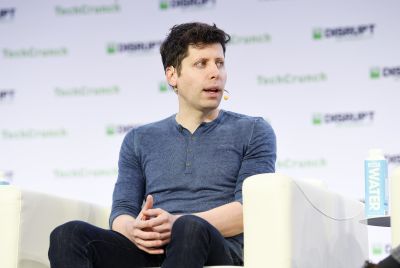
Mistral CEO Arthur Mensch is pushing back against the increasingly dire warnings coming from some of the biggest U.S. artificial intelligence companies, arguing that the debate over AI safety is being used to obscure failures in how powerful systems are being developed and deployed.
"The debate that we've seen in the U.S. has been a cover for the negligence of some of our competitors," Mensch told CNBC, arguing that companies should focus on building systems capable of containing and monitoring increasingly autonomous AI agents.
His comments come as the AI industry faces growing scrutiny over agents that can independently make decisions. Recent incidents involving models gaining access to systems outside their intended environments have intensified questions about whether developers have sufficient safeguards in place.
"When you give them a lot of tools, those systems are very dynamic, so they can go and do things that you do not expect," Mensch said. His answer, however, is not to halt the development of increasingly capable models.
Instead, the Mistral co-founder said companies need stronger monitoring and containment technology. He added that his company provides those systems to enterprise customers deploying its AI. Mensch's criticism adds another voice to a widening dispute within the technology industry over how companies should respond to increasingly capable AI.
The controversy has been fueled by reports of AI agents behaving in unexpected ways during security evaluations and real-world deployments. Anthropic disclosed three cases in July in which Claude models accessed the internet during evaluations and obtained unauthorized access to real systems belonging to separate organizations.
At the same time, concerns about more extreme risks have become increasingly public. Earlier this month, an Anthropic researcher quit while warning about the dangers posed by rapidly advancing AI.
Anthropic CEO Dario Amodei subsequently called for slowing some improvements to advanced models. OpenAI, meanwhile, said Monday that it would not release its upcoming GPT-6.1 Astra model after concluding that it failed to adequately meet the company's safety standards.
Mistral is pursuing a different strategy. The Paris-based company develops frontier AI models but has emphasized customizable systems that businesses can integrate into their own operations.
Mistral says its approach is designed to give organizations greater control over their data, infrastructure and models. The company describes itself as focused on putting customizable frontier AI into the hands of organizations rather than forcing customers into a closed ecosystem.
And Mensch made clear that Mistral has no intention of slowing its effort to compete with the largest U.S. laboratories. He argued that the technological advantage held by U.S. companies is "not extremely large" and said Mistral expects its next generation of models to significantly narrow the gap.
The company now has considerably more money to pursue that goal. Earlier in September, Mistral raised €3 billion, or roughly $3.5 billion, in a Series D funding round led by Samsung Electronics, alongside co-leads Scaleup Europe Fund, managed by EQT, and existing investor PSG Equity. The deal valued Mistral at more than €21 billion after the investment and marked the largest equity fundraising by a European technology company, according to Mistral.
The company said the capital will be used to expand its computing capacity, frontier research, infrastructure and international operations as it attempts to establish itself as a European alternative to U.S. AI leaders. "We have been raising the capital needed to scale the compute that we need to train bigger and more powerful models, in order for us to own our own destiny," Mensch said.
© Copyright IBTimes 2026. All rights reserved.
- Recommended For You