

A New Education Model Emerges as AI Rewrites Learning

Education is facing a curious convergence. International measures of student performance have weakened in several areas as generative AI becomes increasingly accessible to young people. The OECD's PISA 2025 Results report that average OECD mathematics scores fell 22 points between 2015 and 2025, while reading fell 28 points. The findings suggest that the challenge surrounding AI may sit within a wider question about how effectively students are developing the ability to read, reason, evaluate information, and engage deeply with ideas.
That question reaches beyond technology itself. The World Economic Forum's 2026 report describes a growing gap between the speed of AI adoption and the ability of education systems to adapt curricula, assessment, governance, and learning practices. From this perspective, AI may be revealing tensions that were already present in conventional schooling, especially where learning remains organized around standardized content, fixed schedules, and compliance-oriented assessment.
Institutional responses have consequently become part of the debate. Schools and universities have experimented with AI restrictions and detection software, while educators have also begun reconsidering how learning can be demonstrated when students have access to powerful digital tools. The Conversation notes concerns about false positives in AI-detection systems and points toward assessments that provide direct evidence of learning through supervised demonstrations, presentations, practical work, or interviews. The broader question becomes less about identifying a particular tool and more about creating conditions in which students can demonstrate genuine understanding.
That shift is also reflected in emerging research on generative AI. A 2026 systematic review in Frontiers identifies potential benefits including personalized learning, self-regulated learning, and adaptive feedback, alongside concerns involving academic integrity, privacy, equity, and governance. The World Economic Forum similarly argues that effective AI integration depends on conditions spanning pedagogy, assessment, digital literacy, teacher capacity, infrastructure, and learner experience. These findings suggest that technology policy and educational design increasingly need to be considered together.
For Jeff Hopkins, director of engagement and founder of Pacific School of Innovation and Inquiry (PSII), the deeper opportunity lies in reconsidering how learning itself is organized. His school, a nonprofit high school in British Columbia, has spent more than a decade developing an inquiry-based model in which students build individual learning paths around questions that emerge from their interests, while common curriculum requirements remain mapped into that work. "Humans naturally learn by following their curiosity, digging deeper, and connecting new knowledge to original questions," Hopkins states.
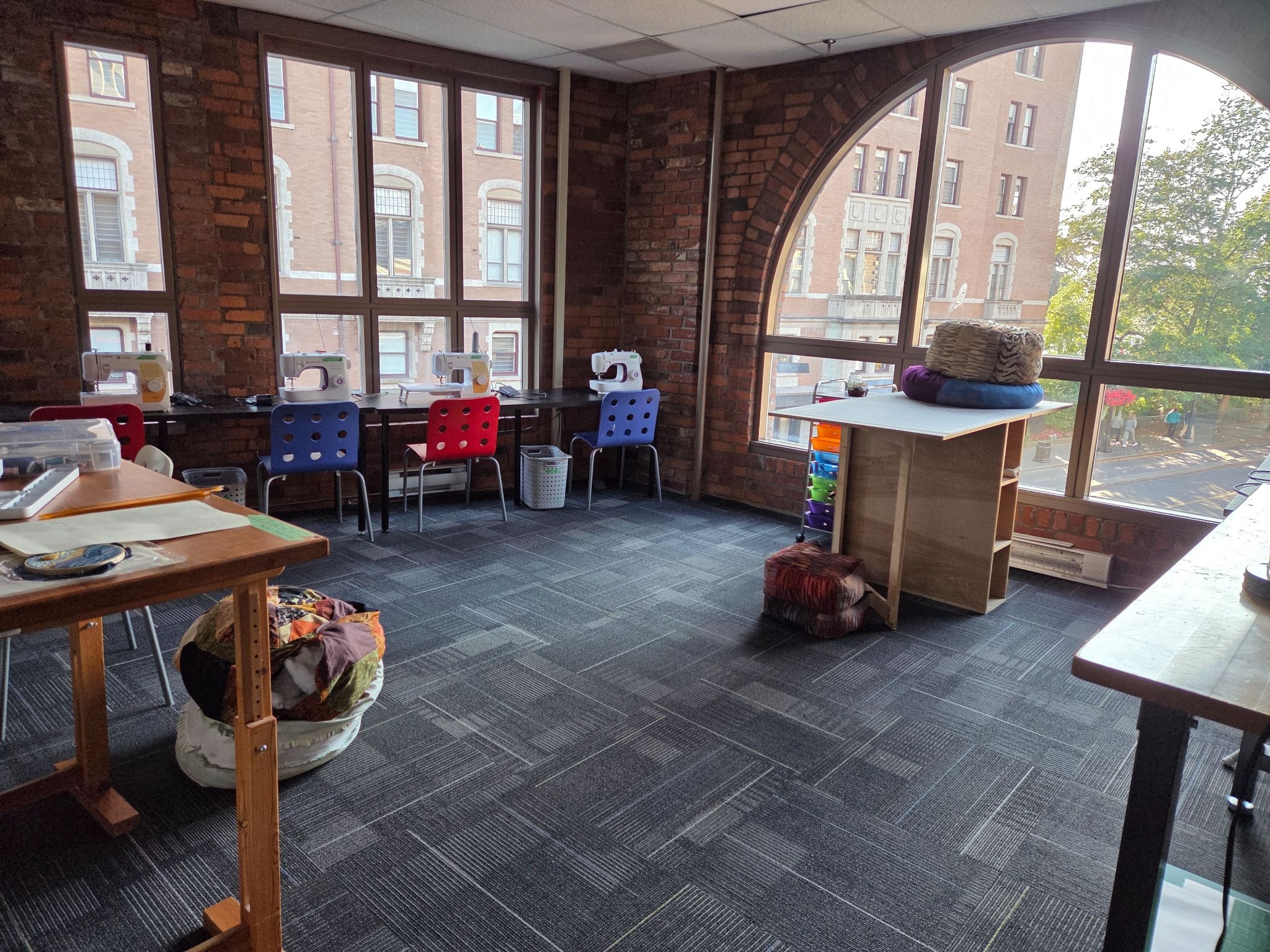
His observation offers a useful lens for an education landscape where access to information is expanding faster than any fixed curriculum can anticipate. At PSII, this philosophy becomes practical through research questions, projects, conversations, and tangible evidence of learning. Inquiry follows a structured cycle. Students begin with questions, conduct initial research, develop deeper questions, plan learning activities, and then carry them out while documenting their progress.
Moreover, students may create an artifact, test an idea in the real world, or explain their reasoning in a deep conversation. Subject requirements are mapped in the background so interdisciplinary work can still satisfy provincial graduation expectations. The result is a model in which competencies such as critical thinking, self-awareness, time management, and self-advocacy become visible through the work students produce.
Such a model also changes the role of educators. Teachers can function as professional facilitators who adapt learning conditions, connect students with expertise, and spend more time discussing the substance of learning. Rather than being solely responsible for planning, delivering, monitoring, and assessing a fixed curriculum for a group, the teacher adapts learning conditions to individual learners and provides or finds expertise as their questions demand it.
Flexible scheduling can give educators greater scope to collaborate, accompany students into community settings, and respond to emerging interests. Hopkins states, "If your focus is genuine learning, AI is a tool rather than a threat." In that framing, the educational task becomes helping students develop enough judgment to question, test, interpret, and apply information, including information produced by AI.
Moving from a conventional school structure to inquiry-based learning can require substantial infrastructure. The work developed at PSII includes processes for translating interdisciplinary learning into traditional curriculum requirements, tracking evidence of competencies, and guiding inquiry through clear stages. Assessment is embedded throughout the process, from developing questions and planning research to evaluating progress toward learning goals and reflecting on longer-term learning. Those mechanisms point to a practical dimension of reform. New educational ideas may require equally thoughtful systems for documentation, assessment, scheduling, and professional practice.
The wider relevance of this work may lie in its emphasis on transferability. Hopkins states, "Our goal is to share the model with existing schools, districts, and new educational organizations. I believe inquiry-based learning can be adapted in different settings." That perspective fits a broader international discussion in which educators are exploring how schools can preserve foundational knowledge while giving students greater responsibility for asking questions, evaluating information, and applying ideas.
Ultimately, the education debate around AI may be moving toward a larger conversation about learning itself. There is continuing pressure on foundational skills, while the importance of human judgment, responsible technology use, and adaptable educational systems is being increasingly highlighted. For schools navigating this environment, the emerging task may be to design learning experiences that make thinking visible and give students meaningful reasons to think deeply.
© Copyright IBTimes 2026. All rights reserved.