Nvidia CEO Tells Graduates To ‘Run, Don’t Walk’ Into AI Buildout As Demand Surges
Huang spoke at Carnegie Mellon University, framing AI as a major economic shift driven by chips, data centers and industrial capacity


Nvidia CEO Jensen Huang told thousands of graduates at Carnegie Mellon University in Pittsburgh that artificial intelligence is opening what he described as a rare industrial expansion moment, urging them to "run, don't walk" toward the sector as demand accelerates across computing and infrastructure.
Speaking to about 5,800 undergraduate and graduate students, Huang said the rapid buildout of AI systems is already driving demand far beyond software engineering, extending into traditional trades and manufacturing roles tied to physical infrastructure.
"No generation has entered the world with more powerful tools — or greater opportunities — than you," Huang said during the commencement address, adding that a "new industry is being born" alongside "a new era of science and discovery." The remarks were delivered as part of CMU's graduation ceremony, Axios noted.
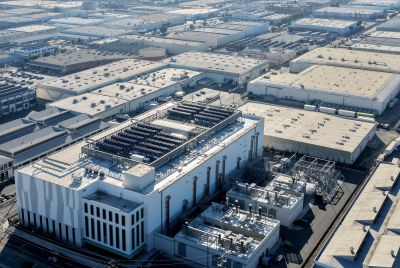
Huang, founder and chief executive of Nvidia, the world's most valuable company by market capitalization, said the AI sector's expansion will require large-scale labor across multiple industries, including construction and utilities. He pointed specifically to roles such as electricians, plumbers, ironworkers, and builders needed for chip fabrication plants, data centers, and advanced manufacturing sites.
"We are all standing at the same starting line. This is your moment to help shape what comes next. So run. Don't walk," Huang said, according to PR News Wire.
He also addressed concerns among students and early-career workers about artificial intelligence displacing entry-level jobs, noting that technological shifts have historically created both disruption and opportunity. "Every major technological revolution in history created fear alongside opportunity," he said, adding that when societies engage with new technologies "openly, responsibly, and optimistically," they expand human potential.
Huang tied his remarks to the scale of what he described as an unfolding buildout of AI systems, pointing to the industries already being pulled into the expansion. He said the demand behind artificial intelligence is not limited to software companies, but is spilling into factories, construction sites, and energy systems needed to support large-scale computing.
He repeatedly returned to the idea that the moment is still early, telling graduates that the technology shift is creating work across a wide range of fields at once, from chip design to the physical infrastructure that supports data centers. Nvidia's graphics processing units are widely used to train and run large AI models, placing the company at the center of global demand for computing power.
Huang's remarks stood in contrast to rising concern among students about artificial intelligence and its impact on their academic and career paths. Recent polling shows nearly half of U.S. college students have seriously considered changing their major because of AI-related job worries, while a smaller but significant share has already done so, according to a Lumina Foundation and Gallup study highlighted by IBT.
Another survey found that 42% of students say AI has prompted at least some reconsideration of their field of study, reflecting a broader sense of uncertainty around entry-level jobs and automation risks, data reported by Gallup. Separate findings show similar sentiment extending beyond academics, with a large share of young people expressing anxiety about how quickly AI is reshaping work and future career stability, according to IBT.
Huang's remarks also emphasized that the AI industry is not limited to software development. He said the construction of physical systems supporting artificial intelligence represents a large-scale industrial effort, requiring coordination across engineering, energy and manufacturing sectors.
© Copyright IBTimes 2026. All rights reserved.
- Recommended For You