

NVIDIA’s Record Quarter Confirms Chipmakers Are Winning the AI Boom
Micron up 220%, Marvell up 185%, while Mag Seven ETF gains just 4%; Vera CPU ships
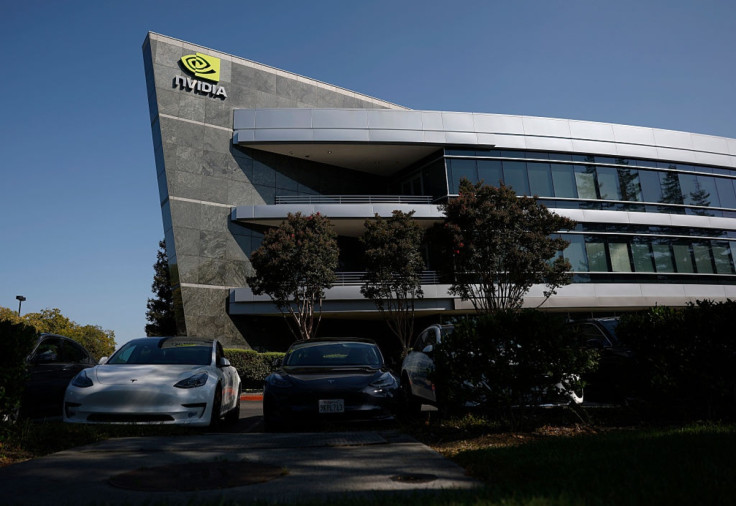
Three days after NVIDIA posted $96.2 billion in quarterly revenue — the largest single-quarter result in semiconductor history — the company's vice president of hyperscale computing hand-delivered its first Vera CPU server and a Vera Rubin GPU to Amazon Web Services' headquarters in Seattle. That Vera CPU delivery to AWS, completed August 27, capped a week that crystallized a new financial truth: in the AI era, the companies building the picks and shovels are extracting far more value than the companies swinging them. Micron Technology is up 220% in 2026. Marvell Technology is up 185%. Intel is up 150%. A popular exchange-traded fund tracking semiconductor stocks has gained more than 70% this year. The ETF tracking the Magnificent Seven — Alphabet, Amazon, Apple, Microsoft, Meta, NVIDIA, and Tesla — is up just 4%.
The shift is not subtle. It is the defining financial story of the AI boom, and NVIDIA's Q2 fiscal 2027 results confirmed it with numbers that would read as outliers for any company in any industry. The chip stocks vs Mag Seven divergence has been building all year — and NVIDIA's earnings put a figure on exactly why.
Record Quarter in Context
NVIDIA reported revenue for the second quarter ended July 26, 2026, of $96.2 billion — up 18% from the prior quarter and up 106% from the same period a year ago — beating Wall Street's consensus estimate of approximately $92.2 billion by roughly $4 billion. The company's data center division, which houses its AI accelerator business, generated $89 billion in revenue for the quarter, up 117% from a year earlier and 18% from the previous quarter.
GAAP and non-GAAP gross margins were both 75.0%. Net income of $59.7 billion represented a 126% increase year over year. NVIDIA guided for $108.0 billion in revenue for the third quarter of fiscal 2027, comfortably ahead of analyst consensus at the time of the report.
Chief Executive Jensen Huang framed the moment in sweeping terms. "AI has reached its inflection point," he said in the Q2 FY2027 earnings release. "It's doing useful work. Its tokens are productive and profitable. Now, compute is revenue." Huang went on to describe what he called a golden age of new AI labs and startups, multiple frontier labs scaling simultaneously, and sovereign governments building AI infrastructure around the world.
Why Chipmakers Are Winning While Big Tech Pays
Understanding the divergence requires a brief look at the structure of the AI economy. The Magnificent Seven — the tech giants that drove the S&P 500 to outsized returns in 2023 and 2024 — are all spending at unprecedented scale on AI infrastructure. Combined AI-related capital expenditure by hyperscale cloud providers was projected to surpass $730 billion in 2026, according to reporting on rating agency forecasts. That spending is flowing directly into the pockets of the companies that build AI hardware.
The mechanics are visible in the market returns. Meta has poured billions into AI infrastructure while its share price declined from recent peaks. It has been more than ten months since Microsoft shares hit a record high; the stock is up roughly 4% in 2026. Alphabet and Amazon are up approximately 8% and 11%, respectively, both down from peaks reached earlier in the year. Meanwhile, chip stocks hit $9.57 trillion in combined market capitalization in July 2026, accounting for 13.9% of the S&P 500 — up from a much smaller share just two years earlier.
The explanation is structural, not cyclical. Big Tech companies are the buyers of AI compute; semiconductor companies are its producers. When the global AI infrastructure buildout accelerates, producers extract margin from every dollar of hyperscaler capex. The more Microsoft, Meta, and Amazon spend on data centers, the more revenue flows to NVIDIA, Micron, SK Hynix, Broadcom, and Marvell. The AI boom is, in a specific financial sense, a transfer of return on capital from the platform companies funding it to the hardware companies enabling it.
Matt Maley, chief market strategist at Miller Tabak + Co., acknowledged the durability of this dynamic while noting the risks. "We have seen other cracks over the past year, and they have not upset the apple cart for very long," he said. "So it would be foolish to say the AI bubble is about to burst." He added that investors should watch how those cracks develop, per CNBC's semiconductor rally analysis.
How NVIDIA Makes More Revenue Per Watt of Demand
There is a technical reason NVIDIA sits at the center of this rotation — and it goes beyond market share. Each successive generation of NVIDIA's AI architecture expands the total dollar value extracted from a given amount of computing capacity. The Hopper-era platform generated roughly $18 billion of revenue per gigawatt of deployed data center capacity. Blackwell expanded that to approximately $25 billion per gigawatt. The Vera Rubin platform — now in full production and shipping to AWS, Google Cloud, Microsoft Azure, Oracle Cloud Infrastructure, CoreWeave, Lambda, Nebius, and Nscale — is estimated at approximately $40 billion per gigawatt, because it bundles the Vera CPU, the Rubin GPU, NVLink 6 switching, ConnectX-9 networking, and software into a single integrated purchase.
The Vera CPU that Ian Buck hand-delivered to AWS on August 27 is the newest element of that bundle. It carries 88 custom-designed "Olympus" cores, 1.2 terabytes per second of memory bandwidth, and a threading architecture NVIDIA calls Spatial Multithreading — a design that physically partitions execution resources for the branchy, low-arithmetic code that AI agent orchestration produces, rather than the dense matrix math GPUs already handle. As described in NVIDIA's Vera CPU announcement, it is not simply a server chip; it is the CPU layer of an AI factory stack that NVIDIA priced at roughly $200 billion in addressable CPU revenue.
The supply constraints embedded in that architecture are what squeeze gross margins — but they also reveal why chipmakers are winning. NVIDIA's supply commitments grew from $119 billion at the end of Q1 to $279 billion at the end of Q2 of fiscal 2027, primarily driven by procurement of high-bandwidth memory for Vera Rubin. Chief Financial Officer Colette Kress was explicit on the August 26 earnings call: customer forecasts implied growth of roughly 140% for fiscal 2028, but NVIDIA's guidance held at 70% because memory supply could not support the full demand. That gap — between what enterprise buyers want to purchase and what the supply chain can deliver — is itself a form of supplier pricing power. It explains why enterprise buyers face AI server price hikes exceeding 15% for Vera Rubin and Grace Blackwell systems shipping in early 2027.
The Memory Bottleneck That Created an Industry
High-bandwidth memory is the specific technology at the center of this constraint — and understanding why helps explain why companies like Micron, SK Hynix, and Samsung have surged while Big Tech has stalled.
Standard server memory delivers data at roughly 50 to 100 gigabytes per second per module. HBM4, the generation used in NVIDIA's Vera Rubin platform, delivers more than 1.4 terabytes per second per stack by stacking multiple memory dies vertically, connecting them through microscopic copper pathways called through-silicon vias (TSVs), and bonding that stack directly alongside the GPU on a silicon interposer. The HBM bandwidth advantage — roughly 15 to 20 times that of conventional DRAM — is what makes large-scale AI model inference possible at commercial speeds.
The supply constraint is structural, not temporary. Producing one gigabyte of HBM consumes approximately three to four times the semiconductor wafer area of a gigabyte of standard DDR5. Every wafer reallocated to HBM production removes three to four times as many conventional memory bits from the global supply pool as it adds in HBM bits. On top of that, every HBM stack must be assembled onto the GPU die using TSMC's CoWoS (Chip-on-Wafer-on-Substrate) advanced packaging process. NVIDIA holds roughly 60% CoWoS share of available packaging capacity for its data center accelerators in 2026. Two independent bottlenecks — HBM die production and CoWoS packaging — compound each other. No single capital investment can quickly resolve both.
Those structural conditions sent capital flooding into the memory sector's equity. Gartner's semiconductor forecast, published August 24, 2026, projected DRAM revenue to increase 246.6% in 2026, with total memory revenue expected to surpass $1 trillion by 2027 — the first time in the semiconductor industry's history that memory revenue would exceed non-memory chip revenue. SK Hynix's CEO stated publicly that 2027 will be the worst year of the HBM shortage, with demand expected to outpace supply capacity beyond 2030. For investors, the logic is direct: if the shortage is structural and extends through the decade, the three companies that control essentially all global HBM production — Samsung, SK Hynix, and Micron — hold a position that no new entrant can quickly replicate.
When Wall Street Began Financing AI Like a Toll Road
The most consequential structural development announced during the week of NVIDIA's earnings was not the revenue figure. It was a deal announced on August 10: NVIDIA signed memorandums of understanding with Apollo Global Management, BlackRock, Blackstone, Brookfield Asset Management, Goldman Sachs, and KKR to establish independent financing platforms designed to mobilize more than $500 billion of third-party capital for AI infrastructure buildout.
The structure is deliberately analogous to the way Wall Street finances physical infrastructure: toll roads, cell towers, power plants, and data center real estate investment trusts. Under the arrangement, the six asset managers — who collectively oversee well over $5 trillion in assets — will create independent platforms that lend against NVIDIA compute as collateral, allowing AI factory operators to access institutional and insurance capital rather than drawing on hyperscaler balance sheets. Apollo President Jim Zelter called AI compute a "scarce, mission-critical asset class". BlackRock CEO Larry Fink connected the deal to job creation, framing compute infrastructure as a long-duration economic asset.
The deal's timing was explicit. A July 2026 market pullback raised questions about whether Big Tech's AI spending would generate commensurate returns. The $500 billion financing structure was NVIDIA's answer: by turning compute into an investable asset class, it creates a capital pool that lies outside hyperscaler capex constraints and outside the balance sheet stress that rating agencies were beginning to flag.
The risk embedded in the structure is real. AI GPUs have a useful life of roughly three to five years before the next generation renders them obsolete. Traditional infrastructure assets — the toll roads and cell towers that institutional debt financing has historically backed — depreciate over 25 to 40 years. Whether compute-backed debt can attract the same institutional capital at comparable rates, given that risk profile, remains a live question. A Forbes analysis of the financing risk described it as a potential vulnerability: if next-generation NVIDIA hardware renders current GPUs less valuable than expected, the collateral supporting billions in infrastructure debt could impair faster than lenders anticipated.
Jensen Huang told CNBC he approached only six firms for the commitment, and none declined. That response is itself a data point: the six largest alternative asset managers in the world see AI compute as a durable enough asset to build financing platforms around. Whether they are right will be tested by the next several GPU generations.
What the China Zero Means
Embedded in NVIDIA's $108 billion Q3 guidance is a disclosure that tends to get less attention than the revenue headline: that forecast assumed essentially zero data center compute revenue from China. In Q2 2026, China data center revenue represented less than 1% of that segment's revenue.
That figure is the consequence of US export restrictions that have effectively severed NVIDIA's GPU supply to Chinese data centers, even as ten Chinese firms — including Alibaba, ByteDance, and JD.com — received clearance for H200 purchases in January 2026. In practice, the clearances have not translated into significant shipments. NVIDIA's actual China data center revenue remained minimal through Q2.
What remains legally permissible is the Vera CPU: NVIDIA began accepting orders from Chinese customers for its Vera server processor in mid-2026, with deliveries targeted for August 2026. A single Vera processor costs north of $20,000, and fully configured 256-chip racks run approximately $10 million. It is a significantly smaller revenue opportunity than GPU-based AI accelerator sales, but it maintains a commercial channel into a market NVIDIA has effectively lost at the AI accelerator layer.
The China zero is also a statement about where AI value is accumulating globally. A forecast of $108 billion in Q3 revenue without China means the US, Europe, Japan, Middle East, and sovereign AI programs in the rest of the world are sufficient to sustain the growth rate. It also means that China's AI infrastructure buildout is increasingly running on domestically produced alternatives — a bifurcation of the global AI chip market with long-term consequences for the relative pace of AI development in each geography.
Is the Rotation Durable?
The full-year performance divergence between semiconductor stocks and Big Tech raises a question that investors holding either are asking: how long does this last?
The structural answer from the research is: at least through 2027. SK Hynix's CEO has forecast that HBM demand will outpace supply capacity through the end of the decade. NVIDIA's own supply-constrained guidance — 70% growth when demand implies 140% — means the memory shortage is not an aberration but a planning input. Every major AI infrastructure expansion planned for 2027 and 2028 is being priced and sized against a supply ceiling set by HBM production capacity, not by customer willingness to pay or available capital.
The risk to the rotation is real, as Maley noted. When Broadcom reported earnings in early June 2026, its chip revenue forecast slightly missed expectations, sending its shares down nearly 20% over two days. Semiconductor stocks are volatile, and the same concentration that amplifies upside amplifies downside. The VanEck Semiconductor ETF (SMH) carries heavy weight in NVIDIA, TSMC, and Broadcom — gains in those three have driven much of the sector's 2026 outperformance, but their losses are similarly concentrated.
The $500 billion private capital structure represents an attempt to insulate the AI buildout from that volatility — to move AI infrastructure financing onto longer-duration institutional capital that does not react to a single earnings miss. Whether that capital can actually tolerate the technological obsolescence risk embedded in short-lived AI hardware is the experiment NVIDIA, Apollo, BlackRock, and their partners are now running.
For now, the hand-delivery of NVIDIA's first Vera CPU to AWS in Seattle is both a symbol and a data point: the world's most valuable chipmaker is physically bringing its next architecture to the cloud's most important customer, one system at a time, at the moment when every major financial institution in the world has decided that compute infrastructure is the decade's most important investable asset class.
Originally published on Tech Times