

Oil Futures For 2027 Have Jumped Almost 20%. Traders Believe Relief Could Take Longer Than Expected.
The U.S. Energy Information Administration has raised its oil price forecasts, adding to concerns about borrowing costs, consumer spending and the outlook for interest rates.

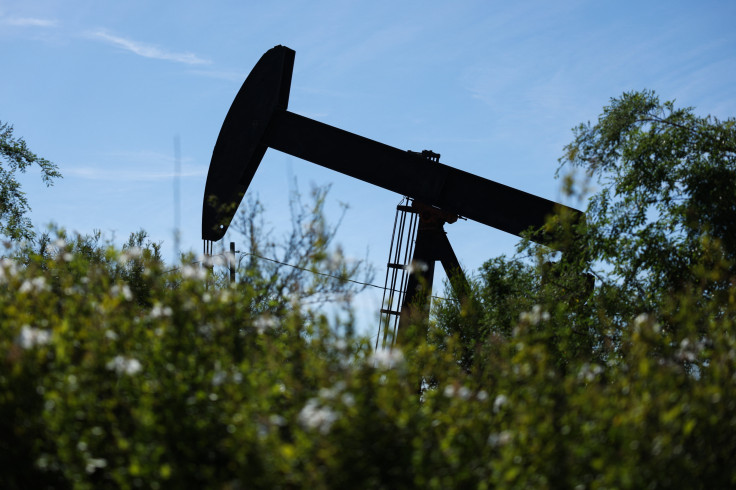
Oil traders are increasingly betting that high energy costs will persist well into 2027, with crude futures for delivery next year rising sharply since September as the Middle East war disrupts global supplies.
West Texas Intermediate futures for January 2027 delivery reached $97.10 a barrel this week. June contracts have jumped 18% to around $88, while December futures have climbed 13% to about $81, according to FactSet market data.
The increases suggest traders expect oil to remain expensive for longer than they anticipated just weeks ago, although futures prices are not guarantees of what crude will cost when those contracts expire.
The latest figures from the International Energy Agency show the extent of the pressure on global supplies. Oil inventories were 509 million barrels below their prewar levels at the end of September, with onshore stocks falling by 113 million barrels during the month. An increase in oil held aboard ships partly offset that decline, leaving overall inventories down 10 million barrels.
Middle Eastern oil exports are recovering, but supply constraints remain. Crude shipments from Gulf producers increased by 4.4 million barrels a day in September to 13.9 million barrels, reaching more than 75% of prewar levels.
Saudi Arabia led the recovery, using alternative shipping routes and tanker transfers outside the Strait of Hormuz. However, attacks on energy infrastructure and vessels continue to threaten shipments, while longer routes and higher insurance costs have made transportation more expensive.
The IEA expects global oil demand to decline by 2.6 million barrels a day in 2026 as high prices and weaker economic conditions affect consumption. Even with lower demand, the agency forecasts an oil supply deficit through the end of the year.
The U.S. Energy Information Administration's October Short-Term Energy Outlook also points to higher prices ahead. The agency raised its forecast for average Brent crude prices in 2027 to $84 a barrel, up from $74 in September. It also increased its fourth-quarter 2026 forecast by $14 to $105 a barrel.
Brent averaged $114 in September, compared with $91 in August, and briefly reached $131 on September 15 following an attack on Saudi Arabia's East-West oil pipeline.
The EIA expects prices to ease as regional production and shipping capacity recover, with Brent averaging $87 in the second quarter of 2027 and $74 in the final quarter. However, those projections were based on information available through October 1, before the latest increase in futures prices.
American consumers could also face higher fuel costs next year. The EIA raised its 2027 gasoline price forecast to $3.56 a gallon from $3.35, while its diesel projection increased to $4.49 from $4.40.
Sustained energy costs create challenges for central banks because they can increase transportation, manufacturing and distribution expenses, potentially feeding into consumer prices.
Diesel is a particular concern. Global exports in September were approximately 700,000 barrels a day below year-earlier levels, according to the IEA, as disruptions in the Middle East and Russia tightened supplies ahead of winter.
Central banks generally look past temporary energy price spikes when setting monetary policy. But prolonged increases can make it harder to determine whether inflationary pressures are fading or spreading through the broader economy.
The Federal Reserve raised its benchmark interest rate by a quarter percentage point in September to a range of 3.75% to 4%, citing elevated inflation and its commitment to returning inflation to the 2% target.
The Trump administration has sought to ease fuel supply pressures by allowing additional Russian diesel shipments into the market. However, the IEA said relaxing Russian export restrictions was unlikely to significantly increase global supplies because damage to the country's refining capacity continues to limit production.
© Copyright IBTimes 2026. All rights reserved.