

Saad Hassan: The Engineer Who Turned Eight Hours of Guesswork Into Minutes of Certainty
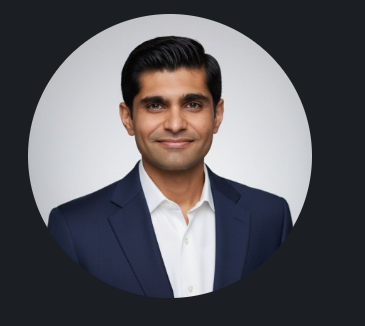
Somewhere in the eastern deserts of Saudi Arabia, a drilling operation runs around the clock. Hundreds of sensors stream data every second. And until recently, a team of analysts scattered across eight countries would spend an entire working day sifting through that data to produce a single performance report. By the time the conclusions arrived, the problems they described were already yesterday's news.
Saad Hassan looked at that process and saw something broken at its foundation. Not a technology gap, exactly. The data existed. The tools existed. What was missing was the engineering discipline to connect one to the other in a way that mattered when it mattered.
"If you're telling me today what I should have done yesterday, it's already too late," Hassan says. "For continuous operations running 24 hours a day, a report that arrives eight hours after the fact is not intelligence. It's a post-mortem."
So he built something different. Leading a cross functional team, Hassan designed a data platform that ingested a decade of historical operational data, cleaned and categorized it, then applied trained machine learning models to incoming real-time streams. The system would flag anomalies, compare current performance against historical baselines, and deliver actionable KPIs to a live dashboard. The entire cycle took minutes, not hours. And the analysts whose days had been consumed by manual extraction were freed to do what they were actually trained for: engineering.
Where Data Meets Consequence
Hassan's career began in petroleum engineering, but the data-intensive side of it. Fresh out of university at a time when big data was shifting from buzzword to operational reality, he landed in one of the few industries where a wrong conclusion drawn from bad data doesn't just cost money. It costs lives.
"Oil and gas drilling in real time is not the same as data for a social media platform," he says. "If something goes wrong on a social network, maybe someone's identity gets exposed. That's bad. But nobody dies. In my world, people have died. Equipment blows up. Environmental disasters happen. The stakes shaped how I think about every system I build."

That pressure became a crucible. While his peers relied on decades of institutional experience and gut instinct, Hassan taught himself Python and started writing automated alert systems that could flag which parts of an operation needed attention in real time. It was rudimentary by his own admission, but it worked. And it planted an idea: if basic automation could produce that kind of operational clarity, what would a purpose-built machine learning platform deliver?
That environment shaped more than just his technical skillset. It defined how he thinks. Hassan approaches problems with a bias toward clarity and consequence, focusing less on what looks impressive and more on what actually works when the stakes are real.
Thirty Percent Less Downtime, Two Million Dollars a Month
The numbers from Hassan's first platform spoke plainly. Reporting time collapsed from eight hours to minutes. But the downstream impact was where the real value lived. With operators now receiving real-time insight instead of day-old summaries, intervention happened on time. Downtime across monitored sites dropped by more than 30%.
To appreciate what that means in dollar terms: some sites were logging 240 hours of downtime per month, with each day costing between $60,000 and $90,000. Cutting 75 of those hours did not require a philosophical debate about the future of AI. It required a well-engineered system doing exactly what it was designed to do.
His second platform tackled an even more acute version of the same problem. Thirty years of operational data existed across four separate applications, each using its own naming conventions and standards. Hassan's team unified the schemas, trained models on historically optimal operating conditions, and deployed the system against live data streams across 20 sites. The result: an average reduction of one full day of downtime per site. At $90,000 per day across 20 locations, the monthly savings approached $2 million.
"And nobody lost their job," Hassan is quick to clarify. "One operator who used to monitor a single site could now oversee ten. The company scaled. The people stayed. That's efficiency. That's what this technology is supposed to do."
The Gap Between Hype and Hardware
Hassan has little patience for the version of artificial intelligence that dominates public conversation. Chatbots that turn your photo into a cartoon. Social media filters powered by neural networks. Tools that look impressive in a demo and solve precisely nothing in a plant, a hospital, or a refinery.
"Modern chatbots are not necessarily solving problems," he says. "They look fancy. A machine is talking to you. That's about it. Value to me is not just financial. It's what benefit society actually gets. If a company cuts downtime, that means cheaper gasoline at the pump. Cheaper gasoline means cheaper milk, cheaper bread, cheaper everything that moves by truck. That's a real impact on real people."
He draws a sharp line between the consumer AI economy and the industrial applications he builds. Most machine learning talent, he argues, is concentrated on a narrow band of consumer apps, which is precisely why the transformative potential of AI in critical operations remains largely unrealized. The technology is ready. The engineering talent exists. What's missing is the will to aim it at problems that matter.
From Platforms to Practice
Hassan's trajectory is shifting. Having proven what tailored machine learning systems can do inside large industrial operations, he is now moving toward a consultancy model. The logic is straightforward: every organization, whether it's a factory, a hospital, a power utility, or a logistics company, generates data and suffers from inefficiency. Most of them know it. Few of them know what to do about it.
"There is no one-size-fits-all," Hassan says. "You can't put a shirt of one size and expect it to fit everyone. Every problem needs to be looked at differently. I go in, I look at their data, I understand their operations, and I build something that fits."
The target industries are those where time sensitivity is highest and failure is most consequential: aviation, mining, power generation, water treatment, healthcare. Places where the difference between a real-time insight and a delayed report is measured not in convenience but in safety, cost, and sometimes human life.
Hassan sees this moment clearly. The tools have matured. The computational infrastructure is available at scale. What the market needs now is not another off-the-shelf product promising to revolutionize everything. It needs engineers who understand both the data and the domain, who have built systems under pressure where the consequences of getting it wrong go far beyond a quarterly earnings miss.
He has done it before. The platforms he built are running. The savings are documented. The downtime is down. And the industries that need this work most are only just beginning to realize what's possible when AI is built to solve, not to impress.
© Copyright IBTimes 2026. All rights reserved.