Scientists Are Racing To Build a ‘Virtual Cell’ As AI Could Help Test Drugs Before They Reach The Lab
Virtual cells could allow researchers to eliminate weaker drug candidates before costly laboratory experiments, though scientists still face challenges involving data quality and real-world validation.

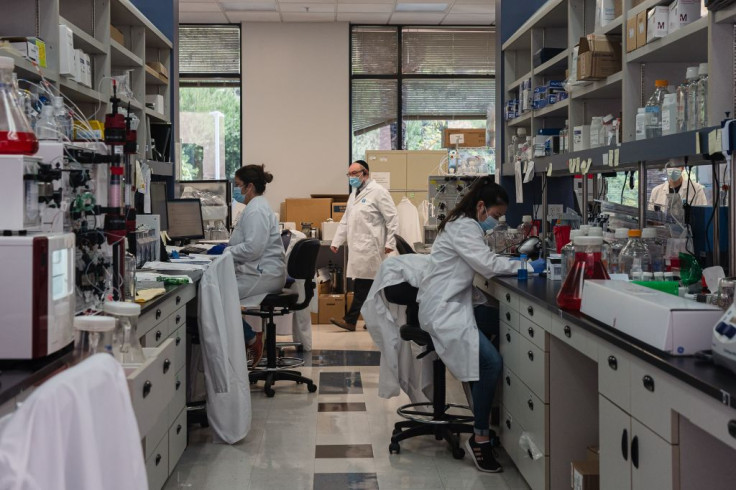
Scientists are developing artificial intelligence models that could simulate how human cells respond to drugs and genetic changes, potentially allowing researchers to test some ideas computationally before moving them into expensive laboratory experiments.
GenBio AI is among the companies pursuing the technology. The Palo Alto-based startup developing what it calls an AI-driven digital organism that connects biological information across multiple scales. The aim is to model interactions spanning molecules, proteins, cells and eventually broader biological outcomes.
Eric Xing, GenBio AI's co-founder and chief scientist, said the company plans to release its first implementation of a virtual cell, Axios reported. Xing and other researchers envision the technology functioning as a simulator in which scientists could introduce a drug or alter a gene and predict how those interventions affect biological systems before conducting physical experiments.
The approach goes beyond many existing AI models in biology, which are designed to solve narrower problems such as predicting protein structures or analyzing individual types of biological data. GenBio's Artificial Intelligence-Driven Digital Organism, or AIDO, is instead designed to connect information across biological scales and enable prediction and simulation of cellular processes, the company said.
The potential applications extend directly to drug development. A review published in the British Journal of Pharmacology in July said advances in single-cell data, spatial multi-omics and AI are allowing researchers to develop virtual-cell systems capable of predicting how biological interventions alter cellular behavior. The researchers identified drug-target prioritization, drug-response prediction and combination therapy design as potential uses.
GenBio is also using AI agents to help construct the underlying models. In research released this year, its AIDO.Builder system was designed to autonomously select modeling approaches, write and execute code, evaluate results and improve models through repeated iterations. A preprint published on bioRxiv said the system produced competitive results across biomedical benchmarks while reducing the manual work normally required to develop predictive models.
The company is not alone in pursuing virtual biology. Researchers associated with the Chan Zuckerberg Initiative previously laid out a broader roadmap for AI virtual cells capable of representing biological systems across molecules, individual cells and tissues.
In a research paper available through the National Institutes of Health's PubMed Central, scientists including researchers from Stanford, Harvard, Carnegie Mellon and the Chan Zuckerberg Initiative described virtual cells as high-fidelity simulations learned from biological data. They said such models could eventually help identify drug targets, predict cellular responses and allow scientists to conduct computer-based experiments before deciding which hypotheses warrant laboratory testing.
The technology is not intended to eliminate physical experiments, animal studies or clinical trials. Instead, virtual-cell developers are seeking to improve the early stages of research by narrowing the number of drug candidates and biological hypotheses that need to be tested in the real world.
Significant technical obstacles remain. A 2026 review indexed by the National Library of Medicine identified challenges including integrating different types of biological data, interpreting model outputs and meeting substantial computational requirements.
Researchers also need to demonstrate that predictions made by virtual cells consistently hold up in physical experiments. Biological responses can vary between tissues and patients, while models trained on incomplete or unrepresentative datasets could produce unreliable results.
GenBio is trying to address the complexity by combining different forms of biological information rather than relying on a single data type. The company said in June that it is working with Nvidia to develop virtual-cell world models capable of simulating human cellular behavior across different biological modalities and scales.
© Copyright IBTimes 2026. All rights reserved.
- Recommended For You