A space weather forecasting site reported that a stream of solar winds is currently moving toward Earth’s direction.
Inigo Monzon
May 07, 2020
NASA has detected a massive asteroid that’s expected to safely fly past Earth on Friday.
Inigo Monzon
May 07, 2020
Scientists at the European Southern Observatory (ESO) were able to detect the closest black hole to Earth.
Inigo Monzon
May 06, 2020
NASA’s automated asteroid tracking system has detected a total of five asteroids that are expected to safely approach Earth on Thursday.
Inigo Monzon
May 06, 2020
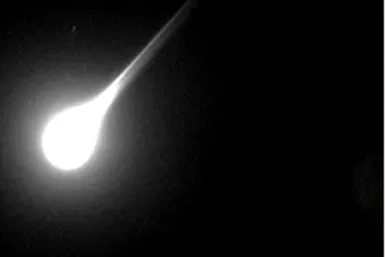
Residents of Portugal spotted a bright fiery object streaking across the sky over the country. Based on reports by eyewitnesses, it seems a small asteroid entered Earth’s atmosphere and turned into a meteor fireball over Portugal.
Inigo Monzon
May 06, 2020
The European Space Agency (ESA) recently shared a photo taken by the Hubble Space Telescope of a distant galaxy. According to the agency, traces of the galaxy’s violent past are visible in the photo.
Inigo Monzon
May 06, 2020
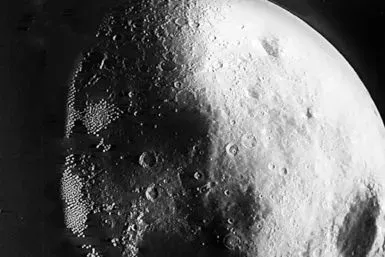
An observatory funded by the European Space Agency (ESA) has detected the latest asteroid impact event on the Moon. According to the ESA, information collected by the observatory provides valuable information regarding asteroid impacts on Earth.
Inigo Monzon
May 05, 2020
An amateur astronomer was able to capture images of solar prominences escaping from the Sun’s surface. These prominences, which mainly consist of plasma, are known to trigger coronal mass ejections.
Inigo Monzon
May 05, 2020
A study provided a new explanation regarding the nature of the impactor that caused the violent Tunguska airburst event in 1908. According to the authors of the study, an ordinary meteorite most likely did not cause the incident.
Inigo Monzon
May 05, 2020
An asteroid almost as big as a standard passenger bus is expected to fly past Earth on Wednesday (May 6). According to the data collected by NASA, the approaching asteroid follows a natural orbit that crosses Earth’s path.
Inigo Monzon
May 05, 2020
A new study on global warming warned that the increasing amount of greenhouse gas emissions would eventually create climate conditions that are not suitable for humans. According to the study, almost half of the global population would be subjected to extremely hot conditions by 2070.
Inigo Monzon
May 05, 2020
A group of astrophysicists claimed in a new study that alien life could exist in planets with atmospheres mainly composed of hydrogen. The new findings could change the way scientists hunt for signs of alien life in exoplanets.
Inigo Monzon
May 04, 2020
A group of geologists discovered that the Moon may still be seismically active. In a new study, the geologists explained how they detected recent tectonic activity on Earth’s natural satellite.
Inigo Monzon
May 04, 2020
NASA’s automated asteroid tracking system is currently monitoring five asteroids that are expected to approach Earth. According to the data collected by the agency, the approaching asteroids will safely fly past Earth on Tuesday (May 5).
Inigo Monzon
May 04, 2020
Researchers recently discovered that like solar flares and extreme space weather, earthquakes and tsunamis could also disrupt Earth’s ionosphere. According to the researchers, the effects of these Earth-based natural disasters on the ionosphere could interfere with radio communications and scramble GPS signals.
Inigo Monzon
May 04, 2020
A group of researchers was able to discover the new timeline of Mars’ ancient magnetic field. According to the researchers, the magnetic field on the Red Planet may have formed much earlier than previously thought.
Inigo Monzon
May 03, 2020
NASA’s automated asteroid tracking system has detected three near-Earth objects that will safely fly past the planet on Monday (May 4). Based on the data collected by the agency, the largest asteroid in the group is about as big as the Great Pyramid of Giza in Egypt.
Inigo Monzon
May 03, 2020
NASA’s Center for Near-Earth Object Studies (CNEOS) has detected five asteroids that are expected to fly past Earth. The approaching asteroids will zip past the planet on Saturday (May 2) and Sunday.
Inigo Monzon
May 01, 2020
A new study carried out in the Antarctic provided a new estimate regarding the amount of cosmic debris and space rocks that hit Earth every year. According to the researchers, an average of about 40 million kilograms of extraterrestrial material hit the planet annually.
Inigo Monzon
May 01, 2020
NASA’s asteroid tracking system has detected four asteroids that are currently approaching Earth.
Inigo Monzon
Apr 30, 2020
Astronomers currently observing the approaching comet SWAN said that it has become bright enough to be spotted by the human eye. It will most likely become brighter as it approaches the Sun and Earth.
Inigo Monzon
Apr 30, 2020
Astronomers have discovered a new exoplanet that’s about three times more massive than Jupiter, which is the largest planet in the Solar System. According to the astronomers, the new exoplanet is currently the largest object in its own star system.
Inigo Monzon
Apr 30, 2020