

Why High-Performing Tech Companies Are Redesigning How Work Gets Done
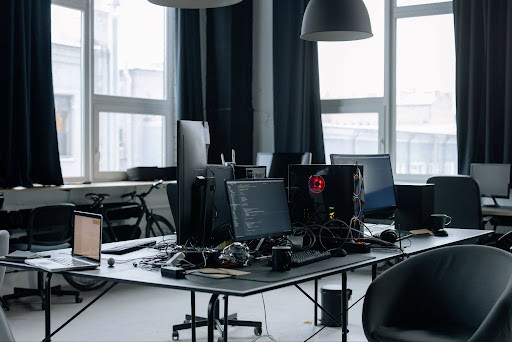
For years, startups rewarded long hours, constant availability, and last-minute heroics as signs of commitment. Today, a growing number of technology companies are evolving beyond those habits with systems designed to improve execution, decision-making, and long-term performance. SecurityScorecard, a global leader in threat-informed third-party risk management (TPRM), is one example of that broader shift.
The all-nighter has long been part of technology's mythology. Somewhere between the dot-com era and today's AI race, saying "I haven't slept in two days" became shorthand for dedication rather than a signal that something might be broken. But as organizations scale, many leaders are questioning whether individual heroics can really support sustainable performance. In industries where a missed signal can lead to a serious security incident, a team that depends on a few people repeatedly saving the day is carrying real risk.
ISC2's 2025 Cybersecurity Workforce Study found that 59% of security teams now cite critical or significant skills gaps, up from 44% the year before. Gallup's latest State of the Global Workplace report puts global employee engagement at 20%, its lowest point since 2020.
Artificial intelligence is part of that shift too, but for a different reason. When it is built into everyday workflows, it can remove repetitive tasks, speed up information flow, and give people back time for higher-value work. The point is not to make people work more. It is to enable them to focus on more strategic work and be less tethered to manual, repetitive workflows.
A UC Berkeley Haas School study followed 200 employees at a U.S. tech company for eight months as they adopted AI tools on their own. Task lists grew. People stayed later and picked up broader work, often without anyone asking them to. The researchers call it workload creep.
Every experienced person a company loses to workplace strain takes real execution capacity with them. A Johns Hopkins study found that friction costs employers an average of $3,999 a year for a nonmanagerial hourly employee and up to $20,683 for an executive.
The global workforce is pushing for change too. Randstad's Workmonitor found that work-life balance has, for the first time in the report's 22-year history, ranked higher than pay among worker priorities, 83% compared with 82%. That shift is not limited to younger employees.
SecurityScorecard redesigned parts of its internal operating model rather than asking people to absorb more pressure. The company moved routine meetings to documented channels and has made video cameras optional. This safeguards deep-work periods for engineers and empowers project leads to act without waiting for endless consensus.
Each change is small on its own. Together, they point to the same problem: constant context switching makes deep work harder than it should be.
"Hero culture is a design and culture and systems problem," says Amy Suchanek, Chief People Officer at SecurityScorecard. "Our focus is on protected time and accountability so people can do their best work without the performative pressure to be 'on' all the time."
The approach reflects a broader shift toward structured operating models. Atlassian ran a two-week company-wide initiative evaluating asynchronous Loom video updates against traditional live meetings, which eliminated 5,000 hours of live meetings in just two weeks.
GitLab built its global model around a public handbook of more than 2,000 pages to centralize organizational documentation. The common thread is simple because sustainable performance relies on scalable processes rather than individual oversight.
Similarly, Shopify took an aggressive approach to guarding deep-work periods by executing a company-wide "calendar purge". The e-commerce giant structurally eliminated all recurring meetings with three or more people and instituted strict meeting-free Wednesdays, instantly wiping out roughly 10,000 corporate events and eventually removing 322,000 hours of unnecessary meetings to give teams back uninterrupted execution capacity.
Reducing live meetings in favor of asynchronous work has real critics. Slower real-time interaction can hurt response when fast collaboration matters most. Sustainable operating models also tend to be easier to build in established companies than in early-stage startups, where speed and rapid pivots can decide whether the company survives.
Ali Khan, field CISO at ReversingLabs, sees the underlying issue as one of dependency. An organization can rely on systems, or it can rely on a handful of people who have become indispensable. When employees turn to one specific person during an incident instead of a shared process, that says something about how the organization is built.
Christina Maslach, the UC Berkeley psychologist who pioneered burnout measurement, has spent decades arguing that it is structural. Exhaustion tends to say more about the system a person is working inside than about that person's ability to handle pressure.
In the end, high-performing organizations are still expected to deliver. What has changed is the way more of them are doing it. They are moving away from heroics and toward systems that keep working even when no one is trying to save the day.
Companies like SecurityScorecard, Atlassian, GitLab, and Shopify are betting on this broader industry evolution, and on a simple idea: operational discipline can create a stronger competitive advantage than performative long hours.
© Copyright IBTimes 2026. All rights reserved.