A Global Exploration Roadmap that will introduce a 25-year scenario for visits beyond Earth orbit is being drawn up by Nasa and their counterparts around the world. The destination?
IBT Staff Reporter
Aug 30, 2011
The cause for last week's Soyuz rocket failure that crashed Russia's Progress 44 supply ship heading to the International Space Station has been identified, said Russian news reports.
Kukil Bora
Aug 30, 2011
Pre-packaged food rations may not be adequate to sustain the first manned mission to mars, scientists claim. Experts believe that kitchen Vegetable gardens will give the crew a healthier diet and produce more oxygen onboard.
Ceylan Yeginsu
Aug 30, 2011
A malfunctioning gas generator in the Soyuz carrier rocket's third stage engine has been identified by members of the emergency commission as the reason a supply ship didn't make it to the International Space Station, Federal Space Agency (Roscosmos) spokesman Alexei Kuznetsov told the Itar-Tass on Monday.
Laura Matthews
Aug 30, 2011
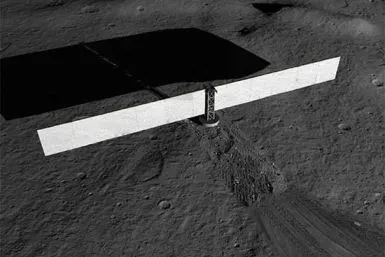
Nuclear energy could find a second life on the moon and Mars.
IBT Staff Reporter
Aug 30, 2011
Alien life stands a far better chance of being discovered thanks to vastly improved scientific detection devices, say scientists meeting this week in Denver at an American Chemical Society conference.
Mike Obel
Aug 30, 2011
Following the failure of the Russian Soyuz rocket last week, if the astronauts, currently living in the International Space Station, will have to abandon ship even temporarily, the $100 billion orbiting research facility would be at great risk of being lost.
Kukil Bora
Aug 30, 2011
NASA has developed a suitcase-sized fission nuclear reactor capable of generating 40-kilowatt electricity in space. Designed to work on the fission nuclear technology, this nuclear reactor will prove to be a reliable power source not only on Earth, but on the moon and the Martian surface claim the scientists.
sangeeta mukherjee
Aug 30, 2011
Scientists are working on compact nuclear power plants based on fission power technology for settlements on the Moon and Mars.
Manikandan Raman
Aug 30, 2011
National Aeronautics and Space Administration (NASA) may leave the International Space Station (ISS) unmanned after the failure of a Russian Soyuz rocket last week is forcing the agency to consider its options.
Manikandan Raman
Aug 30, 2011
A camera in Cartersville, Ga., captured a video and photos of the meteor as it brightened up the Atlanta skies.
Sanskrity Sinha
Aug 30, 2011
Following the failure of an unmanned Russian Soyuz rocket last week, the International Space Station might have to be left without a crew if NASA's Russian partners can't find the cause of the malfunction and fix it soon.
Kukil Bora
Aug 29, 2011
A compact, suitcase-size nuclear power plant could one day generate electricity for manned or unmanned bases on the moon, Mars, or other planets, a U.S. research team says.
IBT Staff Reporter
Aug 29, 2011
NASA's researchers are investigating ways to implement a bioregenerative system in space that would allow astronauts to grow certain plants.
Ashley Portero
Aug 29, 2011
Russian space vehicles are currently the only means of transporting crews and supplies to the station now that the U.S. space shuttle program has ended. The U.S. space shuttle flew its last mission in July.
Laura Matthews
Aug 29, 2011
U.S. and Russian space agency officials are considering temporarily pulling astronauts off of the International Space Station, The Wall Street Journal reports Monday, following last week's failure of an unmanned cargo mission to the international space station.
IBT Staff Reporter
Aug 29, 2011
NASA said that astronauts may need to abandon the International Space Station in the fall. The announcement was prompted by Russian Soyuz rockets, which will be grounded until well into November. NASA said that it will be impossible to send new crews into space after current crews leave.
IBT Staff Reporter
Aug 29, 2011
Astronauts traveling to the Red Planet to script the first manned mission to Mars may have to grow their own food on the spacecraft.
Shailesh Shrivastava
Aug 29, 2011
NASA scientists, using data from the Wide-field Infrared Survey Explorer (WISE), have discovered the coldest class of star-like bodies, with temperatures as cool as the human body.
Monami Thakur
Aug 29, 2011
Scientists provided new insights into a cosmic accident that has been streaming X-rays toward Earth since March. Two studies appearing in the Aug. 25 issue of the journal Nature revealed the information about the accident.
Shailesh Shrivastava
Aug 28, 2011
Hurricane Irene, the first of the 2011 season, is on a destructive path along the East Coast. Irene took three lives in North Carolina and one in Virginia. Additionally, the Category 1 hurricane has effectively closed down New York, the nation's largest city. Irene is packing winds of about 90 miles per hour and is churning over North Carolina and Virginia.
Laura Matthews
Aug 27, 2011
NASA's Cassini spacecraft has captured new raw images of Saturn's oddly shaped moon, Hyperion, during its second closest encounter with the cratered body on Aug. 25, 2011.
Monami Thakur
Aug 27, 2011