

Retail’s Technology Boom Raises the Stakes for AI Strategy
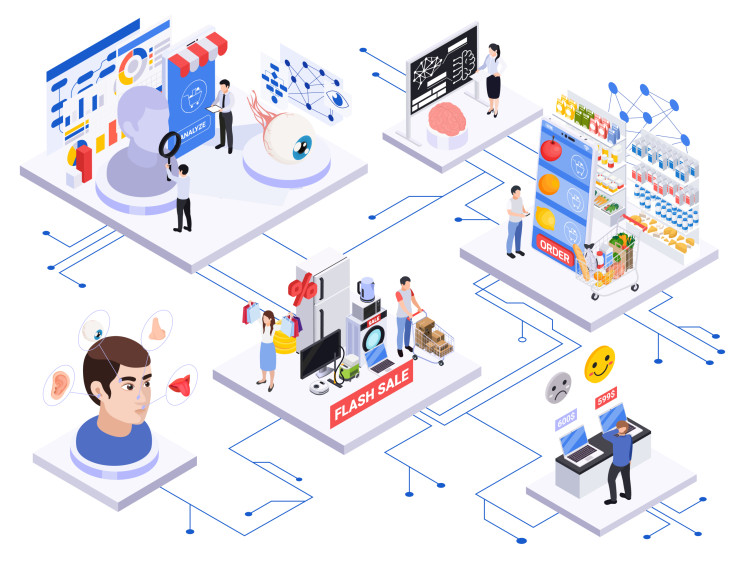
Retail has accumulated an expansive technology infrastructure across stores, supply chains, merchandising, e-commerce, workforce management, reporting, and customer engagement. Point-of-sale systems, inventory platforms, task-management tools, supplier networks, robotics, analytics, and AI applications can each contribute valuable information. Yet the growing volume of systems also creates more information to interpret and more interfaces through which decisions must be made.
That dynamic is becoming increasingly relevant as retailers consider the next stage of AI adoption. Deloitte's 2026 Global Retail Industry Outlook, based on a survey of 330 retail executives, found that nearly 68% of respondents expected to deploy agentic AI for key operational and enterprise activities within 12 to 24 months. The report also describes an industry increasingly focused on connecting technology investments and translating data into business decisions.
Joseph Bullock, co-founder and CEO, and Anton Kulikalov, founder and CTO of FastQuery AI, an AI-native platform focused on retail operations and insights, note that these findings point toward a broader question about retail technology. How much capacity does an organization have to interpret the information its systems continuously generate?
"More platforms can mean more signals, more decisions competing for attention, and more context required to determine which signals deserve action," Bullock states. For retailers without large teams of analysts and data scientists, that creates a potential bandwidth gap between the amount of information available and the organizational capacity to turn it into useful decisions.
Bullock views that gap as a structural issue in the way retail technology has developed. His perspective places greater emphasis on the connection between information, decisions, and frontline execution. "The hardest decisions in retail aren't hard for lack of data," Bullock says. "They're hard because the context never arrives in one place at the same time."
That context matters because retail performance involves several connected layers of activity. At the store level, execution can involve inventory availability, shelf conditions, employee productivity, customer engagement, and countless decisions that influence operational precision. At the organizational level, leaders must interpret sales, inventory, supplier, pricing, and customer data to make consequential choices. A further layer emerges afterward, which is determining whether those decisions produced the intended result and incorporating that learning into future decisions.
These can be viewed as three connected gaps: execution, insights, and the feedback loop. Technology can support each area individually. Yet the value of those systems can depend on the connections between them. A merchandising decision can influence store activity; store activity can influence customer behavior and inventory. Those outcomes can generate information for the next decision. When those stages remain separated, the learning cycle can become difficult to maintain.
That dynamic also helps explain the growing complexity of the AI conversation. "Retailers now have an expanding range of potential applications, from conversational assistants and automated reporting to forecasting, merchandising, workforce tools, and agentic systems," Kulikalov explains. "Each can address a meaningful use case, but the sheer range of possibilities can make it harder to identify where AI can create the greatest organizational value."
Kulikalov argues that the larger opportunity sits in how these capabilities interact. That philosophy places FastQuery within a broader evolution in enterprise technology. Its platform connects information from systems such as POS, inventory, back-office operations, and supplier data, while extending that information to employees working directly with customers. The significance of this model lies in the interaction between previously separate layers: information can inform a decision, the decision can translate into an operational action, and the resulting activity can provide additional context for subsequent decisions.
For independent retailers, that model may carry particular relevance because analytical resources can vary substantially by organization. AI can extend the practical reach of existing teams by helping employees retrieve information, interpret operational signals, and act on relevant context without requiring every decision to pass through a specialized analytical function.
The broader opportunity, then, may involve a transition from technology accumulation toward technology coordination. Retailers have spent years building digital infrastructure across the enterprise. AI can serve as an intelligence layer across that infrastructure, helping connect data, decisions, execution, outcomes, and learning into a more continuous process.
Bullock states, "The gap between knowing and doing is where most retail improvement dies." His observation points toward a retail technology model in which intelligence becomes useful through action and becomes more valuable through the feedback generated by that action.
The emerging question for retailers may extend beyond how many AI tools they deploy. It may concern how effectively their existing technology ecosystem can contribute to a continuous cycle of data, decision-making, execution, outcomes, and learning. In that environment, the strategic value of AI could come from making the technology retailers already possess more connected, accessible, and useful to the people making decisions throughout the business.
© Copyright IBTimes 2026. All rights reserved.