

Trump Said Air Strikes Would Stop Drugs Flowing Into U.S. From The Caribbean. DEA Says They Haven’t Made A Difference
An assessment from the agency has found that the price and availability of drugs in the country has remained stable.

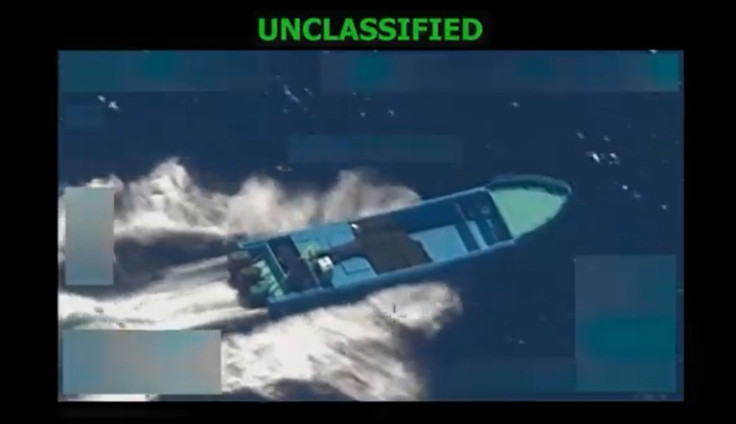
The Trump administration's air strikes on drug smugglers haven't slowed the flow of drugs into the U.S., but they have led drug dealers to alter their tactics, according to a new report.
Despite President Trump's claims that seaborne drug smuggling had been cut by "97 percent," the Washington Post reported that a closed-door assessment by the Drug Enforcement Administration (DEA) found that the air strikes did little to impact the supply or price of cocaine.
"Smugglers have adapted to the intensified pressure," the DEA briefing stated, according to the newspaper. "Price and availability have not been noticeably affected."
Rather, traffickers have adapted, switching from small, fast boats to slower, bigger boats that stick to the coastline. According to the DEA assessment, drug smugglers are also increasingly relying on airplanes to avoid U.S. efforts.
"When you squeeze the balloon on one side, it always expands on the other side," one DEA official told The Post. "They always find the weak spots and exploit them."
Since the U.S. began targeting alleged drug boats, they hit at least 67 of them, killing 221 people.
The DEA assessment leaked to the Washington Post stands in contrast to Trump's public comments regarding the effectiveness of the campaign.
The Daily Beast reported that in a speech last week in Georgia, Trump claimed that "drugs coming in by ocean, sea, by water, was cut 97 percent." Previously, Trump asserted in an April social media post that "98.2% of Drugs coming into the U.S. by Ocean or Sea have STOPPED!," according to the website.
CNN reported that, despite Trump's public comments that the strikes were working, they appeared to have stopped as of June 21. The administration has not stated why the strikes stopped.
The outlet added that the amount of seaborne cocaine seized by the U.S. Coast Guard in the Pacific and the Caribbean did decline after the U.S. began the air strikes. However, officials said it was hard to assess the impact of the strikes.
"It's hard to measure this close in time," a Homeland Security official told CNN. "We have to wait and see what dent there is and, you know, how cartels are changing tactics."
Like the Post story, CNN quoted a second Homeland Security official as saying it was possible that smugglers were using new routes and avoiding U.S. authorities, possibly resulting in lower seizures but not less drugs entering the U.S.
The administration, however, has insisted publicly that the tactics have been effective. Chief Pentagon spokesman Sean Parnell told the Washington Post that "Transnational criminal organizations have continually adapted their tactics for decades. That does not indicate the pressure is ineffective. It demonstrates that we are imposing systemic friction on their operations."
© Copyright IBTimes 2026. All rights reserved.