

U.S.-Iran Hostilities Resume. Trump Again Threatens To Target Key Island For Tehran’s Oil Exports.
U.S. forces said they struck Iranian rocket launchers on Larak Island on Sunday, while Tehran launched missiles at U.S. bases in Jordan.

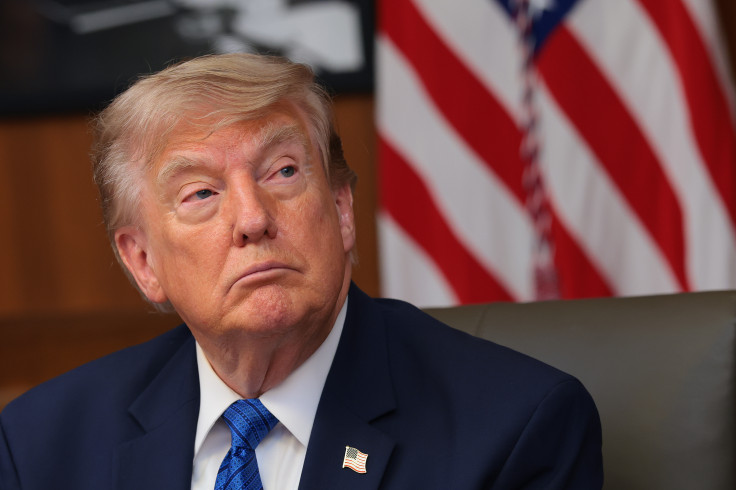
President Donald Trump threatened a key island for Iranian oil exports after the U.S. and Iran again exchanged strikes for the first time in more than a month during the weekend.
U.S. forces said they targeted two Iranian rocket launchers on Larak Island, claiming Iranian forces were getting ready to launch rockets carrying sea mines into the Strait of Hormuz.
"Last week, CENTCOM completed clearing sea mines from the strait's international shipping routes. U.S. forces are monitoring the area closely and remain prepared to protect the free flow of commerce through this essential waterway," U.S. Central Command spokesperson Tim Hawkins told CNBC.
Trump then threatened Kharg Island, from which about 80% of Iran's oil export are shipped, sharing an AI-made video with a caption claiming it was "being blown to smithereens."
Iran, in turn, launched missiles at U.S. bases in Jordan, local media claimed. Forces said they "destroyed the technical and repair infrastructure, as well as the enemy fighter deployment sites."
Iranian forces also said on Monday that a supertanker was disabled and caught fire after hitting two naval mines. The country's foreign ministry also said the U.S. bears "full responsibility" for the escalation that may follow the initial strikes.
Iranian Foreign Minister Abbas Araghchi had said last week that a return to diplomacy with the U.S. "isn't impossible" even though it required steps from Washington.
However, President Donald Trump had told press hours earlier that the U.S. doesn't "want to speak with them." "We're not looking to meet or anything," he added in the Oval Office.
The U.S. has been enforcing a naval blockade of Iranian ports, leading to a sharp plunge in its exports. Recent data shows that they have plunged more than 80% compared to the same month last year.
Intelligence firm Kpler showed that Tehran loaded some 260,000 barrels per day so far this month, compared to 1.7 million in the same month of last year.
Most of the drop took place since the U.S. reimposed the blockade on July 14 after the memorandum of understanding with Iran collapsed. Ever since, the country loaded 70% fewer barrels.
The U.S. has also chosen to double down on economic pressure against Tehran to achieve its goals. Earlier this week Treasury Secretary Scott Bessent unveiled a plan to impose secondary sanctions on those "enabling" Iran to maintain its economic activity.
Bessent also told The Associated Press on Sunday that the administration plans to sanction another bank this week to intensify economic pressure on Tehran. "This is going to be financial violence if we have to," he said.
© Copyright IBTimes 2026. All rights reserved.