By | April 25 2012 10:49 AM

1 of 10
Anytime is Barbecue Time in Canada
Photo: Flickr

Anytime is Barbecue Time in Canada

Cold-weather barbecuing is becoming more popular according to those in the grilling business, as barbecues offer features that make them easy to operate year-round. Even those with a $100 grill from the local department store can enjoy an outdoor barbecue year-round by following a few food preparation and safety procedures.

During the colder months, it's a great time to grill larger pieces of meat and comfort foods that don't require a lot of attention or standing next to the grill, such as barbecued meatloaf, says Weber's Jamie Purviance. The meatloaf recipe is available on the Weber site.

Canadian chef and author Ted Reader, who owns more than 100 barbecues, says about half of Canadians grill 12 months a year. He says when it's cold outside, the barbecue should be preheated five to 10 minutes longer than in the summer. Barbecue manufacturer Traeger Canada suggests adding 20 minutes of cooking time per pound for every five degrees below 45 F. If you're using a charcoal grill, you may need to add charcoal more often to keep the temperature constant. Traeger, which sells barbecues that burn pellets, says it's important to have an airtight container in which to store the pellets – damp or dusty pellets will cause a large decrease in heat output, the company says.

For propane units, try to position your barbecue so the wind isn't blowing directly on the burner tubes. Keep the lid closed as much as possible because every time it opens, you lose heat. Traeger Canada says you should add 15 minutes of cooking time for every time you open the lid. Large pieces of meat, such as a roast, work best because they can be left for a long time on indirect heat and don't need as much attention, says Weber.

It's tempting to move the barbecue into a garage or sheltered area to keep out of the wind, but that's not a safe idea – you need lots of ventilation around the unit. Operating a propane barbecue inside an enclosed space could lead to carbon monoxide poisoning. The barbecue should also be at least 10 feet away from any building to avoid risk of fire.

Since nightfall comes early in the winter, make sure your barbecue is near a light source – cooking by flashlight is not ideal.

Duff Dixon, president of Ontario Gas BBQ, which bills itself as the world's largest BBQ store, says that the latest generation of barbecues include built-in features that make grilling anytime a breeze. This year we are seeing a shift toward grill centres, which are the all-inclusive propane or natural gas barbecues. People are moving toward these because they not only have large and diverse cooking surfaces but they can also be permanently incorporated in backyard landscaping designs.

Engineered to fit into an outdoor counter much like indoor stoves, the units immediately increase the value of your backyard and home because they are permanently installed, says Dixon. With counter space, a wet bar, barbecue, seating, umbrellas and canopies, your backyard can easily be transformed into another room in your house.

Health Canada's Food Safety Tips for Barbecuing recommend thawing frozen meat in a refrigerator or in a microwave before placing it on the barbecue, so it will cook evenly. When cooking, Health Canada recommends using a digital food thermometer to make sure the internal temperature of the meat has killed all bacteria such as E. coli, Salmonella and Listeria. Colour alone is not a reliable indicator that meat is safe to eat. Meat can turn brown before all the bacteria are killed, says Health Canada.

Put the thermometer into the thickest part of the meat. For hamburgers, place it through the side of the patty all the way to the middle, and check each patty.

Health Canada has a chart of safe internal cooking temperatures on its website.

If you haven't used your barbecue for awhile, Napoleon Fireplaces and Grills suggests taking the burners off and cleaning them thoroughly. Use a venturi brush to clean out the burners. If there are food particles blocking burner ports, use a 1/16th-inch drill bit to clean out the ports.

Hot soapy water is best for most of the grills and searing plates, and for the base, sides and outside of the grill. Stainless steel units should be cleaned with a stainless steel cleaner. Use a spatula to scrape up grease from the base down to the drip pan, and give the drip pan a good cleaning.

Look for any crimps, scratching or punctures on all the hoses and feed tubes. If you find a problem, the line must be replaced. Conduct a leak test to make sure everything is working property – there's a video about how to do this on Napoleon's website.

Finally, ensure the ignition parts are working property. The tips of the electrodes should be clean and have no rust or grease build-up – if they do, use sandpaper to clean them off. If the unit has a battery ignition, you may need to change the batteries.

Twitter to launch business tools by year-end
Photo: Flickr

Twitter to launch business tools by year-end

Micro-blogging site Twitter plans to introduce tools and services by year-end to help businesses serve their customers, and may charge fees for such services, co-founder Biz Stone said on Monday.

We're looking at who's using Twitter and for what, Stone told the Reuters Global Technology Summit in New York via videolink from San Francisco. Are there any commercial usages that are making a lot of sense?

Twitter, a two-year-old, venture capital-backed company that lets people send 140-character messages, or Tweets, has enjoyed explosive growth in recent months. Visitors to Twitter jumped 83 percent in April from the previous month, to reach 17 million, according to comScore data.

Twitter is searching for ways to make money from its popularity. Stone said phase one of that effort was spent collecting intelligence on how people use the service.

The second phase will see Twitter launching tools and services on top of free micro-blogging, aimed at companies that wish to use Twitter to message customers.

It will be simple stuff such as lightweight analytics, Stone said. He reiterated the company's commitment to keeping the service free for everyone but added:

If there is a way we can go above and beyond, and they (companies) can improve bottom line by offering services we can offer for a fee, (we) will do that.

(For summit blog: http://blogs.reuters.com/summits/)

(Reporting by Anupreeta Das and Alexei Oreskovic, editing by Tiffany Wu and John Wallace)

For Reuters MediaFile blog see http://blogs.reuters.com/mediafile/

US stocks open lower after retail sales data
Photo: REUTERS

US stocks open lower after retail sales data

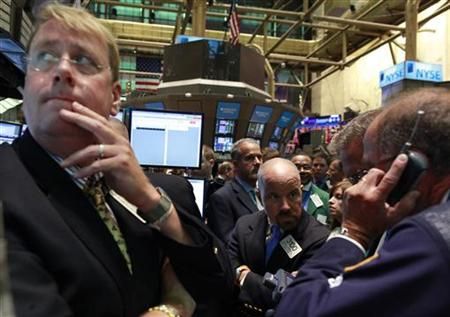
U.S. stocks opened lower on Tuesday after the government report showed that retail sales rose less than forecast in January.

The S&P 500 Index declined 4.66 points, or 0.35 percent, to trade at 1,327.24 at 9:45 a.m. EDT. The Dow Jones Industrial Average declined 46.69 points, or 0.38 percent, to trade at 12,221.50. The Nasdaq Composite Index fell 0.35 percent.

US retail sales rose less than expected in January, but recorded a gain for a seventh consecutive month. Retail and food services sales in the US rose 0.3 percent to $381.6 billion in January compared with the revised figure of 0.5 percent increase in December last year. Core retail sales, excluding motor vehicle and parts, rose 0.3 percent against the economists’ expectations of 0.6 percent increase.

The NY Empire State Manufacturing Index, which measures the economic health of the manufacturing sector in New York region, rose better than expected in February. The manufacturing index rose to 15.4 in February, its highest level since June, from 11.90 in January and against analysts’ estimation of 15.0.

On the corporate front, Marriot International Inc. (NYSE:MAR) shares gained 3.76 percent to $42.53. The company reported fourth quarter net income of $0.39 per share and said it plans to spin-off its timeshare business into a separate company.

Jds Uniphase Corp. (NASDAQ:JDSU) shares plunged 5.42 percent after the company stock was downgraded to a “market perform” rating from “outperform” at Bernstein.

The euro gained 0.18 percent to 1.3514 against the dollar and the yen declined 0.61 percent against the greenback.

Crude oil futures gained 0.62 percent to $85.34/barrel and gold futures advanced 0.60 percent.

European stock markets are currently trading mixed with FTSE100 down by 14.43 points, DAX30 down by 0.19 points and CAC 40 up by 9.06 points.

Oil prices climb on Nigeria, U.S. refinery fire
Photo: REUTERS

Oil prices climb on Nigeria, U.S. refinery fire

Oil prices rose nearly 4.8 percent to a six-month high on Monday as violence in Africa's top crude exporter Nigeria and a fire at a key U.S. East Coast refinery revived concern about supplies.

U.S. crude for June rose $2.69 to $59.03 a barrel, the highest settlement since November 11. London Brent for July rose $2.49 to $58.47.

The gains came after Nigerian militants said they had blown up two oil and gas pipelines in the Niger Delta and would blockade waterways in the region in an effort to disrupt energy exports from the OPEC country.

Crude has been bolstered by the unrest occurring in Nigeria, where militants have declared an all-out war on the oil industry, Addison Armstrong, analyst at Tradition Energy in Stamford, Connecticut, said in a research note.

Unrest in the world's seventh largest oil exporter routinely impacts the country's shipments.

In the United States, an explosion rocked Sunoco's oil refinery in Marcus Hook, Pennsylvania, setting a fire and disrupting production from the 178,000-barrel-per-day plant heading into the peak summer driving season.

The Nigerian stories probably would not have much of an impact on their own, but combined with the refinery glitches are contributing to a positive start to the week, said Tony Machacek, a broker at Bache Commodities.

The refinery problem pushed U.S. gasoline futures to seven-month high over $1.76 a gallon.

Machacek added that a weaker U.S. dollar and gains in equity markets were adding to oil's gains.

U.S. stocks rose Monday as a better-than-expected quarterly profit and upbeat outlook from Lowe's Cos Inc , the No. 2 U.S. home improvement retailer, fueled hopes the economic slump was easing and spending was stabilizing. <.N>

OPEC MEETING LOOMS

Oil has risen from a near five-year low of $32.40 reached in December as the market has tracked a rally in equities underpinned by hopes of an economic recovery.

Supply curbs by OPEC have also bolstered prices. The group, which has agreed to cut 4.2 million barrels per day (bpd) of output since September, meets on May 28 to revisit policy.

So far, comments from ministers from the Organization of the Petroleum Exporting Countries suggest the group is unlikely to reduce supply further. But prices are still lower than some in the group would like.

Iranian President Mahmoud Ahmadinejad said on Monday that OPEC's second largest oil exporter considered an oil price of $80 to $90 barrel as suitable, the semi-official Mehr news agency reported.

The June U.S. crude contract expires Tuesday and dealers said trading may be more volatile than usual as a result.

(Additional reporting by Fayen Wong in Perth and Richard Valdmanis in New York; editing by Jim Marshall)

Proposed Cuts to Federal Higher Education Budgets
Photo: REUTERS

Proposed Cuts to Federal Higher Education Budgets

Robert W. Baird said it remains generally cautious on the post-secondary group given regulatory risk and deteriorating fundamentals.

Proposed cuts to federal student aid programs do not come as a surprise given the environment, but on the margin would be an additional negative for enrollment growth for the industry, in our opinion. Additionally, while the expected introduction of an amendment to stall gainful employment shows support for the sector, we view it as unlikely to become law, said Amy Junker, an analyst at Robert W. Baird.

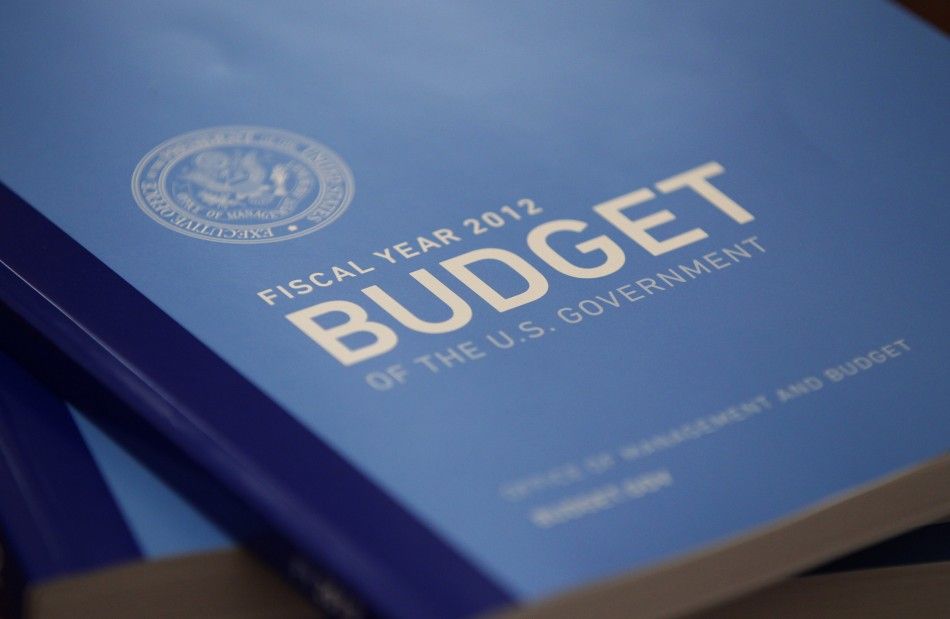
U.S. President Barack Obama's fiscal 2012 budget proposal maintains Pell Grant maximum. In order to keep the maximum Pell Grant at $5,550, the President's fiscal 2012 budget calls for $100 billion in cuts in other areas of Pell over the next 10 years, according to officials cited in news reports.

Over 90 percent of the cuts would come from two key changes: eliminating year-round Pell Grants, and lower subsidies for graduate and professional students.

Amy Junker said student would no longer be able to use more than one grant per year (recently went into effect in 2008) for estimated savings of $8 billion next year. The Administration would phase out the payment of interest on student loans for graduate students while they are in school for projected savings of $2 billion next year.

Last Friday, House Republicans revised their fiscal 2011 Continuing Resolution. They would reduce the maximum Pell Grant by $845, to $4,705, and wipe out some other need-based aid programs.

Greatest exposure; Pell as percentage of revenue (of those that provide the data): Corinthian Colleges Inc. (COCO) 29 percent, Lincoln Educational Services Corp. (LINC) 22 percent, ITT Educational Services Inc. (ESI) 18 percent, Apollo Group Inc. (APOL) 18 percent, and Education Management Corp. (EDMC) 14 percent.

Given the battle ahead on education funding between House, Senate and the White House, Amy Junker expects that uncertainty regarding the degree of cuts could create an overhang for the stocks and potential disruption for students.

Representatives to introduce amendment to stall gainful employment. This week, a bipartisan group is expected to propose an amendment to the continuing resolution bill for fiscal 2011 that would stop the Department of Education's work on gainful employment from being funded through September 30, 2011.

We would caution that this is unlikely to pass in the Senate, but if passed, would merely stall gainful employment (extending the overhang) rather than derail the rule (if finalized by November 1, 2011, will take effect July 2012), said Amy Junker.

The group includes: John Kline (Republican Party-Minnesota) Chairman of the House Education and Workforce Committee, Virginia Foxx (Republican Party-North Carolina) Chairwoman of the Subcommittee on Higher Education, and Representatives Alcee Hastings (Democratic Party-Florida) and Carolyn McCarthy (Democratic Party-New York), Robert W. Baird said in a note to clients.

Britain&rsquo;s oldest mom to be, pregnant at 66
Photo: REUTERS

Britain’s oldest mom to be, pregnant at 66

An eight-month pregnant 66-year-old businesswoman, Elizabeth Adeney, is on her way to become the Britain’s oldest mom.

The baby will be Adeney’s first and the pregnancy was conceived using donor eggs and sperm, which has raised debate over the ethics of helping a woman her age conceive.

Currently, Britain's oldest mother is Dr Patricia Rashbrook, a psychiatrist who used a donated egg from Russia to birth to her son Jude in 2006, when she was 62 years old.

Adeney told the Sunday Mirror: It doesn't interest me that I'm going to be the oldest mum in the country. It's not my physical age that's important - it's how I feel inside.

The Managing Director of a Mildenhall, Suffolk-based firm, - which produces plastic and textile products - Adeney still works full-time, and lives in a £400,000 home in nearby Newmarket.

Good Things And Not-So-Good Things About Using Electronic Signatures
Photo: REUTERS

Good Things And Not-So-Good Things About Using Electronic Signatures

Although it is still a ways from being standard procedure, the use of electronic signatures in real estate transactions has become increasingly common. There is a lot to like. Signatures can be obtained quickly. Not needing to go through multiple faxing, document copies are clear and legible. Document storage and retrieval is a snap. And the reduction in paper usage is good for the planet!

Not only that, but electronic signatures are legal, and in most contexts have the full effect of wet signatures. Almost every state has adopted the 1999 provisions of UETA (the Uniform Electronic Transactions Act), and there is also the federal E-Sign (the Electronic Signatures in Global and National Commerce Act). The most relevant provisions are to be found in section 7 of UETA:

    * A record or signature may not be denied legal effect or enforceability solely because it is in electronic form.

    * A contract may not be denied legal effect or enforceability solely because an electronic record was used in its formation.

    * If a law requires a record to be in writing, an electronic record satisfies the law.

    * If a law requires a signature, an electronic signature satisfies the law.

As always, some exceptions apply. They vary from state to state. In California, for example, electronic signatures can't be used for many landlord-tenant documents, for seller-financing disclosures, or for purchase agreements when the seller is in default. Moreover, there are individuals and institutions who will not accept electronic signatures. Good luck trying to invoke the provisions of UETA or E-sign when your lender says they won't accept a purchase contract with electronic signatures.

Yes, it is true that there are ways around the security features built in by the various providers of electronic signature software. One spouse could give the other his/her codes and passwords. Etc. A moderately clever agent could figure out how to rig the system and create documents purportedly electronically signed by the principals. So? It isn't foolproof. But there's a lot more security around electronic signature protocols than there ever was – or will be – to prevent forgeries of wet signatures.

There are other concerns as well. Some of these were expressed at a recent gathering of real estate attorneys, held in conjunction with the meetings of Directors of the California Association of Realtors® (CAR). Two items in particular were the subject of attention.

One had to do with the authorization of principals for using electronic signatures in the transaction. The governing laws do not provide a particular protocol for this. Parties must provide consent, but no method for doing so is specified. Under both UETA and E-Sign, consent may be obtained in writing, orally or determined from the surrounding circumstances, including the parties' conduct.

To be sure, the providers of electronic signature software may include a procedure for obtaining consent. And we are all familiar with these – the click through method. Probably everyone who reads this has given electronic consent in a similar manner. You know; when you click I agree to a terms-of-use statement that may be 2500 words or more. How many people have read any of those all the way through?

Secondly, and curiously, attorneys worried that the practice of obtaining electronic signatures on electronically-transmitted documents results in even further diminishment of face time between agents and their clients. This was not just a bit of nostalgia, though there was some of that. It was mostly about the lack of explanation. At the CAR meetings, attorneys spoke of files that contain copies of emails that implicitly say something like this: Here is the eight-page, single-spaced purchase contract. Please follow the instructions for affixing your electronic signatures and initials. If you have any questions, don't hesitate to ask.

It can be bad enough, to be sure, when agents are face-to-face with principals and those principals feel pressure to hurry up and sign documents. But the electronic mode of communication may make it even easier, some of the attorneys feared, to make plausible the defense that, I didn't understand, and they didn't explain, all those things they told me to sign.

It's nothing new that agents sometimes do not go over with their clients the complex documents that require signatures. But the at-a-distance electronic mode of communication exacerbates the problem. It is something to be concerned about.

Geithner says markets mending but jobs at risk
Photo: REUTERS

Geithner says markets mending but jobs at risk

U.S. Treasury Secretary Timothy Geithner said on Monday that borrowing costs were falling as credit markets gradually thaw, but warned a painful period lies ahead for American consumers.

Answering questions at a luncheon sponsored by Newsweek magazine, Geithner said unemployment likely will keep rising for some time as the Obama administration tries to find a way to wrench the economy out of recession.

We're not going to have a steady, even process of repair. It's going to be bumpy, still feel fragile for a while, he said. Even as growth starts to turn positive, which will happen...it's not going to feel better for a long time for millions of Americans.

Since taking over Treasury in January, Geithner has been immersed in the effort to administer a government bailout for the severely stressed financial sector. He said proposals for a broad regulatory overhaul will be made public within a few weeks and suggested it will be sweeping.

We have an incredibly archaic, segmented, complex oversight regime across our system, he said. It did not prevent huge amounts of risk building up in pockets of the system...and we're going to have to change a lot of aspects of the regulatory system to reduce the risks.

PAY FANS ANGER

Geithner said huge paychecks for Wall Street figures during the boom years of the 1990s and early 2000s angered many Americans and said compensation needs to be changed, though he rejected the idea of setting upper limits on executive pay for companies receiving taxpayer-financed bailouts.

I don't think our government should set caps on compensation, Geithner said. What I think we need to do is make sure we set in place some broad constraints on the incentives (that) compensation systems create.

He said the financial crisis was fueled by excessive risk-taking in search of short-term pay incentives but there were means for controlling that.

Through supervisory standards and through the kind of disclosure requirements the SEC (Securities and Exchange Commission) can put in place I think we can bring about broader reforms to compensation...that will make it much less likely that people will get paid to take large amounts of short-term risk at the expense of their firms, Geithner said.

NOT DALLYING

Geithner defended himself against published charges that Treasury was moving slowly on policy decisions because many key positions were unfilled and lines of managements were blurred. There is no deputy Treasury secretary, no nominee for under secretary for domestic finance and the candidate for under secretary for international affairs is not yet confirmed.

I actually think we're doing quite well in terms of speed, quality of policy. he said, insisting that Treasury has moved swiftly on an extraordinarily complex set of programs to deal with the housing crisis and financial system turmoil.

Geithner said there is pressure to act now to overhaul financial rules while memories are fresh about the upheaval that has been caused by reckless lending and risk-taking and chances are best for shaping attitudes.

I think the American people want to see us moving to change things, not just waiting, he said, adding that means there may be some areas in which we're going to err on the side of constraining risk rather than letting it get around the new rules.

(additional reporting by David Lawder, Mark Felsenthal and Corbett B. Daly, Editing by Chizu Nomiyama)

(Reporting by Glenn Somerville)

US Retail Sales Weaker Than Expected, USD Should Soften
Photo:

US Retail Sales Weaker Than Expected, USD Should Soften

US retail sales came in weaker than expected for the January period.

Headline retail sales rose 0.3% in the month, smaller than forecasts of a 0.5% gain. While its the 7th straight month that sales were up, it is also the weakest reading in 6 months, going back to last July.


width=479

Taking autos out of the equation sales were up 0.3%, smaller than the expected 0.6%. Finally, if we take both autos and gasoline out of the headline figure, we get a pretty paltry 0.2% gain. The value of January gasoline stations sales surged 1.4%, pushed up by higher prices at the pump.

Some categories posting gains included electronics (0.3%), food and beverage stores (1.3%) and general merchandise stores (0.8%). Non-store retailers, which includes Internet sellers, jumped 1.2% in January.

Personal consumption was up 4.4% in the 4th quarter helping to drive the 3.2% annualized GDP rate during the quarter. We see that the 1st quarter has started off with a slower start.

There are some positive factors that should help consumer spending. A one-year cut in Social Security payroll taxes puts extra money in workers' pockets, but concerns about the housing market can keep some homeowners on the sidelines as they fret about their overall net wealth.

Sales related to the housing industry saw declines. Building materials and garden equipment fell a steep 2.9% and home furnishings sales were 0.3% lower.

Its a mixed report, and one that will put some pressure on the USD as it shows that the engine that was driving US economic activity of late - consumer spending - has eased to start 2011. We'll have to see how this trend develops, but in the short term we could see the set a soft tone in today's trading.

Subscribe and become a member to share your views and join live discussions as well as webinars about the markets.

Emerging Markets ETF sees option traders locking into strong rally
Photo:

Emerging Markets ETF sees option traders locking into strong rally

Today’s tickers: EEM, VALE, CSCO, ALL, IBN, STT & XLE

EEM – iShares MSCI Emerging Markets Index ETF – Shares of the emerging markets ETF have jumped 5% today to stand at $31.58. Ignoring the current bullish movement in the underlying share price, one option trader looked to the December contract to initiate a ratio put spread in the expectation that shares may decline by expiration. The investor established the trade by purchasing 5,000 puts at the December 31 strike price for 3.71 each spread against the sale of 10,000 puts at the December 25 strike for a premium of 1.51 apiece. The net cost of the transaction amounts to 69 cents and yields a maximum potential profit of 5.31 to the trader if shares were to fall to $25.00 by expiration.

VALE – Companhia Vale do Rio Doce ADS – The metals and mining company has experienced a share price rally of more than 6% to $18.49 amid reports from Vale’s CEO, Roger Angelli, that the company will likely invest $10.5 billion down from the previous estimate of $14 billion due to lower costs and a weaker Brazilian real. Option traders expressed mixed sentiments in the near-term June contract where the majority of option contracts exchanged hands. One investor got long of some 18,000 puts that appear to have been purchased for about 25 cents each at the June 15 strike price. Perhaps he is long the stock and is looking to protect his position from potential erosion of the share price through the breakeven point on the trade at $14.75. The in-the-money June 18 strike price saw 9,000 calls sold for an average premium of 1.17 apiece. It is possible that investors are selling premium on the share price rally and, like the put-buying bear above, see shares giving back gains by expiration. Traders will retain the full premium enjoyed on the sale if the June 18 calls land out-of-the-money by expiration. We note the possibility that approximately 7,500 of the calls sold at the June 18 strike price are part of a covered call by an investor who bought the stock and sold the calls to effectively lower the price paid per share by 1.17. If this is the case, the trader will have the underlying shares called away from him if the calls remain in-the-money and are exercised by expiration.

CSCO – Cisco Systems, Inc. – Networking and communications products manufacturer and tech bellwether, Cisco Systems, Inc., has climbed more than 4.5% to $18.78 today. The San Jose, CA-based firm has announced a strategy to apply its core internet routing-and-switching technology to the nation’s “aging electricity grid”. In short, Cisco’s technology would allow businesses and individual consumers to more efficiently manage their power consumption. Perhaps inspired by the news, one option trader looks to have established a bought straddle. Such a strategy implies that the investor sees shares making significant moves by expiration. The straddle was initiated through the purchase of 5,000 calls at the July 19 strike price for a premium of 80 cents each along with the purchase of 5,000 puts at the same strike for 1.24 apiece. The net cost of the transaction amounts to 2.04 and yields breakeven points at $21.04 to the upside and at $16.96 to the downside. The investor is likely expecting a rise in volatility from the current value of 31% along with a shift in the price of the underlying stock through one of the breakeven points.

ALL – The Allstate Corporation – The insurance company jumped onto our ‘most active by options volume’ market scanner after one investor populated the July and October contracts on the stock. Allstate has experienced a more than 2% rally in shares to stand at $24.79. It appears that this individual originally sold short approximately 31,451 calls at the October 35 strike price for a premium of 1.35 apiece when shares were trading as high as $27.78 and volatility neared 67%. Today, the investor closed out the short position by buying back the calls for just 60 cents each because shares are trading lower and volatility has come off to 57%. He reeled in a profit of 75 cents on the trade and is looking to increase his gains by initiating a repeat performance in the nearer-term July contract. The trader reestablished a short call position by selling 31,451 lots at the July 29 strike price for an average premium of 75 cents apiece. He will likely be looking to close out the short position by buying the calls back for a lesser premium than he received for today’s sale.

IBN – ICICI Bank Ltd, ADR – An oversized rally for Indian stocks hot on the heels of a decisive election victory for Prime Minister Manmohan Singh’s Congress Party, helped lift ADR shares at ICICI Bank by 30% to $30.40 in New York trading. The polling results might allow the government to implement plans to increase foreign investment in India. Previously those ambitions were scuppered due to communist politicians getting in the way. Investors used options today as a way to build expectations on a continued rally for the bank’s share price. Using the June contract investors went looking for shares to keep moving higher with the heaviest-trafficked strike at the 35.0 level. Investors bought almost 7,000 call options there, roughly one third of today’s 24,000 overall volume paying between 1.15 and 1.90 to secure buying rights by expiration. Shares have not traded above $30.00 since September and not above $35.00 since early August last year. We saw some evidence that investors expect today’s gains to remain intact as put options at the June 25 and 22 strike were sold.

STT – State Street Corporation – Shares of the world’s third-largest custodian bank, which announced plans to offer $1.5 billion in common stock and at least $500 million of debt today, are up nearly 6.5% to $41.00. One option trader who appears skeptical of the present rally got long of downside protection in the near-term June contract. This bearish investor sold 10,000 calls at the June 40 strike price for a premium of 4.10 each as well as shed 10,000 calls at the higher June 45 strike for about 1.90 apiece. The gross premium enjoyed on the short sale of 20,000 calls amounts to 6.00 per contract. It looks as though the investor then utilized a portion of the proceeds in order to fund the purchase of 10,000 puts at the June 38 strike price for about 2.10 each, leaving him a net premium of 3.90. The aggregate picture of the three legs points to bearish movement in the stock over the next four weeks. The investor could be looking for additional gains on the long put position which would amass if shares declined beneath the breakeven point at $35.90 by expiration. Otherwise, he would just hope that shares do not rise above $43.90 because he is exposed to unlimited losses to the upside given his short position at both the June 40 and June 45 strikes.

XLE – Energy Select Sector SPDR – The energy ETF has rallied 3% to $49.44 today and attracted the attention of a straddle seller who gravitated to the near-term June contract. The investor initiated the sold straddle by shedding 10,000 calls at the June 48 strike price for an average premium of 2.60 apiece combined with the sale of 10,000 puts at the same strike for 1.60 each. The gross premium on the trade amounts to 4.20 and is fully retained by the trader if shares settle at $48.00 by expiration. Should shares move significantly in either direction, this individual faces losses above the breakeven point to the upside at $52.20 or below the breakeven point to the downside at $43.80. Option implied volatility has come off slightly since last Friday’s reading of 35% to the current value of 33%.

Researchers spotted an albino killer whale off the shores of Russia on Sunday, the first time anyone has documented an adult white killer whale. Whale watchers have seen white calves in the past, but none have been known to grow to adulthood, researchers said.

Researchers hope to collect a genetic sample from the whale, named Iceberg, to determine the origin of its albinism, research leader Erich Hoyt, a senior research fellow with the Whale and Dolphin Conservation society, said in a blog post.

We have no genetic data [on the whale] but we are hoping to meet them again in summer 2012 and learn more about the phenomenon of white whales, why they occur, what it means and whether Iceberg is a true albino - perhaps we can catch a glimpse of a pink eye - or 'just' one of the most beautiful orcas anyone has ever seen, Hoyt wrote.

Albinism is a congenital disorder characterized by a lack of pigment in the skin. Albino people and animals appear white or very pale and often have pink eyes. Albino humans frequently have vision problems and are at a greater risk of sunburn and skin cancer.  Albino animals are usually unable to hide from predators or prey, so their survival rate in the wild is typically low.

Click through the slideshow for some examples of albino animals.