Western Investors Buying Up African Farming Properties In “Land Grab”: Report
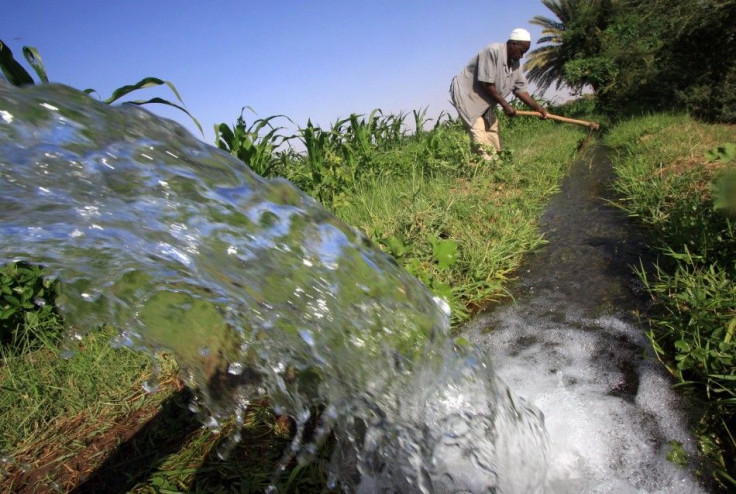
Some prominent American universities and pension funds, among other wealthy foreign investors, are allegedly purchasing huge tracts of land in Africa -- acts that may lead to the eviction of thousands of local farmers, according to a study by the Oakland Institute (Oakland Institute), a California-based think tank.
U.S. educational institutions, including Harvard University, as well as pension funds, are using UK hedge funds and European financial speculators to acquire large agricultural properties thousands of miles away on the African continent.
Many of these lands are being taken in order to develop biofuel production, in place of normal food production.
Oakland Institute said in the report that the investors have little or no accountability in these transactions, while providing them with greater control over food supply for the world's poor.
This is very, very scary, said Anuradha Mittal, executive director of Oakland Institute.
Oakland Institute’s research looked at such transactions in seven African countries: Ethiopia, Mali, Mozambique, Sierra Leone, Sudan, Tanzania and Zambia.
Oakland Institute researchers claim that many of these western investors are getting arable land very cheaply and are generally not required to create jobs for the locals in exchange for the acquisitions.
For example, Oakland Institute cited, a foreign investment group was able to acquire 100,000 hectares of fertile land in Mali for a 50-year term for free.
The buyers are also apparently not observing labor and environmental rules.
Investment in agriculture is very important, but the question is what kind of investment, said Mittal.
The pace of land buying has been phenomenal. In 2009, nearly 60 million hectares – an area the size of France -- of African lands were purchased or leased, Oakland Institute stated.
Most of these deals are characterized by a lack of transparency, despite the profound implications posed by the consolidation of control over global food markets and agricultural resources by financial firms, says the Oakland Institute report.
Oakland Institute concedes that the rush to buy farmland has, in some cases, been encouraged by the African governments themselves who are desperate to modernize farming methods and increase crop yields in order to feed rising populations.
For example, The Malian Investment Promotion Agency provides Western investors access to land as well as the ability to move profits out of the country.
The Ethiopian government provides attractive incentives including income tax holidays and a government land bank through which foreign buyers can buy large contiguous blocks of land, according to the report.
Oakland Institute cites the example of AgriSol Energy LLC, a US company led by farming and ethanol executive Bruce Rastetter.
AgriSol plans large-scale commercial farming and beef and poultry production on land it bought in western Tanzania. To avoid foreign land ownership limitations, AgriSol works in league with a Tanzanian consulting firm.
Oakland Institute explains that while AgriSol said it wants to work in cooperation with local farmers, up to 325,000 hectares of land it purchased is occupied by Burundian refugees who have farmed the land since 1972.
Oakland Institute said those people are being pushed out in favor of white South African farm managers.
There's an extreme lack of transparency surrounding the land deals in Africa, said Frederic Mousseau, policy director at Oakland Institute.
International investors who are involved in these deals are not accountable to anyone.
Many of these African land deals are conducted through Emergent Asset Management, a London-based firm which is run by former currency dealers from JP Morgan and Goldman Sachs
Oakland Institute believes Emergent's clients in the US may have invested up to $500-million – with the assumption that they will make returns as high as 25 percent.
According to the Guardian newspaper in England, a spokesman for Emergent defended the deals.
Yes, university endowment funds and pension funds are long-term investors, he said. We are investing in African agriculture and setting up businesses and employing people. We are doing it in a responsible way … The amounts are large. They can be hundreds of millions of dollars. This is not land-grabbing. We want to make the land more valuable. Being big makes an impact, economies of scale can be more productive.
The Guardian further reports that in Ethiopia the government is relocating tens of thousands of farmers out of their traditional lands while it negotiates property deals with foreign firms.
The scale of the land deals being struck is shocking, said Mittal. The conversion of African small farms and forests into a natural-asset-based, high-return investment strategy can drive up food prices and increase the risks of climate change.”
There are also grave repercussions for the world’ hungry.
We have seen cases of speculators taking over agricultural land while small farmers, viewed as squatters, are forcibly removed with no compensation, said Frederic Mousseau, policy director at Oakland, said:
This is creating insecurity in the global food system that could be a much bigger threat to global security than terrorism. More than one billion people around the world are living with hunger. The majority of the world's poor still depend on small farms for their livelihoods, and speculators are taking these away while promising progress that never happens.
Mittal warned of grave danger from these land grabs
“The same financial firms that drove us into a global recession by inflating the real estate bubble through risky financial maneuvers are now doing the same with the world’s food supply,” she said.
“In Africa this is resulting in the displacement of small farmers, environmental devastation, water loss and further political instability such as the food riots that preceded the Tunisian and Egyptian revolutions.”
© Copyright IBTimes 2026. All rights reserved.
- MOST POPULAR IN World