

Washington ER Doctors Sue State Over New Medicaid Limit

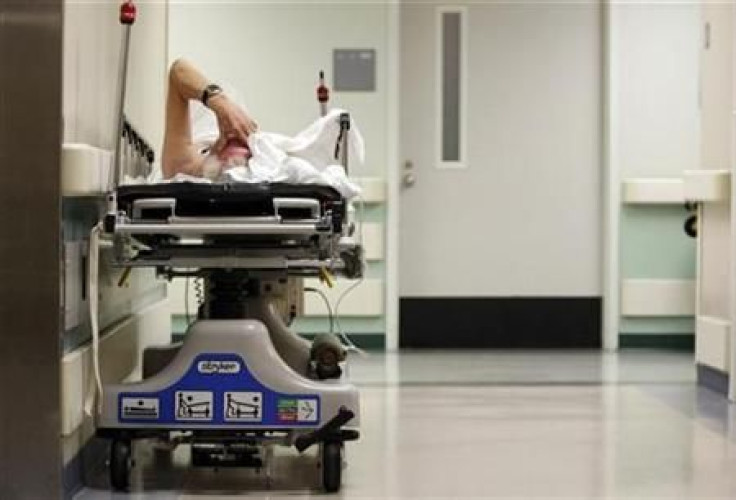
Emergency-room doctors in Washington state are worried a new plan would limit low-income Medicaid patients to three nonemergency visits each year, possibly causing its own emergency, and they are suing.
The new plan went into effect Saturday, and ER physicians are suing the state's health department in an effort to have it do away with the limit. Physicians say the limit puts patients at risk.
The limit was created to cut costs in emergency rooms. Under the plan, there is a new list of 700 nonemergency symptoms, including breathing difficulty, dizziness, early-pregnancy hemorrhaging, gallstones, abdominal pains, and chest pains unrelated to heart attacks. A patient exhibiting signs of any of the 700 symptoms is encouraged to visit a primary-care physician's office instead of an emergency room.
Such limits would not apply to children who are in the foster system or living with relatives or other caregivers, according to reports. It also would not apply to patients brought in by ambulance, police, or emergency medical technicians; for visits for mental-health diagnoses; for clients seeking detoxification services; or for visits that result in emergency surgery, admission as an inpatient, or admission for observation.
But the doctors charge a patient may not be able to tell whether the symptoms being experienced are signs of an emergency. Limiting emergency room visits is illegal, according to the lawsuit filed by the Washington branch of the American College of Emergency Physicians (ACEP).
The ACEP argued many of the codes indicate a true medical emergency, and therefore should be covered by Medicaid. It said a limit should not be placed on a patient's visits to the ER, regardless of how many times a year these visits are made.
Dr. Stephen Anderson, president of ACEP's Washington chapter, said the list of nonemergency diagnoses not only puts patients in danger but also unfairly targets the poor and those in most need of care, according to a press release reviewed by the media.
The ACEP is opposing the limit primarily because of the list of diagnoses that the state is proposing to be nonemergencies, like chest pains and heart arrhythmias and dysrhythmias, which can result in sudden death, sudden blindness, and hemorrhages during miscarriage, Anderson told ABC News. Their proposal is dangerous. It's almost funny it's so scary they would have them on the list. ... I don't want people to sit at home and self-diagnose. People should seek care early for true emergencies -- that's what the ER is for. We're open 24/7, 365 days a year, so if your chest pains started at 10 p.m., you shouldn't wait until the next morning to call your primary-care doctor.
The Washington State Health Care Authority spent almost $98 million on 327,965 emergency-department visits made by Medicaid patients last year, according to a Sept. 22 press release reported by MedPage Today.
With the three-visit plan, there would be an estimated savings of $35 million per year for the state, according to MedPage Today.
The limit is included in the state's 2011-2013 budget, which directed the health care authority to find ways to cut unnecessary emergency-room visits to save money.
This is a realistic strategy to change clients' behavior and improve patient care as well as assure taxpayers that we are addressing the state's continuing financial crisis, Doug Porter, director of the Washington State Health Care Authority, said in a press release. Nonemergency issues and chronic conditions should be treated by a primary-care provider, not by an expensive visit to hospital emergency rooms.
But the ER doctors say they, too, want the state to save money, but that this approach doesn't seem like the best way to get there.
We want to save the state money. We want to work with the state, Anderson told ABC News. But they were given a number to reach for the budget, and the only way to do so was to add diagnoses to the list that they originally decided were unquestionably emergencies. That's where we have to draw the line.
Other health-care agencies are drawing the lines, as well.
The Washington State Hospital Association (WSHA) and the Washington chapter of the Academy of Emergency Physicians (WCAEP) have also released statements objecting to the change.
We share the state's goal of reducing preventable emergency-room visits. However, this benefit limit is not a reasonable approach to the problem, noted a statement on the WSHA Web site. In addition, the list creates a public-health concern as patients who have sexually transmitted diseases are being asked to wait until they can get a primary-care office visit.
Should a Medicaid patient come in for a fourth emergency room visit with nonemergency symptoms, he or she won't be refused treatment. However, the state won't bear the burden of the cost. Instead, the hospital will have to pay for its service.
The health care authority's press release said the state is working with health care providers to find alternatives that could include opening walk-in primary-care clinics near the hospitals and having case managers work with the emergency departments to find the right care for emergency patients.
Dr. Jeffery Thompson, Washington Medicaid's chief medical officer, said in a press release that 97 percent of Medicaid clients do not have excessive emergency-room visits in a given year. However, he said a small number who exceed that limit are responsible for scores of visits, which are largely for chronic conditions and pain complaints resulting in prescription for narcotic painkillers.
© Copyright IBTimes 2024. All rights reserved.
-

Former US Ambassador Asserts Taiwan Will Receive Support From Trump If He Wins
-

Heatwave Hammers Thailand's Stinky But Lucrative Durian Farms
-

Vietnam Temperature Records Tumble As Heatwave Scorches
-

Self-care: Orangutan Seen Apparently Treating Wound
-

European Court Upholds Italy's Claim To Greek Bronze In US Museum
-

Colombian School, A Grim Reminder Of Atrocities Of Rubber Fever
-

More War Debris In Gaza Than Ukraine: UN
-

UK Confirms First Migrants Held For Rwanda Deportation Flights
-

Tesla To Cut Hundreds More Jobs In Musk Cost Push: Report
-

New Post-Brexit Controls: A Thorn For UK Horticulture


