Ron Paul 2012: What Are His Positions?
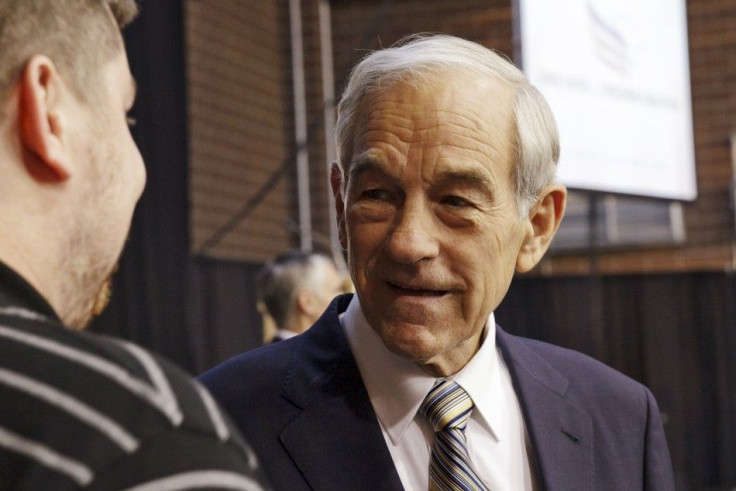
Ron Paul, R-Texas, the libertarian congressman, has risen in the polls in Iowa and New Hampshire in recent weeks. Here are his positions on the issues.
ECONOMIC ISSUES
Entitlements:
Among the Republican candidates, Paul has been one of the most vocal critics of entitlement programs like Social Security, Medicare and Medicaid, which he called unconstitutional in a Fox News interview in May.
Article I, Section 8 doesn't say I can set up an insurance program for people. What part of the Constitution are you getting it from? he asked Fox interviewer Chris Wallace. A 1937 Supreme Court decision found Social Security constitutional under a clause that reads in part, The Congress shall have power to lay and collect taxes, duties, imposts and excises to pay the debts and provide for the common defense and general welfare of the United States, but Paul called that an extreme liberal viewpoint that has been mistaught in our schools for so long and added, The Constitution and the courts said slavery was legal, too, and we had to reverse that.
But while he has been very clear that he thinks entitlement programs are unconstitutional, Paul said more recently that he would phase the programs out gradually in order to minimize the impact on people who are already receiving benefits. Workers would be able to opt out of the current Social Security, Medicare and Medicaid programs and set up private, tax-exempt savings accounts instead, he told the Republican Congressional Health Care Caucus this month. I'd be willing to work toward sanity by not cutting health care benefits until we solve our problems with this horrendous financial crisis, he said.
Health care:
Paul, a physician, argues that the best way to reduce health care costs and the uninsured rate is through the doctor-patient relationship and individual decision-making rather than through one-size-fits-all policies in which excessive regulation, immoral mandates and short-sighted incentives have created a system where no one is happy, doctors pass quickly from one patient to the next, insurance is expensive to get and difficult to maintain, and politicians place corporate interests ahead of their constituents, according to his Web site. Probably the worst thing that we ever did was make medical care the responsibility of the government, he said of Medicare and Medicaid.
He has called for the repeal of President Barack Obama's health care law and condemned the individual mandate that requires all Americans to obtain insurance, calling it unconstitutional. To make insurance more affordable, he has proposed allowing people to purchase insurance across state lines, creating new tax credits and deductions for medical expenses, exempting employees who are terminally ill from payroll taxes and giving a payroll deduction to any employee who is caring for a terminally ill family member.
In terms of federal policy, he wants to prevent taxpayer contributions to Medicare and Medicaid from being used for other purposes; eliminate government restrictions on health savings accounts, which are privately owned savings accounts with no taxes on deposits; and ensure that agencies like the Food and Drug Administration and the Federal Trade Commission do not interfere with Americans' knowledge of and access to dietary supplements and alternative treatments.
Job creation:
Paul has proposed several measures to strengthen the economy and create jobs. He wants to strengthen the dollar by eliminating the Federal Reserve, which he argues has enabled the over 95 percent reduction of what our dollar can buy and continues to create money out of thin air to finance future debt, according to his Web site. He also wants to legalize sound money, so the government is forced to get serious about the dollar's value -- an apparent reference to, once the Federal Reserve is gone, returning to something like the gold standard in order to stop inflation.
He also supports offshore drilling and a variety of other measures to reduce gas prices: eliminating highway fuel taxes, increasing mileage reimbursement rates and creating new tax credits for people and businesses that use energy-efficient vehicles. He would also eliminate the income tax altogether, along with the capital gains and estate taxes, and oppose all unfunded mandates and unnecessary regulations on small businesses and entrepreneurs.
Taxes:
Paul opposes any and all tax increases, and he has called for the repeal of the 16th Amendment, which authorizes the federal income tax. He also wants to end the estate tax, the capital gains tax and taxes on tips, and he would eliminate the Internal Revenue Service. Taxes on capital gains, his Web site says, punish you for success and interfere with your efforts to hedge against inflation by purchasing gold and silver coins.
He supports more tax credits and deductions, including for educational costs, alternative energy and health care, according to his Web site, which also calls it immoral to tax senior citizens twice by requiring them to include Social Security benefits in their gross income at tax time. Ultimately, he supports a fair tax, which would essentially be a flat national sales tax, as an alternative to the income tax. However, he says the 16th Amendment would have to be repealed before a fair tax could be implemented in order to avoid the possibility of having both systems of taxation at once.
In budget debates, he is firmly on the side of all spending cuts and no tax increases, because he believes that the power to tax is the power to destroy and that the American people should not have to pay for Washington's reckless and out-of-control appetite for debt. He has also vowed to veto any unbalanced budget and any attempt to raise the federal debt ceiling.
FOREIGN POLICY
Afghanistan and Iraq:
Paul is a non-interventionist, which distinguishes him from the rest of the Republican presidential candidates. He was the only one of the 2008 Republican presidential candidates to vote against the Iraq War Resolution in 2002, and his opposition to the Iraq War has not changed since then. He believes it was wrong to use the Sept. 11 attacks as a pretext to invade Iraq when Iraq had not been linked to al-Qaida, and he said it was unconstitutional to remain in Iraq with no exit strategy when Congress had only authorized military force to defend the national security of the United States and to enforce all relevant United Nations Security Council resolutions.
He also called for a complete withdrawal of troops from Afghanistan at a Republican debate in July. Nation-building in Afghanistan and telling those people how to live and getting involved in running their country hardly had anything to do with finding the information on where he [Osama bin Laden] was being held in a country that we give billions of dollars of foreign aid to, at the same time we are bombing that country, he said. Now that he's killed, boy, it is a wonderful time for this country now to reassess it, get the troops out of Afghanistan and end that war that hasn't helped us and hasn't helped anybody in the Middle East.
Iran:
Unlike the other Republican candidates, several of whom have said that they would authorize a military attack if necessary to prevent Iran from developing nuclear weapons, Paul opposes military action against Iran. He has compared the support for such action to the support for the Iraq War when it began. He was also one of only two members of the House -- the other was Dennis Kucinich, D-Ohio -- to vote against the 2007 Rothman-Kirk Resolution, which asked the United Nations to charge Mahmoud Ahmadinejad, the president of Iran, with violating the U.N.'s genocide charter.
Earlier this month, Paul told Fox News that instead of invading Iran or imposing sanctions, the U.S. should consider offering friendship. He also said that fears about Iran developing a nuclear program had been blown out of proportion and that confrontation would only worsen the situation.
National security:
Although Paul is an Air Force veteran and has supported certain foreign interventions -- he voted, for instance, to authorize the use of military force to capture Osama bin Laden -- he opposes military action unless it is essential to protect the United States. He has criticized the neoconservative idea of nation-building, which former President George W. Bush promoted, saying on his Web site, Acting as the world's policeman and nation-building weakens our country, puts our troops in harm's way and sends precious resources to other nations in the midst of an historic economic crisis.
Paul believes national security depends on domestic projects like securing the United States' borders. His Web site criticizes long and expensive land wars that bankrupt our country and calls for a greater focus on intelligence efforts, but not when those efforts involve things like the Patriot Act, warrantless wiretapping or denial of habeas corpus, which he finds unconstitutional. He has called for the elimination of the Transportation Security Administration, which he also calls unconstitutional and accuses of forcing Americans to either be groped or ogled just to travel on an airplane.
SOCIAL ISSUES
Abortion:
Paul opposes abortion, and he frequently cites his experience as an obstetrician-gynecologist -- he delivered more than 4,000 babies -- in explaining his pro-life stance. He says on his Web site that he would effectively repeal Roe v. Wade, although he does not specify how he would do that barring a Supreme Court revote. In response to critics who say that his anti-abortion stance conflicts with libertarian principles, he says that liberty does not extend to actions that hurt other people.
Paul has promised to take the issue of abortion out of federal jurisdiction and leave it to the states to establish laws allowing or prohibiting abortion. He also says, however, that he would advocate a federal Sanctity of Life Act that would define life as beginning at conception, which would presumably prevent individual states from choosing to keep abortion legal, since federal laws supersede state laws when the two come into conflict.
He also vows on his Web site to prohibit taxpayer funds from being used for abortions, Planned Parenthood or any other so-called 'family planning' program. The 1976 Hyde Amendment already prohibits the use of federal Department of Health and Human Services funds for abortion, but Planned Parenthood and family planning programs do receive federal funding for non-abortion services.
Education:
Paul supports eliminating the federal Department of Education and delegating educational policy decisions to state and local officials. The Constitution does not authorize the Department of Education, and the founders never envisioned the federal government dictating those education policies, he said in a 2008 interview. He called the DOE a huge bureaucracy that squanders our money, citing No Child Left Behind and other massive unfunded mandates, and argued that the smallest level of government possible best performs education.
A large part of his education plan involves making it easier for parents to homeschool their children, because, his Web site says, no nation can remain free when the state has greater influence over the knowledge and values transmitted to children than the family does. He supports a $5,000 tax credit per homeschooled child to help parents pay for tutoring and for textbooks, computers and other school supplies, and he wants a federal guarantee that high school diplomas earned through homeschooling will be treated the same as diplomas earned through traditional schools.
Gay marriage:
Paul believes it should be up to the states to legalize or prohibit same-sex marriage, along with things like prostitution and marijuana use. We don't have a First Amendment so we can talk about the weather. We have the First Amendment so we can say very controversial things, he said at a Republican debate in May. So for people to say that, 'yes, we have our religious beliefs protected, but people who want to follow something else or a controversial religion, you can't do this' -- if you have the inconsistency, then you're really not defending liberty.
Paul initially opposed repealing the military's don't ask, don't tell policy, which forbade LGBT service members from revealing their sexuality and military officials from asking about it, but he ultimately voted for the repeal. He also opposes a federal constitutional amendment that would define marriage as between a man and a woman. The government has no business in your private life, so if one person is allowed to do something, so should everyone else, he told the Iowa State Daily earlier this year. The whole gay marriage issue is a private affair, and the federal government has no say.
Immigration:
Paul opposes anti-immigration proposals that he believes infringe on the civil liberties of American citizens, such as requiring a national identification card. However, he does support strict policies against illegal immigration, coupled with a streamlined process for legal immigration.
He opposes amnesty programs, which would create a route for illegal immigrants to obtain permanent citizenship. He also opposes the clause of the 14th Amendment that guarantees citizenship to any person born or naturalized in the United States, because, he says on his Web site, as long as illegal immigrants know their children born here will be granted U.S. citizenship, we'll never be able to control our immigration problem.
He argues that the welfare state provides a powerful incentive for illegal immigration and should be abolished. Finally, his Web site says that the United States should focus on securing its own borders and stop policing the world through the United Nations -- a reference to his belief that the U.S. should withdraw from the United Nations and other international organizations.
Religion:
Paul believes the federal government has no right to restrict citizens' religious practices, including in public spaces, as it has done at various points by forbidding prayer in public schools and the display of religious items like the Ten Commandments in courthouses. He argues that the courts have misinterpreted the religious freedom clause of the First Amendment and that the federal government should have no jurisdiction over issues of religious freedom.
The framers of the Constitution never in their worst nightmares imagined that the words, 'Congress shall make no law respecting an establishment of religion or prohibiting the free exercise thereof; or abridging the freedom of speech' would be used to ban children from praying in school, prohibit courthouses from displaying the Ten Commandments, or prevent citizens from praying before football games, he said on the House floor in 2002. The original meaning of the First Amendment was clear on these two points: the federal government cannot enact laws establishing one religious denomination over another, and the federal government cannot forbid mention of religion, including the Ten Commandments and references to God.
© Copyright IBTimes 2026. All rights reserved.
- MOST POPULAR IN World