

Pakistan's Reko Diq Looking Less Prospective

(REUTERS) -- Pakistan's Reko Diq, an untapped copper and gold mine of fabulous potential, was meant to be the biggest foreign investment in the country's mining sector, but it's beginning to look more like fool's gold to the companies involved.
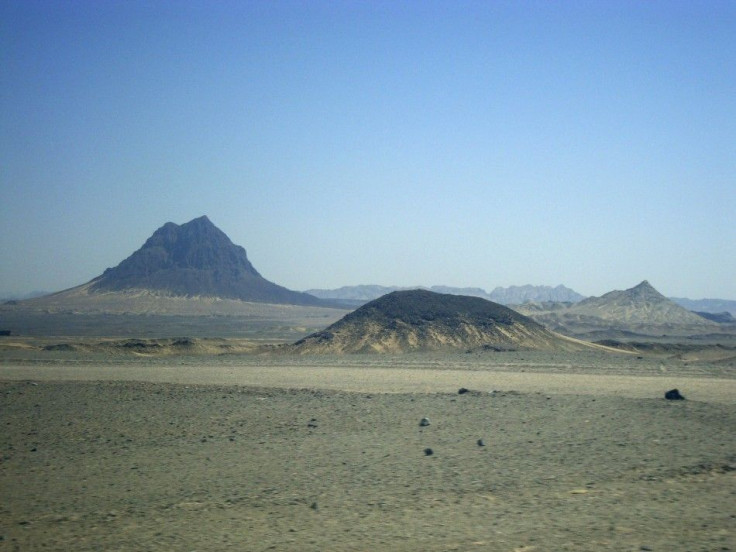
Set in one of the bleakest places on earth, a Baluchistan desert at the foot of an extinct volcano, Reko Diq was expected to yield revenues of at least $60 billion over the 56-year life of the mine.
Tethyan Copper Company (TCC), a joint venture between Chile's Antofagasta and Canadian-based Barrick Gold, had sunk $220 million over the past five years into exploring the deposit in the ochre sand desert, where temperatures reach 130 degrees Fahrenheit in the summer. It was planning to invest a total of $3.3 billion when the provincial government abruptly refused to grant a mining license last year.
TCC says it never did get an explanation.
It's been difficult to define what their actual issues were, Tim Livesey, CEO of TCC, told Reuters in an exclusive interview. We went back to them for clarification, as many of their issues are not covered in the Baluchistan Mining Regulations.
A local government official, who requested anonymity, said TCC took too long to complete its feasibility study and that it was cheating Baluchistan by under-valuing the worth of the copper and gold.
They are the monopoly, the official said angrily. They are the monopolists of the gold! They don't want to disclose the worth of the gold in Baluchistan.
The case is now before the Pakistan Supreme Court, and TCC has filed for international arbitration. The Baluchistan government, meanwhile, has recently handed out exploration permits in the area around Reko Diq to new Pakistani and Chinese companies with no mining experience.
Pakistan is already viewed as a high risk investment due to chronic civil and sectarian conflict, terrorism, corruption, poor regulation and chronic power outages. Legal uncertainty would only add to that list.
WHAT'S THE DEAL?
Reko Diq was supposed to be a model of public-private partnership and a means to lifting an impoverished area where Baluch insurrectionists have long operated.
The Baluchistan government received a 25 percent stake in the venture for no money down. Adding in taxes and royalties, the total share of revenues to the provincial and federal governments would come to just over half.
From my experience, 25 percent to the government is extremely generous and it's not normal, said Vivienne Lloyd, a senior consultant at the U.S.-based Copper Research Group.
According to documents filed with the Supreme Court, TCC projected the mine would produce at least $60 billion worth of ore over its lifespan based on long-term copper and gold prices of $2.2/pound and $925/ounce, respectively.
Higher spot prices would increase that sum significantly. Based on recent copper and gold prices, the mine would be worth almost $120 billion, with Baluchistan getting a quarter of that after operating costs.
It is this difference in long-term and spot prices that has led to angry allegations in the media and from Baluchis that outsiders are exploiting their natural wealth.
The picture that emerges is one of a grand deception, loot and plunder that never happened before on such a scale, the News daily said. And the facts, untruths, half-truths, attempts to sabotage, frauds and back-door bribes, are all documented.
The Baluch official was more succinct: They corrupted our people, they corrupted our nation and for 18 years they looted our money.
The Tethyan Copper Company was originally established 18 years ago in 1993 under a different partnership.
SANDY MOUNTAIN
Reko Diq, which means Sandy Mountain in Baluch, is part of the Tethyan Magmatic Arc, a crumple in the earth created by collisions of the African, Arabian, Indian and Eurasian tectonic plates.
It contains massive deposits of copper and gold ore of varying grades in a belt stretching from Romania through Turkey, Iran, Pakistan and Afghanistan all the way to Papua New Guinea.
The site in Pakistan today is a boulder-littered moonscape of rust-colored dunes, extinct volcano domes and a whipping wind that sends a fine-grit dust over the scattered settlements in the area. There are few towns, fewer roads, no electricity or running water, and almost nothing grows there. The only way in or out is by chartered plane on a private airstrip.
TCC's exploration site is like an abandoned moon colony: converted shipping containers and white trailers meant to house workers line up neatly under the baking sun, but stand empty.
TCC has laid off about 240 of its 270 workers, but if the mine goes forward, it plans to employ 11,000 people within two years. That seems unlikely now.
Alongside the lonely trailers, cavernous warehouses with corrugated steel roofs hold thousands of trays containing rods of compressed earth -- core samples that testify to the riches underfoot.
In all, the planned $3.3 billion investment would have included a 1,000-metre-deep open-pit mine, a processing facility, a project village for employees and a 682-km underground pipeline to Gwadar port on the Arabian sea to carry slurry concentrate to a dedicated marine terminal.
The village would include schools and cricket pitches, a mosque, health clinics, a library, a public square, restaurants and markets, and even a 189 MW power plant.
INVESTMENT RISK
Despite its remoteness, TCC's Livesey said the project would add percentage points to Pakistan's gross domestic product, which grew at just 2.4 percent in fiscal 2010-11.
Indeed, the mining sector has been hit especially hard, posting only 0.4 percent growth last year and contributing just 2.4 percent of GDP, down from a peak of 2.7 percent in 2004-5.
Most mining projects in Pakistan, they suffer from lack of research or lack of management, said Dr Farid Malik, a geologist and former chairman of the Pakistan Science Foundation, explaining the need for foreign investment.
Political turmoil and other uncertainties hanging over the $175 billion economy risk deepening the steady attrition of foreign direct investment, which plunged 40 percent to $594 million in the first seven months of the 2011/12 fiscal year.
TCC's feasibility study alone was already the largest single foreign direct investment in Pakistan's history.
The rejection of a mining license after an exploration permit had been granted is highly unusual, industry sources say, and has heightened perceptions of foreign investment risk in Pakistan.
There is potential ... for multiple mine developments over the next few decades, Livesey said. By refusing a mining license without good grounds, it's sending quite a negative signal to the exploration/mining community.
TCC has filed cases with the International Court of Arbitration in London and the World Bank's International Centre for the Settlement of Investment Disputes. If the courts find in its favour, Pakistan could face billions of dollars in damages.
DIGGING UP THE PAST
The origins of the dispute go back to 1993, when Australian mining company BHP Billiton and the government of Baluchistan signed a joint venture agreement that set up the Tethyan Copper Company, with BHP getting a 75 percent share of any mineral wealth found.
In 2006, Barrick Gold and Antofagasta acquired TCC, taking an equal share each. The Baluch government kept its original quarter share. The new owners soon found signs of the immense deposits.
Once word of the billions below ground appeared in the media, an avalanche of lawsuits followed.
Last May, the Supreme Court directed the local government to expeditiously decide TCC's application for the grant of mining lease transparently and fairly.
In November, Baluchistan made its decision. It rejected the license -- but not before granting 11 exploration permits for sites surrounding TCC's Reko Diq area to five hastily established Pakistani and Chinese companies with no previous experience in mining.
All five companies were created and attained their licenses in the four months following the Supreme Court's May order.
Why should (Baluchistan government) give away 75 or 50 percent of a multi-billion-dollar resource when it can keep everything? lawyer and arbitration expert Feisal Naqvi sarcastically asked on his blog, Monsoon Frog.
The Baluchistan government says it rejected TCC's permit because the company didn't complete the feasibility study on time and the study did not cover the entire area for which the exploration license had been granted.
These were the grounds that we made for the licensing authority to reject the application for the mining lease, said Ahmer Bilal Soofi, who represents the Baluch government.
But TCC and mining experts say it is normal to submit feasibility studies for a smaller area than originally explored.
In a bid to head off arbitration, the provincial government and a number of nationalist political parties have filed suit in the Supreme Court to have the original deal declared illegal.
Soofi says the 1993 agreement was tainted by corruption. The official who signed the original deal, Athar Jaffar, was later convicted of having assets beyond his means and was sentenced to seven years in prison, he says. Though Jaffar's conviction was not related to the deal signed with BHP, you can infer corrupt practices, he said.
Jaffar could not be located for this report, nor could Soofi's statements be verified.
THE CHINA SYNDROME
Further complicating the story are the Baluchis themselves. Traditionally proud and martial, they are fiercely suspicious that outsiders - including the rest of Pakistan - are out to steal their mineral and energy resources.
They have valid reasons to worry. For years Baluchistan has languished near the bottom in literacy, electric power, infant mortality and other social indicators; its natural gas and mineral riches went to the wealthy, populated parts of Pakistan.
They've been exploited so many times in the past, said Malik. Now they see so much light at the end of the tunnel ... and they think they're not getting their fair share.
The Baluchis have staged five uprisings since the province was incorporated into Pakistan in 1948, each time demanding more control over their natural resources.
Because of this, some analysts speculate that the powerful Pakistani army sees Reko Diq as a strategic resource and hopes to keep the mineral wealth out of the hands of the Baluchistan government, in case separatist political parties win provincial elections.
The army, acknowledging Pakistan's inexperience in large-scale commercial mining, might also want to bring China into the picture. China is the world's largest consumer of copper, has experience in large-scale mining, and has a record of building infrastructure in exchange for resources in developing countries.
Everywhere I look, there are indications of Chinese interest in developing this area, more than Barrick Gold could, said Shamila Chaudhary of Eurasia Group.
The Chinese government-owned Metallurgical Construction Corp (MCC) already runs the nearby Saindak Copper-Gold Project, and submitted a counter-proposal to develop the Reko Diq mine during a visit to Pakistan by Chinese Prime Minister Wen Jibbao in December 2010. Pakistan media say MCC's proposal was similar to TCC's, but was sweetened with a larger share of the royalties going to the government. This was after TCC had submitted its feasibility report. MCC has not commented on those reports.
TCC is still hoping for a negotiated settlement outside arbitration, but Chaudhary thinks its parent companies are looking to cut their losses.
From what I hear on the Barrick Gold side ... they're looking to come to closure on this issue, she said.
© Copyright Thomson Reuters 2024. All rights reserved.
-

Self-care: Orangutan Seen Apparently Treating Wound
-

European Court Upholds Italy's Claim To Greek Bronze In US Museum
-

Colombian School, A Grim Reminder Of Atrocities Of Rubber Fever
-

More War Debris In Gaza Than Ukraine: UN
-

UK Confirms First Migrants Held For Rwanda Deportation Flights
-

Tesla To Cut Hundreds More Jobs In Musk Cost Push: Report
-

Microsoft Is Turning Into The 'Maestro' Of AI Transformation
-

US-Japan-Philippines Alliance: A Trio With Bitter Past Now Threatens China's Maritime Ambitions
-

Abu Dhabi-backed Group Ends Telegraph Takeover Bid
-
New Post-Brexit Controls: A Thorn For UK Horticulture


