

Don’t Judge a Book by its Trailer
The book trailer is just beginning to find its voice. As the name suggests, the book trailer is a video that promotes a book, much as a movie trailer generates hype for its feature film. Two years ago, a clip was released for Thomas Pynchon's eagerly awaited Inherent Vice. In the trailer, notably voiced by the reclusive author himself, shaky video footage of barren California beaches and a soundtrack reminiscent of Pink Floyd gives the narration a nostalgic feel. At the end, Pynchon all but tells you to stop watching: Maybe you'll just want to read the book, before balking at its retail price.
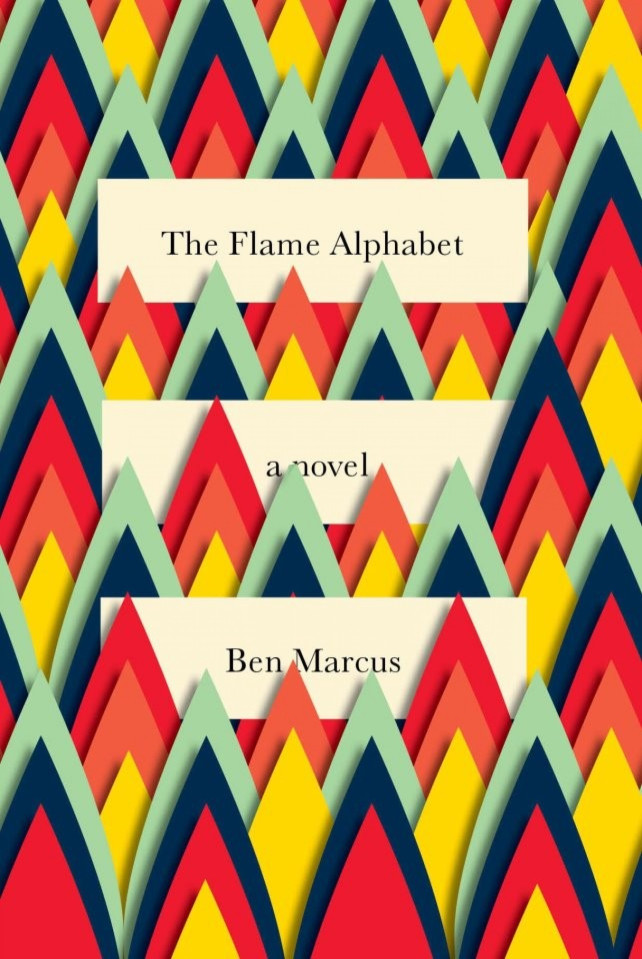
Or take the recent trailer supporting Ben Marcus' newest release, The Flame Alphabet. If you didn't know the trailer was pushing a book, you might think the unsettling animation was for Contagion. The video is eerily effective, and will no doubt help in digital as well as physical sales of the book. The use of voiceover, regarded as something of a narrative crutch in feature films, is at home here.
Marcus met Erin Cosgrove, the animator of his book trailer, through Creative Capital, an organization that funds artists. Though he thinks it sad that books now need a visual component to make them more appealing, he at least advocates for something more artistic. It's become clear that advertorials with large text floating through the sky don't work, he says. A trailer is more of an oblique sidecar in that it is not explicit praise.
The Flame Alphabet shows there is a chance to create something that can stand as its own artistic work.
Though the book trailer has been around for nearly a decade, the form has not really gained a lot of traction. But readers are experiencing novels in, well, novel ways. As sales in e-books continue to rise and printed book sales inversely decline, we will likely see a resurgence in the form. The trailer will especially be a key component in hooking younger readers.
Cary Murnion, who runs the creative agency Honest, approaches trailers from a cinematic standpoint. We think trailers work the same way as in the movies: We don't want to spell out the narrative, but give the reader a sense of the narrative and themes of the book.
Murnion's team is responsible for a host of trailers, including a series for Michael Crichton's novel Next and Chuck Palahniuk's Snuff, and recently a video game-inspired clip for Ready Player One.
"Sometimes we do a series of trailers, where each one is almost a puzzle piece to the book," Murnion said. "We don't give away too much; we just want the viewer to get the feeling of the book."
Jeff Yamaguchi of Knopf Doubleday, which produced The Flame Alphabet trailer, worked with Murnion on the Next campaign in 2006 when YouTube was just starting to take off.
"The way the Web works, it's very fast-moving. Video is a nice way to work into that fray. I think what will evolve is having a lot of video," Yamaguchi said. "You can't just do one. With Ben Marcus, we have that one awesome video [produced by Erin Cosgrove.] But you can't ask her to make four more of those. So we also have an interview with Ben and we filmed him giving him some writing advice."
Yamaguchi is talking about Knopf's Writers on Writing series. Though these videos are not trailers, they're more media that fuels the publisher to push the novel, allowing for a greater connection with readers, a term he calls feeding the beast.
Professional video editors could soon add publishing editors to their list of clients as they're asked to cut trailers for books much as they are for feature films. Robert Ludlum in the style of Jerry Bruckheimer, a Stephen King book cut like Hostel. What would a Don Delillo trailer be like? Jeffrey Eugenides? Murakami? Capturing the voices of these authors in a video might seem like a fool's errand, and it doesn't mean publishers won't try, but it is wise to tread carefully.
With books being turned into movies, a lot of them already have a cinematic feel, so they lend themselves to a trailer, Murnion says. But one of our jobs is not to force anything. We read the book first always, and we advise the client on the best way to approach the trailer, or just how to launch the book. It has to fit with the content.
The relationship between books and movies has existed as long as film has, and is never more evident than when there is a tie-in, as in last year's Ryan Gosling vehicle Drive. A book cover tempts the casual browser in a store, but video, a medium built for the Internet, will entice the online shopper.
Authors and publishers have started to realize that video is a pretty powerful promotional tool. Authors aren't selling out, they're entering the playing field. Much like the very experience of reading a book and watching its film adaptation are wholly different, the literary trailer is a means of generating enthusiasm for the book without usurping it.
Murnion is optimistic, "I think trailers will just get better. The audience we attract, the more used to trailers they are, the more chances we can take to push the creative."
Yamaguchi adds, "Something I'm hopeful for, people see it less as commercials, and more as a creative short film. That's what people want to see, that's the kind of thing that gets shared. And the medium of video online, there's no shortage of it, but boy is there a huge opportunity to do amazing stuff."
Tristan Kneschke is a freelance editor and colorist who operates Exit Editorial.
Watch the book trailer for The Flame Alphabet below:
© Copyright IBTimes 2026. All rights reserved.