COMPLETE TEXT: G-20 Seoul Communique
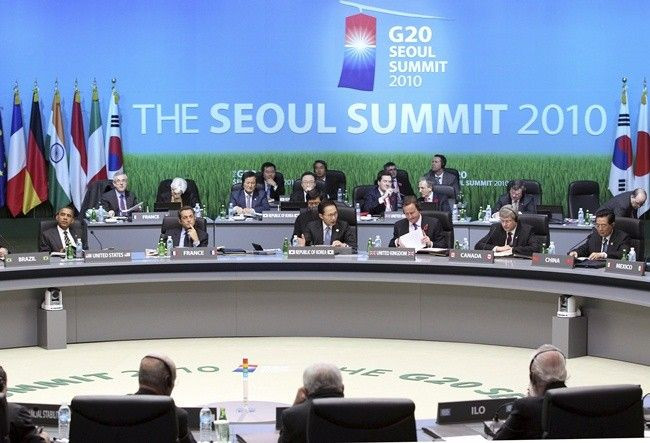
THE G20 SEOUL SUMMIT
LEADERS' DECLARATION
NOVEMBER 11 - 12, 2010
- 1. We, the Leaders of the G20, are united in our conviction that by working together we can secure a more prosperous future for the citizens of all countries.
- 2. When we first gathered in November 2008 to address the most severe world recession our generation has ever confronted, we pledged to support and stabilize the global economy, and at the same time, to lay the foundation for reform, to ensure the world would never face such upheaval again.
- 3. Over the past four Summits, we have worked with unprecedented cooperation to break the dramatic fall in the global economy to establish the basis for recovery and renewed growth.
- 4. The concrete steps we have taken will help ensure we are better prepared to prevent and, if necessary, to withstand future crises. We pledge to continue our coordinated efforts and act together to generate strong, sustainable and balanced growth.
- 5. We recognize the importance of addressing the concerns of the most vulnerable. To this end, we are determined to put jobs at the heart of the recovery, to provide social protection, decent work and also to ensure accelerated growth in low income countries (LICs).
- 6. Our relentless and cooperative efforts over the last two years have delivered strong results. However, we must stay vigilant.
- 7. Risks remain. Some of us are experiencing strong growth, while others face high levels of unemployment and sluggish recovery. Uneven growth and widening imbalances are fueling the temptation to diverge from global solutions into uncoordinated actions. However, uncoordinated policy actions will only lead to worse outcomes for all.
- 8. Since 2008, a common view of the challenges of the world economy, the necessary responses and our determination to resist protectionism has enabled us to both address the root causes of the crisis and safeguard the recovery. We are agreed today to develop our common view to meet these new challenges and a path to strong, sustainable and balanced growth beyond the crisis.
- 9. Today, the Seoul Summit delivers:
- the Seoul Action Plan composed of comprehensive, cooperative and country-specific policy actions to move closer to our shared objective. The Plan includes our commitment to:
- - undertake macroeconomic policies, including fiscal consolidation where necessary, to ensure ongoing recovery and sustainable growth and enhance the stability of financial markets, in particular moving toward more market-determined exchange rate systems, enhancing exchange rate flexibility to reflect underlying economic fundamentals, and refraining from competitive devaluation of currencies. Advanced economies, including those with reserve currencies, will be vigilant against excess volatility and disorderly movements in exchange rates. These actions will help mitigate the risk of excessive volatility in capital flows facing some emerging countries;
- - implement a range of structural reforms that boost and sustain global demand, foster job creation, and increase the potential for growth; and
- - enhance the Mutual Assessment Process (MAP) to promote external sustainability. We will strengthen multilateral cooperation to promote external sustainability and pursue the full range of policies conducive to reducing excessive imbalances and maintaining current account imbalances at sustainable levels. Persistently large imbalances, assessed against indicative guidelines to be agreed by our Finance Ministers and Central Bank Governors, warrant an assessment of their nature and the root causes of impediments to adjustment as part of the MAP, recognizing the need to take into account national or regional circumstances, including large commodity producers. These indicative guidelines composed of a range of indicators would serve as a mechanism to facilitate timely identification of large imbalances that require preventive and corrective actions to be taken. To support our efforts toward meeting these commitments, we call on our Framework Working Group, with technical support from the IMF and other international organizations, to develop these indicative guidelines, with progress to be discussed by our Finance Ministers and Central Bank Governors in the first half of 2011; and, in Gyeongju, our Finance Ministers and Central Bank Governors called on the IMF to provide an assessment as part of the MAP on the progress toward external sustainability and the consistency of fiscal, monetary, financial sector, structural, exchange rate and other policies. In light of this, the first such assessment, to be based on the above mentioned indicative guidelines, will be initiated and undertaken in due course under the French Presidency.
- a modernized IMF that better reflects the changes in the world economy through greater representation of dynamic emerging markets and developing countries. These comprehensive quota and governance reforms, as outlined in the Seoul Summit Document, will enhance the IMF's legitimacy, credibility and effectiveness, making it an even stronger institution for promoting global financial stability and growth.
- instruments to strengthen global financial safety nets, which help countries cope with financial volatility by providing them with practical tools to overcome sudden reversals of international capital flows.
- core elements of a new financial regulatory framework, including bank capital and liquidity standards, as well as measures to better regulate and effectively resolve systemically important financial institutions, complemented by more effective oversight and supervision. This new framework, complemented by other achievements as outlined in the Seoul Summit Document, will ensure a more resilient financial system by reining in the past excesses of the financial sector and better serving the needs of our economies.
- the Seoul Development Consensus for Shared Growth that sets out our commitment to work in partnership with other developing countries, and LICs in particular, to help them build the capacity to achieve and maximize their growth potential, thereby contributing to global rebalancing. The Seoul Consensus complements our commitment to achieve the Millennium Development Goals (MDGs) and focuses on concrete measures as summarized in our Multi-Year Action Plan on Development to make a tangible and significant difference in people's lives, including in particular through the development of infrastructure in developing countries.
- the Financial Inclusion Action Plan, the Global Partnership for Financial Inclusion and a flexible SME Finance Framework, all of which will significantly contribute to improving access to financial services and expanding opportunities for poor households and small and medium enterprises.
- our strong commitment to direct our negotiators to engage in across-the-board negotiations to promptly bring the Doha Development Round to a successful, ambitious, comprehensive, and balanced conclusion consistent with the mandate of the Doha Development Round and built on the progress already achieved. We recognize that 2011 is a critical window of opportunity, albeit narrow, and that engagement among our representatives must intensify and expand. We now need to complete the end game. Once such an outcome is reached, we commit to seek ratification, where necessary, in our respective systems. We are also committed to resisting all forms of protectionist measures.
- 10. We will continue to monitor and assess ongoing implementation of the commitments made today and in the past in a transparent and objective way. We hold ourselves accountable. What we promise, we will deliver.
- 11. Building on our achievements to date, we have agreed to work further on macro-prudential policy frameworks; better reflect the perspective of emerging market economies in financial regulatory reforms; strengthen regulation and oversight of shadow banking; further work on regulation and supervision of commodity derivatives markets; improve market integrity and efficiency; enhance consumer protection; pursue all outstanding governance reform issues at the IMF and World Bank; and build a more stable and resilient international monetary system, including by further strengthening global financial safety nets. We will also expand our MAP based on the indicative guidelines to be agreed.
- 12. To promote resilience, job creation and mitigate risks for development, we will prioritize action under the Seoul Consensus on addressing critical bottlenecks, including infrastructure deficits, food market volatility, and exclusion from financial services.
- 13. To provide broader, forward-looking leadership in the post-crisis economy, we will also continue our work to prevent and tackle corruption through our Anti-Corruption Action Plan; rationalize and phase-out over the medium term inefficient fossil fuel subsidies; mitigate excessive fossil fuel price volatility; safeguard the global marine environment; and combat the challenges of global climate change.
- 14. We reaffirm our resolute commitment to fight climate change, as reflected in the Leaders' Seoul Summit Document. We appreciate President Felipe Calderón's briefing on the status of the UN Framework Convention on Climate Change negotiations, as well as Prime Minister Meles Zenawi's briefing on the report of the High-Level Advisory Group on Climate Change Financing submitted to the UN Secretary-General. We will spare no effort to reach a balanced and successful outcome in Cancun.
- 15. We welcome the Fourth UN LDC Summit in Turkey and the Fourth High-Level Forum on Aid Effectiveness in Korea, both to be held in 2011.
- 16. Recognizing the importance of private sector-led growth and job creation, we welcome the Seoul G20 Business Summit and look forward to continuing the G20 Business Summit in upcoming Summits.
- 17. The actions agreed today will help to further strengthen the global economy, accelerate job creation, ensure more stable financial markets, narrow the development gap and promote broadly shared growth beyond crisis.
- 18. We look forward to our next meeting in 2011 in France, and subsequent meeting in 2012 in Mexico.
- 19. We thank Korea for its G20 Presidency and for hosting the successful Seoul Summit.
- 20. The Seoul Summit Document, which we have agreed, follows.
THE SEOUL SUMMIT DOCUMENT
Framework for Strong, Sustainable and Balanced Growth
- 1. Our unprecedented and highly coordinated fiscal and monetary stimulus worked to bring back the global economy from the edge of a depression. This has highlighted that the world would benefit from more effective international cooperation. In Pittsburgh, we launched the Framework for Strong, Sustainable and Balanced Growth and committed to work together to assess the collective implications of our national policies on global growth and development, identify potential risks to the global economy, and take additional actions to achieve our shared objectives.
- 2. Since then, we have made important progress through our country-led, consultative Mutual Assessment Process (MAP) of the Framework:
- - Supportive economic policies have been put in place to promote ongoing recovery and job creation;
- - Explicit commitments have been made to put public finances on a sustainable track;
- - Strong measures have been adopted and are being implemented to safeguard the stability of our financial system;
- - Important structural reforms have been launched and/or planned to boost global demand and potential growth; and
- - Significant steps have been taken to strengthen the capacity of international financial institutions (IFIs) in support of development.
- 3. Since we last met, the global recovery continues to advance, but downside risks remain. We are resolved to do more. Our strengthened collaborative and collective policy actions can further safeguard the recovery and lay a solid foundation for our shared objectives of strong, sustainable and balanced growth.
The Seoul Action Plan
- 4. Today we are launching the Seoul Action Plan. We shaped the Plan with unity of purpose to:
- - ensure an unwavering commitment to cooperation;
- - outline an action-oriented plan with each member's concrete policy commitments; and
- - deliver on all three objectives of strong, sustainable and balanced growth.
- 5. Specifically, we commit to actions in five policy areas with details of specific commitments by G20 members set out in the Supporting Document.
- 6. Monetary and Exchange Rate Policies: We reaffirm the importance of central banks' commitment to price stability, thereby contributing to the recovery and sustainable growth. We will move toward more market-determined exchange rate systems and enhance exchange rate flexibility to reflect underlying economic fundamentals and refrain from competitive devaluation of currencies. Advanced economies, including those with reserve currencies, will be vigilant against excess volatility and disorderly movements in exchange rates. Together these actions will help mitigate the risk of excessive volatility in capital flows facing some emerging market economies. Nonetheless, in circumstances where countries are facing undue burden of adjustment, policy responses in emerging market economies with adequate reserves and increasingly overvalued flexible exchange rates may also include carefully designed macro-prudential measures. We will reinvigorate our efforts to promote a stable and well functioning international monetary system and call on the IMF to deepen its work in these areas.
- 7. Trade and Development Policies: We reaffirm our commitment to free trade and investment recognizing its central importance for the global recovery. We will refrain from introducing, and oppose protectionist trade actions in all forms and recognize the importance of a prompt conclusion of the Doha negotiations. We reaffirm our commitment to avoid financial protectionism and are mindful of the risks of proliferation of measures that would damage investment and harm prospects for the global recovery. With developing countries' rising share in world output and trade, the goals of global growth, rebalancing and development are increasingly interlinked. We will focus efforts to resolve the most significant bottlenecks to inclusive, sustainable and resilient growth in developing countries, low-income countries (LICs) in particular: infrastructure, human resources development, trade, private investment and job creation, food security, growth with resilience, financial inclusion, domestic resource mobilization and knowledge sharing. In addition, we will take concrete actions to increase our financial and technical support, including fulfilling the Official Development Assistance (ODA) commitments by advanced countries.
- 8. Fiscal Policies: Advanced economies will formulate and implement clear, credible, ambitious and growth-friendly medium-term fiscal consolidation plans in line with the Toronto commitment, differentiated according to national circumstances. We are mindful of the risk of synchronized adjustment on the global recovery and of the risk that failure to implement consolidation, where immediately necessary, would undermine confidence and growth.
- 9. Financial Reforms: We are committed to take action at the national and international level to raise standards, and ensure that our national authorities implement global standards developed to date, consistently, in a way that ensures a level playing field, a race to the top and avoids fragmentation of markets, protectionism and regulatory arbitrage. In particular, we will implement fully the new bank capital and liquidity standards and address too-big-to-fail problems. We agreed to further work on financial regulatory reforms.
- 10. Structural Reforms: We will implement a range of structural reforms to boost and sustain global demand, foster job creation, contribute to global rebalancing, and increase our growth potential, and where needed undertake:
- - Product market reforms to simplify regulation and reduce regulatory barriers in order to promote competition and enhance productivity in key sectors.
- - Labor market and human resource development reforms, including better targeted benefits schemes to increase participation; education and training to increase employment in quality jobs, boost productivity and thereby enhance potential growth.
- - Tax reform to enhance productivity by removing distortions and improving the incentives to work, invest and innovate.
- - Green growth and innovation oriented policy measures to find new sources of growth and promote sustainable development.
- - Reforms to reduce the reliance on external demand and focus more on domestic sources of growth in surplus countries while promoting higher national savings and enhancing export competitiveness in deficit countries.
- - Reforms to strengthen social safety nets such as public health care and pension plans, corporate governance and financial market development to help reduce precautionary savings in emerging surplus countries.
- - Investment in infrastructure to address bottlenecks and enhance growth potential.
In pursuing these reforms, we will draw on the expertise of the OECD, IMF, World Bank, ILO and other international organizations.
- 11. MAP beyond the Seoul Summit: In addition, we will enhance the MAP to promote external sustainability. We will strengthen multilateral cooperation to promote external sustainability and pursue the full range of policies conducive to reducing excessive imbalances and maintaining current account imbalances at sustainable levels. Persistently large imbalances, assessed against indicative guidelines to be agreed by our Finance Ministers and Central Bank Governors, warrant an assessment of their nature and the root causes of impediments to adjustment as part of the MAP, recognizing the need to take into account national or regional circumstances, including large commodity producers. These indicative guidelines composed of a range of indicators would serve as a mechanism to facilitate timely identification of large imbalances that require preventive and corrective actions to be taken. To support our efforts toward meeting these commitments, we call on our Framework Working Group, with technical support from the IMF and other international organizations, to develop these indicative guidelines, with progress to be discussed by our Finance Ministers and Central Bank Governors in the first half of 2011; and, in Gyeongju, our Finance Ministers and Central Bank Governors called on the IMF to provide an assessment as part of the MAP on the progress toward external sustainability and the consistency of fiscal, monetary, financial sector, structural, exchange rate and other policies. In light of this, the first such assessment, to be based on the above mentioned indicative guidelines, will be initiated and undertaken in due course under the French Presidency.
- 12. We have a shared responsibility. Members with sustained, significant external deficits pledge to undertake policies to support private savings and where appropriate undertake fiscal consolidation while maintaining open markets and strengthening export sectors. Members with sustained, significant external surpluses pledge to strengthen domestic sources of growth.
- 13. Recognizing the benefits of the Framework, we agreed to expand and refine the country-led, consultative MAP by including monitoring of the implementation of our commitments and assessment of our progress toward achieving our shared objectives. This process will be adopted in 2011 under the French Presidency.
International Financial Institution Reforms
- 14. When the world was in the middle of the global financial crisis, we met and agreed to provide the IFIs with the resources they needed to support the global economy. With our agreements to increase their resources substantially and endorse new lending instruments, the IFIs mobilized critical financing, including more than $750 billion by the IMF and $235 billion by the Multilateral Development Banks (MDBs). Financial markets stabilized and the global economy started to recover. Even in the midst of the crisis, we knew that further reforms of the IFIs were required.
- 15. We committed to modernize the institutions fundamentally so that they better reflect changes in the world economy and can more effectively play their roles in promoting global financial stability, fostering development and improving the lives of the poorest. In June 2010, we welcomed the reforms to increase the voting power of developing and transition countries at the World Bank. We also remained committed to strengthening the legitimacy, credibility and effectiveness of the IMF through quota and governance reforms.
Modernized IMF governance
- 16. Today, we welcomed the ambitious achievements by the Finance Ministers and Central Bank Governors at the Gyeongju meeting, and subsequent decision by the IMF, on a comprehensive package of IMF quota and governance reforms. The reforms are an important step toward a more legitimate, credible and effective IMF, by ensuring that quotas and Executive Board composition are more reflective of new global economic realities, and securing the IMF's status as a quota-based institution, with sufficient resources to support members' needs. Consistent with our commitments at the Pittsburgh and Toronto Summits, and going even further in a number of areas, the reforms include:
- - Shifts in quota shares to dynamic emerging market and developing countries and to under-represented countries of over 6%, while protecting the voting share of the poorest, which we commit to work to complete by the Annual Meetings in 2012.
- - A doubling of quotas, with a corresponding rollback of the New Arrangements to Borrow (NAB) preserving relative shares, when the quota increase becomes effective.
- - Continuing the dynamic process aimed at enhancing the voice and representation of emerging market and developing countries, including the poorest, through a comprehensive review of the quota formula by January 2013 to better reflect the economic weights; and through completion of the next general review of quotas by January 2014.
- - Greater representation for emerging market and developing countries at the Executive Board through two fewer advanced European chairs, and the possibility of a second alternate for all multi-country constituencies.
- - Moving to an all-elected Board, along with a commitment by the IMF's membership to maintain the Board size at 24 chairs, and following the completion of the 14th General Review, a review of the Board's composition every eight years.
- 17. We reiterate the urgency of promptly concluding the 2008 IMF Quota and Voice Reforms. We urge all G20 members participating in the expanded NAB to accelerate their procedures in completing the acceptance process. We ask the IMF to report on the progress, in accordance with agreed timelines, toward effective implementation of the 2010 quota and governance reforms to our Finance Ministers and Central Bank Governors at their periodic G20 meetings.
- 18. When combined with the already agreed voice reform of the World Bank, these represent significant achievements in modernizing our key IFIs. They will be even stronger players in promoting global financial stability and growth. We asked our Finance Ministers and Central Bank Governors to continue to pursue all outstanding governance reform issues at the World Bank and the IMF.
Surveillance
- 19. We recognize the importance of continuing the work on reforming the IMF's mission and mandate, including strengthening surveillance.
- 20. IMF surveillance should be enhanced to focus on systemic risks and vulnerabilities wherever they may lie. To this extent, we welcome the decision made by the IMF to make financial stability assessments under the Financial Sector Assessment Program (FSAP) a regular and mandatory part of Article IV consultation for members with systemically important financial sectors. We call on the IMF to make further progress in modernizing the IMF's surveillance mandate and modalities. These should involve, in particular: strengthening bilateral and multilateral work on surveillance covering financial stability, macroeconomic, structural and exchange rate policies, with increased focus on systemic issues; enhancing synergies between surveillance tools; helping members to strengthen their surveillance capacity; and ensuring even-handedness, candor, and independence of surveillance. We welcome the IMF's work to conduct spillover assessments of the wider impact of systemic economies' policies.
Multilateral Development Banks
- 21. We reiterate our commitment to completing an ambitious replenishment for the concessional lending facilities of the MDBs, especially the International Development Association, to help ensure that LICs have access to sufficient concessional resources.
Strengthened global financial safety nets
- 22. As the global economy became more interconnected and integrated, the size and volatility of capital flows increased significantly. The increased volatility was a source of instability during the financial crisis. It even adversely affected countries with solid fundamentals and the effects were greater on those with more open economies. These problems persist. Current volatility of capital flows is reflecting the differing speed of recovery between advanced and emerging market economies. National, regional and multilateral responses are required. Strengthened global financial safety nets can help countries to cope with financial volatility, reducing the economic disruption from sudden swings in capital flows and the perceived need for excessive reserve accumulation.
- 23. Therefore, we asked our Finance Ministers and Central Bank Governors to prepare policy options to strengthen global financial safety nets for our consideration at this Summit.
- 24. We welcome the following achievements from our mandate:
- - The enhancement of the Flexible Credit Line (FCL) including the extension of its duration and removal of the access cap. Countries with strong fundamentals and policies will have access to a refined FCL with enhanced predictability and effectiveness.
- - The creation of the Precautionary Credit Line (PCL) as a new preventative tool. The PCL allows countries with sound fundamentals and policies, but moderate vulnerabilities, to benefit from the IMF's precautionary liquidity provision.
- - The recent decision by the IMF to continue its work to further improve the global capacity to cope with shocks of a systemic nature, as well as the recent clarification of the procedures for synchronized approval of the FCLs for multiple countries, by which a number of countries affected by a common shock could concurrently seek access to FCL.
- - The dialogue to enhance collaboration between Regional Financing Arrangements (RFAs) and the IMF, acknowledging the potential synergies from such collaboration.
- 25. Building on the achievements made to date on strengthening global financial safety nets, we need to do further work to improve our capacity to cope with future crises. Therefore, we asked our Finance Ministers and Central Bank Governors to explore, with input from the IMF:
- A. A structured approach to cope with shocks of a systemic nature.
- B. Ways to improve collaboration between RFAs and the IMF across all possible areas and enhance the capability of RFAs for crisis prevention, while recognizing region-specific circumstances and characteristics of each RFA.
- 26. Our goal is to build a more stable and resilient international monetary system. While the international monetary system has proved resilient, tensions and vulnerabilities are clearly apparent. We agreed to explore ways to further improve the international monetary system to ensure systemic stability in the global economy. We asked the IMF to deepen its work on all aspects of the international monetary system, including capital flow volatility. We look forward to reviewing further analysis and proposals over the next year.
Financial Sector Reforms
- 27. The global financial system came to a sudden halt in 2008 as a result of reckless and irresponsible risk taking by banks and other financial institutions, combined with major failures of regulation and supervision. While our initial priority was to move quickly to stabilize financial markets and restore the global flow of capital, we never lost sight of the need to address the root causes of the crisis. We took our first step at the Washington Summit, where we developed the Action Plan to Implement Principles for Reform. Since then, we built on the progress made in London, Pittsburgh, and Toronto, and together, took major strides toward fixing the financial system with the support from the international organizations, particularly the Financial Stability Board (FSB) and the Basel Committee on Banking Supervision (BCBS).
Transformed financial system to address the root causes of the crisis
- 28. Today, we have delivered core elements of the new financial regulatory framework to transform the global financial system.
- 29. We endorsed the landmark agreement reached by the BCBS on the new bank capital and liquidity framework, which increases the resilience of the global banking system by raising the quality, quantity and international consistency of bank capital and liquidity, constrains the build-up of leverage and maturity mismatches, and introduces capital buffers above the minimum requirements that can be drawn upon in bad times. The framework includes an internationally harmonized leverage ratio to serve as a backstop to the risk-based capital measures. With this, we have achieved far-reaching reform of the global banking system. The new standards will markedly reduce banks' incentive to take excessive risks, lower the likelihood and severity of future crises, and enable banks to withstand - without extraordinary government support - stresses of a magnitude associated with the recent financial crisis. This will result in a banking system that can better support stable economic growth. We are committed to adopt and implement fully these standards within the agreed timeframe that is consistent with economic recovery and financial stability. The new framework will be translated into our national laws and regulations, and will be implemented starting on January 1, 2013 and fully phased in by January 1, 2019.
- 30. We reaffirmed our view that no firm should be too big or too complicated to fail and that taxpayers should not bear the costs of resolution. We endorsed the policy framework, work processes, and timelines proposed by the FSB to reduce the moral hazard risks posed by systemically important financial institutions (SIFIs) and address the too-big-to-fail problem. This requires a multi-pronged framework combining: a resolution framework and other measures to ensure that all financial institutions can be resolved safely, quickly and without destabilizing the financial system and exposing the taxpayers to the risk of loss; a requirement that SIFIs and initially in particular financial institutions that are globally systemic (G-SIFIs) should have higher loss absorbency capacity to reflect the greater risk that the failure of these firms poses to the global financial system; more intensive supervisory oversight; robust core financial market infrastructure to reduce contagion risk from individual failures; and other supplementary prudential and other requirements as determined by the national authorities which may include, in some circumstances, liquidity surcharges, tighter large exposure restrictions, levies and structural measures. In the context of loss absorbency, we encourage further progress on the feasibility of contingent capital and other instruments. We encouraged the FSB, BCBS and other relevant bodies to complete their remaining work in accordance with the endorsed work processes and timelines in 2011 and 2012.
- 31. In addition, we agreed that G-SIFIs should be subject to a sustained process of mandatory international recovery and resolution planning. We agreed to conduct rigorous risk assessment on these firms through international supervisory colleges and negotiate institution-specific crisis cooperation agreements within crisis management groups. Regular peer reviews will be conducted by the FSB on the effectiveness and consistency of national policy measures for these firms.
- 32. We reaffirmed our Toronto commitment to national-level implementation of the BCBS's cross-border resolution recommendations. To support implementation at the national level, we welcomed the BCBS's planned stock taking exercise of these recommendations. We called on the FSB to build on this work and develop attributes of effective resolution regimes by 2011.
- 33. Delivering on our commitment in Toronto, we endorsed the policy recommendations prepared by the FSB in consultation with the IMF, on increasing supervisory intensity and effectiveness. We reaffirmed that the new financial regulatory framework must be complemented with more effective oversight and supervision. We agreed that supervisors should have strong and unambiguous mandates, sufficient independence to act, appropriate resources, and a full suite of tools and powers to proactively identify and address risks, including regular stress testing and early intervention.
Implementation and international assessment, including peer review
- 34. But our reform efforts are an ongoing process. It is essential that we fully implement the new standards and principles, in a way that ensures a level playing field, a race to the top and avoids fragmentation of markets, protectionism and regulatory arbitrage. We recognized different national starting points.
- 35. We reaffirmed today our full commitment to action and implementation.
- 36. At the national level, we will incorporate the new standards and principles into relevant legislation and policies. At the global level, international assessment and peer review processes should be substantially enhanced in order to ensure consistency in implementation across countries and identify areas for further improvement in standards and principles. In this regard, we recognized the value of the FSAP jointly undertaken by the IMF and the World Bank, and the FSB's peer review as means of fostering consistent cross-country implementation of international standards.
- 37. We also firmly recommitted to work in an internationally consistent and non-discriminatory manner to strengthen regulation and supervision on hedge funds, OTC derivatives and credit rating agencies. We reaffirmed the importance of fully implementing the FSB's standards for sound compensation. We endorsed the FSB's recommendations for implementing OTC derivatives market reforms, designed to fully implement our previous commitments in an internationally consistent manner, recognizing the importance of a level playing field. We asked the FSB to monitor the progress regularly. We welcomed ongoing work by the Committee on Payment and Settlement Systems and the International Organization of Securities Commissions (IOSCO) on central counterparty standards. We also endorsed the FSB's principles on reducing reliance on external credit ratings. Standard setters, market participants, supervisors and central banks should not rely mechanistically on external credit ratings.
- 38. We re-emphasized the importance we place on achieving a single set of improved high quality global accounting standards and called on the International Accounting Standards Board and the Financial Accounting Standards Board to complete their convergence project by the end of 2011. We also encouraged the International Accounting Standards Board to further improve the involvement of stakeholders, including outreach to, and membership of, emerging market economies, in the process of setting the global standards, within the framework of independent accounting standard setting process.
- 39. In addition, we reiterated our commitment to preventing non-cooperative jurisdictions from posing risks to the global financial system and welcomed the ongoing efforts by the FSB, Global Forum on Tax Transparency and Exchange of Information (Global Forum), and the Financial Action Task Force (FATF), based on comprehensive, consistent and transparent assessment. We reached agreement on:
- - The FSB to determine by spring 2011 those jurisdictions that are not cooperating fully with the evaluation process or that show insufficient progress to address weak compliance with internationally agreed information exchange and cooperation standards, based on the recommended actions by the agreed timetable.
- - The Global Forum to swiftly progress its Phase 1 and 2 reviews to achieve the objective agreed by Leaders in Toronto and report progress by November 2011. Reviewed jurisdictions identified as not having the elements in place to achieve an effective exchange of information should promptly address the weaknesses. We urge all jurisdictions to stand ready to conclude Tax Information Exchange Agreements where requested by a relevant partner.
- - The FATF to pursue its successful work in identifying non-cooperative jurisdictions as well as regularly updating a public list on jurisdictions with strategic deficiencies, with next update being in February 2011.
- 40. We reaffirmed the FSB's role in coordinating at the international level the work of national financial authorities and international standard setting bodies in developing and promoting the implementation of effective regulatory, supervisory and other financial sector policies in the interest of global financial stability. We asked the FSB to bring forward for review by Finance Ministers and Central Bank Governors well before our next meeting in 2011 proposals to strengthen its capacity, resources and governance to keep pace with growing demands. We welcomed the FSB's outreach. We endorsed the establishment of regional consultative groups. We welcomed the FSB report on progress in the implementation of G20 recommendations for strengthening financial stability and look forward to another progress report at our next meeting.
Future work: Issues that warrant more attention
- 41. While we have made significant progress in a number of areas, there still remain some issues that warrant more attention:
- - Further work on macro-prudential policy frameworks: In order to deal with systemic risks in the financial sector in a comprehensive manner and on an ongoing basis, we called on the FSB, IMF and BIS to do further work on macro-prudential policy frameworks, including tools to mitigate the impact of excessive capital flows, and update our Finance Ministers and Central Bank Governors at their next meeting. These frameworks should take into account national and regional arrangements. We look forward to a joint report which should elaborate on the progress achieved in identification of best practices, which will be the basis for establishing in the future international principles or guidelines on the design and implementation of the frameworks.
- - Addressing regulatory reform issues pertaining specifically to emerging market and developing economies: We agreed to work on financial stability issues that are of particular interest to emerging market and developing economies, and called on the FSB, IMF and World Bank to develop and report before the next Summit. These issues could include: the management of foreign exchange risks by financial institutions, corporations and households; emerging market and developing economies' regulatory and supervisory capacity where necessary, including with regard to local branches of foreign financial institutions which are systemic in their host country and development of deposit insurance schemes; financial inclusion; information sharing between home and host supervisory authorities on cross border financial institutions; and trade finance.
- - Strengthening regulation and supervision of shadow banking: With the completion of the new standards for banks, there is a potential that regulatory gaps may emerge in the shadow banking system. Therefore, we called on the FSB to work in collaboration with other international standard setting bodies to develop recommendations to strengthen the regulation and oversight of the shadow banking system by mid-2011.
- - Further work on regulation and supervision of commodity derivative markets: We called especially on IOSCO's taskforce on commodity futures markets to report to the FSB for consideration of next steps in April 2011 on its important work.
- - Improving market integrity and efficiency: We called on IOSCO to develop by June 2011 and report to the FSB recommendations to promote markets' integrity and efficiency to mitigate the risks posed to the financial system by the latest technological developments.
- - Enhancing consumer protection: We asked the FSB to work in collaboration with the OECD and other international organizations to explore, and report back by the next summit, on options to advance consumer finance protection through informed choice that includes disclosure, transparency and education; protection from fraud, abuse and errors; and recourse and advocacy.
Fighting Protectionism and Promoting Trade and Investment
- 42. Recognizing the importance of free trade and investment for global recovery, we are committed to keeping markets open and liberalizing trade and investment as a means to promote economic progress for all and narrow the development gap. The importance of free trade and open markets is illustrated by the joint report of the OECD, ILO, World Bank and WTO on the benefits of trade liberalization for employment and growth. These trade and investment liberalization measures will help achieve the G20 Framework objectives for strong, sustainable and balanced growth, and must be complemented by our unwavering commitment to resist protectionism in all its forms. We therefore reaffirm the extension of our standstill commitments until the end of 2013 as agreed in Toronto, commit to rollback any new protectionist measures that may have risen, including export restrictions and WTO-inconsistent measures to stimulate exports, and ask the WTO, OECD, and UNCTAD to continue monitoring the situation and to report publicly on a semi-annual basis.
- 43. With respect to the WTO Doha Development Round, we welcome the broader and more substantive engagement of the past four months among our representatives in Geneva. Bearing in mind that 2011 is a critical window of opportunity, albeit narrow, this engagement must intensify and expand. We now need to complete the end game. We direct our negotiators to engage in across-the-board negotiations to promptly bring the Doha Development Round to a successful, ambitious, comprehensive, and balanced conclusion consistent with the mandate of the Doha Development Round and built on the progress achieved. Once such an outcome is reached, we commit to seek ratification, where necessary, in our respective systems.
- 44. We strongly believe that trade can be an effective tool for reducing poverty and enhancing economic growth in developing countries, LICs in particular. To support LIC capacity to trade, we welcome the adoption of the Multi-Year Action Plan on Development. We note our commitment to at least maintain, beyond 2011, Aid for Trade levels that reflect the average of the last three years (2006 to 2008); to make progress toward duty-free quota-free market access for least developed country (LDC) products in line with our Hong Kong commitments, without prejudice to other negotiations, including as regards preferential rules of origin; to call on relevant international agencies to coordinate a collective multilateral response to support trade facilitation; and to support measures to increase the availability of trade finance in developing countries, particularly LICs. In this respect, we also agree to monitor and assess trade finance programs in support of developing countries, in particular their coverage and impact on LICs, and to evaluate the impact of regulatory regimes on trade finance.
- 45. We recognize the potential for faster growth in Africa, which could be unlocked by African plans for deeper regional economic integration. We therefore commit to support the regional integration efforts of African leaders, including by helping to realize their vision of a free trade area through the promotion of trade facilitation and regional infrastructure. We call on the MDBs and WTO to collaborate with us in supporting this endeavor.
Seoul Development Consensus for Shared Growth
- 46. The crisis disproportionately affected the most vulnerable in the poorest countries and slowed progress toward achievement of the Millennium Development Goals (MDGs). As the premier economic forum, we recognize the need to strengthen and leverage our development efforts to address such challenges.
- 47. At the same time, narrowing the development gap and reducing poverty are integral to achieving our broader Framework objectives of strong, sustainable and balanced growth by generating new poles of growth and contributing to global rebalancing. We are therefore using our best efforts for a rapid increase in the share of global growth and prosperity for developing countries, LICs in particular.
- 48. We commit to work in partnership with other developing countries, LICs in particular, to help them build the capacity to achieve and maintain their maximum economic growth potential. We have thus developed a consensus for the G20's contribution to global development efforts in line with our Toronto mandate.
- 49. We endorse today the Seoul Development Consensus for Shared Growth (Annex I) and its Multi-Year Action Plan on Development (Annex II).
- 50. The Seoul Consensus and the Multi-Year Action Plan are based on six core principles:
- First, an enduring and meaningful reduction in poverty cannot be achieved without inclusive, sustainable and resilient growth, while the provision of ODA, as well as the mobilization of all other sources of financing, remain essential to the development of most LICs.
- Second, we recognize that while there are common factors, there is no single formula for development success. We must therefore engage other developing countries as partners, respecting national ownership of a country's policies as the most important determinant of its successful development, thereby helping to ensure strong, responsible, accountable and transparent development partnerships between the G20 and LICs.
- Third, our actions must prioritize global or regional systemic issues that call for collective action and have the potential for transformative impact.
- Fourth, we recognize the critical role of the private sector to create jobs and wealth, and the need for a policy environment that supports sustainable private sector-led investment and growth.
- Fifth, we will maximize our value-added and complement the development efforts of other key players by focusing on areas where the G20 has a comparative advantage or could add momentum.
- And finally, we will focus on tangible outcomes of significant impact that remove blockages to improving growth prospects in developing countries, especially LICs.
- 51. The Seoul Consensus also identifies nine key pillars where we believe actions are necessary to resolve the most significant bottlenecks to inclusive, sustainable and resilient growth in developing countries, LICs in particular: infrastructure, human resource development, trade, private investment and job creation, food security, growth with resilience, financial inclusion, domestic resource mobilization and knowledge sharing. The Multi-Year Action Plan then outlines the specific, detailed actions to which we commit in order to address these bottlenecks, including to:
- a) Facilitate increased investment from public, semi-public and private sources and improve the implementation and maintenance of national and regional infrastructure projects in sectors where there are bottlenecks. We agree to establish a High-Level Panel (HLP) to recommend measures to mobilize infrastructure financing and review MDBs' policy frameworks. We will announce the Chair of the HLP by December 2010;
- b) Improve the development of employable skills matched to employer and labor market needs in order to enhance the ability to attract investment, create decent jobs and increase productivity. We will support the development of internationally comparable skills indicators and the enhancement of national strategies for skills development, building on the G20 Training Strategy;
- c) Improve the access and availability to trade with advanced economies and between developing and LICs. Our action plans on trade are discussed in paragraphs 42 to 45 above;
- d) Identify, enhance and promote responsible private investment in value chains and develop key indicators for measuring and maximizing the economic and employment impact of private sector investment;
- e) Enhance food security policy coherence and coordination and increase agricultural productivity and food availability, including by advancing innovative results-based mechanisms, promoting responsible agriculture investment, fostering smallholder agriculture, and inviting relevant international organizations to develop, for our 2011 Summit in France, proposals to better manage and mitigate risks of food price volatility without distorting market behavior. We also welcome the progress of the Global Agriculture and Food Security Program, as well as that of other bilateral and multilateral channels, including the UN Committee on World Food Security, and invite further contributions;
- f) Improve income security and resilience to adverse shocks by assisting developing countries enhance social protection programs, including through further implementation of the UN Global Pulse Initiative, and by facilitating implementation of initiatives aimed at a quantified reduction of the average cost of transferring remittances;
- g) Increase access to finance for the poor and small and medium enterprises (SMEs). Our action plans for financial inclusion and associated implementation mechanisms are discussed in paragraphs 55 to 57 below;
- h) Build sustainable revenue bases for inclusive growth and social equity by improving developing country tax administration systems and policies and highlighting the relationship between non-cooperative jurisdictions and development; and
- i) Scale up and mainstream sharing of knowledge and experience, especially between developing countries, in order to improve their capacity and ensure that the broadest range of experiences are used to help tailor national policies.
- 52. We commit to and prioritize full, timely and effective implementation of the Multi-Year Action Plan, understanding its high potential to have a positive transformative impact on people's lives, both through our individual and collective actions and in partnership with other global development stakeholders. We will continue to work closely with relevant international organizations to push these actions forward.
- 53. We reaffirm our commitment to achievement of the MDGs and will align our work in accordance with globally agreed development principles for sustainable economic, social and environmental development, to complement the outcomes of the UN High-Level Plenary Meeting on the MDGs held in September 2010 in New York, as well as with processes such as the Fourth UN LDC Summit in Turkey and the Fourth High-Level Forum on Aid Effectiveness in Korea, both to be held in 2011. We also reaffirm our respective ODA pledges and commitments to assist the poorest countries and mobilize domestic resources made following on from the Monterrey Consensus and other fora.
- 54. We further mandate the Development Working Group to monitor implementation of the Multi-Year Action Plan, so that we may review progress and consider the need for any further steps at the 2011 Summit in France. Development based on the Seoul Consensus will therefore be an enduring part of future G20 Summits. What we promise, we will deliver.
Financial Inclusion
- 55. We reiterate our strong commitment to financial inclusion and recognize the benefits of improved access to finance to lift the lives of the poor and to support the contribution of SMEs to economic development. We welcome the stock taking report on successful and scalable models of SME financing in developing economies. We have developed the Financial Inclusion Action Plan based on our Principles for Innovative Financial Inclusion as the work program for the coming year.
- 56. Working with the Alliance for Financial Inclusion, the Consultative Group to Assist the Poor and the International Finance Corporation, we commit to launch the Global Partnership for Financial Inclusion (GPFI) as an inclusive platform for all G20 countries, interested non-G20 countries and relevant stakeholders to carry forward our work on financial inclusion, including implementation of the Financial Inclusion Action Plan. The GPFI's efforts over the next year will include helping countries put into practice the Principles for Innovative Financial Inclusion, strengthening data for measuring financial inclusion, and developing methodologies for countries wishing to set targets. We agree that the GPFI should report to us on its progress at our 2011 Summit in France.
- 57. Recognizing the vital role of SMEs in employment and income generation, we welcome the strong response to the G20 SME Finance Challenge and the innovative models for scaling up private SME finance that have emerged from the competition and congratulate the winners. We have constructed a flexible SME Finance Framework to mobilize grant, risk capital and private financing by using existing funding mechanisms and the new SME Finance Innovation Fund to finance the winning proposals and other successful SME financing models. We welcome the commitment of Canada, Korea, the United States and the Inter-American Development Bank of $528 million to the Framework through grants and co-financing.
Energy
Fossil Fuel Subsidies
- 58. We reaffirm our commitment to rationalize and phase-out over the medium term inefficient fossil fuel subsidies that encourage wasteful consumption, with timing based on national circumstances, while providing targeted support for the poorest. We direct our Finance and Energy Ministers to report back on the progress made in implementing country-specific strategies and in achieving the goals to which we agreed in Pittsburgh and Toronto at the 2011 Summit in France.
- 59. We note the preliminary report of the IEA, World Bank and OECD and ask these organizations, together with OPEC, to further assess and review the progress made in implementing the Pittsburgh and Toronto commitments and report back to the 2011 Summit in France.
- 60. We recognize the value of the sharing of knowledge, expertise and capacity with respect to programs and policies that phase out inefficient fossil fuel subsidies.
Fossil Fuel Price Volatility
- 61. We recognize the importance of a well-functioning and transparent market in oil for world economic growth. We strongly support the Joint Oil Data Initiative (JODI) and ask the IEF, IEA and OPEC for a report suggesting specific steps in order to improve the quality, timeliness and reliability of the JODI Database. The report should include a proposed timeframe and implementation strategy, which will explore the ways to improve data availability on oil production, consumption, refining and stock levels, as appropriate. An intermediate report should be submitted to the February 2011 Finance Ministers' meeting, with the final report submitted to the April 2011 Finance Ministers' meeting. We also request the IEF, IEA, OPEC and IOSCO to produce a joint report, by the April 2011 Finance Ministers' meeting, on how the oil spot market prices are assessed by oil price reporting agencies and how this affects the transparency and functioning of oil markets.
- 62. We support the establishment of the IEF charter to strengthen the producer-consumer dialogue, and welcome the IEF plan, developed in cooperation with the IEA and OPEC, to hold an annual symposium with major relevant institutions on energy market outlooks. We call on the IEF, IEA and OPEC to produce a joint report and common communiqué, highlighting their respective outlooks and their short, medium and long-term forecasts for oil market supply and demand. We welcome their ongoing work on the linkages between oil physical and financial markets.
- 63. Welcoming the June and November 2010 IOSCO reports, we ask IOSCO to further monitor developments in the oil OTC markets and report to the FSB for consideration of next steps, for improved regulation and enhanced transparency of the oil financial market in April 2011 by Finance Ministers and other relevant Ministers, informed by the work of the Energy Experts Group. We ask the Energy Experts Group to extend its work on volatility to other fossil fuels as a second step.
Global Marine Environment Protection
- 64. We welcome the progress achieved by the Global Marine Environment Protection (GMEP) initiative toward the goal of sharing best practices to protect the marine environment, to prevent accidents related to offshore exploration and development, as well as marine transportation, and to deal with their consequences. We recognize the work done by the GMEP Experts Sub-Group and take note of the progress made on reviewing international regulation of offshore oil and gas exploration, production and transport with respect to marine environmental protection as a first step to implement the Toronto mandate.
- 65. Future work on the GMEP initiative should benefit from relevant findings, as they become available, from the National Commission on the BP Deepwater Horizon Oil Spill in the United States and the Montara Commission of Inquiry in Australia. We ask the GMEP Experts Sub-Group to provide a further report, with the support of the IMO, OECD, IEA, OPEC, International Regulators Forum, and International Association of Drilling Contractors and, in consultation with relevant stakeholders, to continue work on the effective sharing of best practices at the 2011 Summit in France.
Climate Change and Green Growth
- 66. Addressing the threat of global climate change is an urgent priority for all nations. We reiterate our commitment to take strong and action-oriented measures and remain fully dedicated to UN climate change negotiations. We reaffirm the objective, provisions, and the principles of the UN Framework Convention on Climate Change (UNFCCC), including common but differentiated responsibilities and respective capabilities. We thank Mexico for hosting the UNFCCC negotiations to be held in Cancun beginning at the end of November 2010. Those of us who have associated with the Copenhagen Accord reaffirm our support for it and its implementation. We all are committed to achieving a successful, balanced result that includes the core issues of mitigation, transparency, finance, technology, adaptation, and forest preservation. In this regard, we welcome the work of the High-Level Advisory Group on Climate Change Financing established by the UN Secretary-General and ask our Finance Ministers to consider its report. We also support and encourage the delivery of fast-start finance commitments.
- 67. The ongoing loss of biodiversity is a global environmental and economic challenge. Both climate change and loss of biodiversity are inextricably linked. We acknowledge the outcomes of the global study on the economics of ecosystems and biodiversity. We welcome the successful conclusion of COP10 in Nagoya.
68. We are committed to support country-led green growth policies that promote environmentally sustainable global growth along with employment creation while ensuring energy access for the poor. We recognize t
© Copyright IBTimes 2026. All rights reserved.
- MOST POPULAR IN World