China’s Dancing Robot Star Unitree Heads For A Record IPO. Investors Want In.
Unitree has raised about $905 million ahead of its Shanghai market debut, with demand for shares exceeding the amount available by more than 8,000 times as China pushes deeper into humanoid robotics.

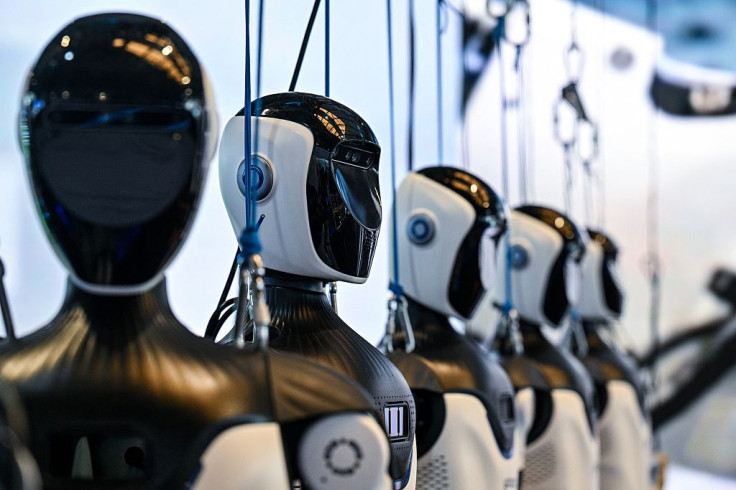
Chinese robot maker Unitree is preparing to make its stock market debut after raising 6.1 billion yuan, or about $905 million, in a heavily oversubscribed initial public offering.
The Hangzhou-based company is scheduled to begin trading in Shanghai on Wednesday, becoming the first humanoid robot maker to list in mainland China.
Demand for the shares exceeded the amount available by more than 8,000 times, setting a record for Shanghai's technology-focused STAR Market.
Unitree gained international attention for humanoid robots capable of dancing, boxing, performing martial arts and completing backflips. The company is also the world's largest seller of humanoid robots by unit sales.
CNN reported Tuesday that Unitree sold more than 5,500 humanoid robots worldwide last year as revenue increased more than tenfold in two years.
The company generated nearly 1.7 billion yuan, or $252 million, in revenue in 2025 and reported net profit of 278 million yuan, equivalent to around $41 million, according to its IPO prospectus.
Unitree also sells quadruped robots, commonly known as robot dogs, which accounted for about 42% of its revenue last year.
Its humanoid machines have become increasingly visible outside laboratories and technology conferences.
Unitree gained widespread attention in China after its robots performed a choreographed dance during the country's annual Lunar New Year gala last year. Its machines have also appeared on America's Got Talent, performing routines including backflips and dances.
On Monday, the company unveiled another humanoid robot called "Superman," which it says can jump as high as two meters and run at 12.66 meters per second.
Unitree was founded in Hangzhou in 2016 by Wang Xingxing and has attracted backing from several major Chinese technology companies, including Tencent, Alibaba and Meituan, as well as AI company DeepSeek.
Wang's growing profile has also reflected Unitree's importance to China's technology plans. He was among the executives seated in the front row at President Xi Jinping's meeting with prominent technology business leaders last year.
China has made humanoid robotics one of the industries it wants to develop as the country deals with an aging population and shrinking workforce.
A 2023 policy document from China's Ministry of Industry and Information Technology identified humanoid robots as an important area of technological competition and called for the development of an internationally competitive industry.
Chinese manufacturers already account for most global humanoid robot shipments.
China-based companies shipped nearly 13,000 humanoid robots in 2025, accounting for roughly 80% of the global total, according to Counterpoint Research. Unitree led individual manufacturers with a 17% share of shipments.
The industry remains at an early stage, however. Research and educational institutions accounted for the majority of Unitree's sales, while industrial deployments represented less than 10% of sales during the first nine months of 2025, according to earlier company filings.
The company plans to use proceeds from its IPO to expand factories and invest in robot hardware and embodied AI, the technology that allows machines to interpret their surroundings and perform physical tasks.
That software is an important area of development for Unitree. Ethan Qi, associate director at Counterpoint Research, told CNN that Unitree's current strengths are primarily in hardware and motion control, while further investment in embodied AI models will be needed.
Unitree announced a research and development partnership with Nvidia in June as it works on those capabilities.
The company also faces growing restrictions in the United States, an important issue because more than 40% of its revenue comes from overseas markets.
Washington added Unitree to a list of Chinese companies linked to China's military in June, preventing the company from doing business with the Pentagon.
The U.S. subsequently introduced restrictions on imports of new foreign-made humanoid and quadruped robots in July, a move that could limit future sales by Chinese manufacturers.
Existing models already approved for sale in the U.S. are not covered by the restrictions.
Unitree acknowledged the risk in its IPO prospectus, warning that additional U.S. restrictions could prevent it from maintaining rapid growth in overseas sales and could lead to a decline in performance.
The restrictions come as competition in humanoid robotics expands in both China and the U.S.
Chinese companies including UBTECH and Dobot are already publicly traded in Hong Kong, while Agibot is pursuing its own listing. American companies including Tesla, Figure AI and Boston Dynamics are also developing humanoid robots for industrial and other applications.
For Unitree, Wednesday's listing will provide additional capital to expand production and develop its technology. It will also provide a public-market test of investor demand for China's growing humanoid robotics sector.
© Copyright IBTimes 2026. All rights reserved.
- Recommended For You