The Wall Street Bonus Boom Is Back. Some Bankers Could See Them Jump Up To 30%
Stock traders and professionals working on IPOs could see bonuses climb as much compared with last year's.


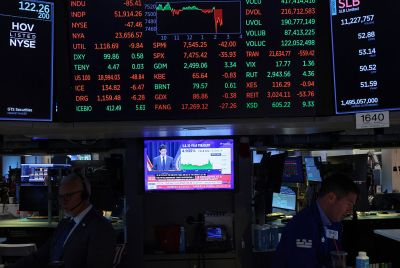
Wall Street employees are on track for one of their strongest bonus seasons in years, with investment banks emerging as the biggest winners after a banner year fueled by record dealmaking, robust trading activity and an artificial intelligence-driven market rally.
New projections from compensation consulting firm Johnson Associates cited by Yahoo Finance show that bonus expectations for 2026 have improved significantly since the beginning of the year, reflecting the industry's stronger-than-expected financial performance.
The firm's latest outlook increased its forecasts by an average of three percentage points across 21 Wall Street job categories, signaling that the industry's record first half is translating directly into higher compensation.
The biggest beneficiaries are expected to be employees at the nation's largest banks, prompting Johnson Associates to dub 2026 the "Year of the Bank." "Banks, at least for now, are leading the pack," Alan Johnson, founder of Johnson Associates, told Yahoo Finance, noting that the compensation gap between major banks and other financial firms has widened considerably.
Some of the largest bonus increases are expected in investment banking and trading. Stock traders and professionals working on IPOs could see bonuses climb by as much as 30% compared with last year, according to Johnson Associates. M&A bankers and senior banking executives are projected to receive average bonus increases of 17.5%.
The gains extend beyond front-office dealmakers. Corporate support staff are also expected to receive double-digit bonus increases. Meanwhile, fixed-income professionals are projected to receive more modest but still healthy gains. Bond underwriters and fixed-income traders are expected to see bonuses rise by about 7.5%, while commercial and retail bankers are forecast to receive increases of approximately 5%.
The outlook is also positive across much of the asset and wealth management industry, although compensation trends vary widely depending on the investment strategy. While traditional banks are enjoying renewed momentum, many alternative asset managers are losing the compensation advantage they held for much of the past decade.
"The advantage that alternative asset management firms have had, at least for the time being, has fully gone away," Johnson said. Private equity firms continue to perform relatively well, though not at the same pace as investment banks.
Excluding carried interest payments, bonuses are expected to rise about 7.5% for infrastructure investment professionals and roughly 5% at large private equity firms. Other areas of private investing are facing a much more challenging environment. Professionals working in real estate asset management, venture capital and smaller private equity firms are not expected to receive meaningful bonus increases overall.
Private credit, once considered one of Wall Street's hottest growth businesses, is facing the sharpest decline. Johnson Associates projects bonuses in the sector could fall by as much as 10% as firms contend with investor redemptions, weaker fundraising conditions and broader concerns about credit markets.
Despite the surge in compensation, higher bonuses are not translating into a hiring boom.
Regulatory filings show that combined headcount across the six largest U.S. Wall Street banks has remained largely unchanged over the past five years, even as profits have climbed. Industry executives increasingly expect that trend to continue as artificial intelligence reshapes financial services.
A recent PwC survey of roughly 1,000 financial services executives found that 80% expect their organizations' workforces to shrink by at least 20% over the next five years as AI automates more functions.
Johnson said that unlike previous Wall Street compensation booms, firms are rewarding existing employees rather than aggressively expanding payrolls. "What's different now than other past surges in pay is that none of our clients are really in hiring mode," he said.
© Copyright IBTimes 2026. All rights reserved.
- Recommended For You